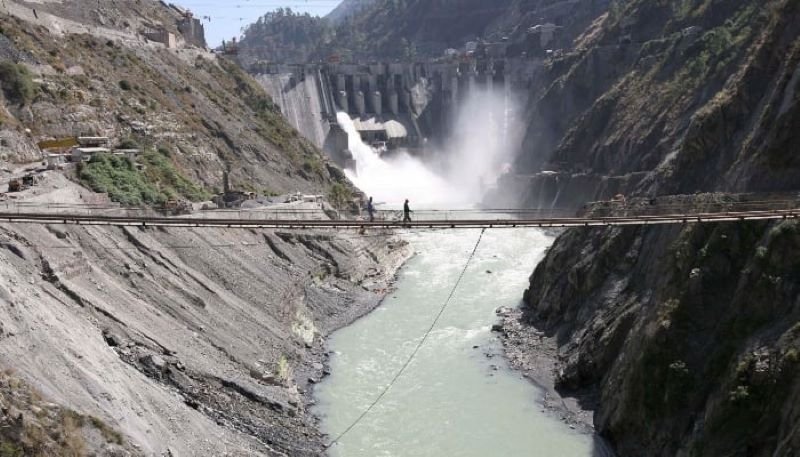
Islamabad (TDI): Pakistan on Friday formally sought an explanation from India over an unusual and sharp reduction in the flow of the Chenab River earlier this month, stating that the decline followed the emptying and subsequent refilling of the Baglihar dam in violation of the Indus Waters Treaty of 1960.
In a statement, the Ministry of Water Resources said Chenab flows had begun to stabilise after a period of significant volatility, but stressed that the earlier disruption raised serious concerns. Pakistan’s Commissioner for Indus Waters has taken up the matter with his Indian counterpart, requesting detailed data and clarification under the treaty’s framework.
According to the ministry, hydrological records for the first half of December 2025 showed an abnormal decline in Chenab flows between December 10 and 16. During that period, discharge levels dropped repeatedly, hitting a low of just 870 cusecs, far below the historical 10-year minimum range of roughly 4,000 to 4,400 cusecs for those dates, Dawn reported.
Officials said satellite imagery was examined to identify the cause of the decline at the Marala headworks. Imagery from December 8 showed a sharp reduction in the surface area of the Baglihar reservoir, which then increased again in images dated December 13. This pattern, the ministry said, suggested that the reservoir had been emptied and later refilled.
Read More: India Repeatedly Undermines Indus Waters Treaty, Says Dar
Under the Indus Waters Treaty, India is not permitted to drain the dead storage of reservoirs linked to run-of-the-river hydropower projects on western rivers, the statement noted. Pakistan has therefore raised the issue through the Permanent Indus Commission.
The ministry said river conditions began to improve from December 17, when flows rose steadily. By 7am that day, discharge had climbed to 6,399 cusecs, returning to the historical 10-year range for the first time since the mid-month decline.
Data provided by the Punjab Irrigation Department, which monitors Chenab flows at Marala, showed that by December 19, discharge levels had fully stabilised within historical limits. Readings on that day ranged between 4,505 and 6,494 cusecs, in line with seasonal expectations.
Read More: Pakistan Slams India’s Suspension of Indus Waters Treaty
The ministry said monitoring of river flows would continue, adding that any information attributed to sources other than the office of the Pakistan Commissioner for Indus Waters carried no official weight.
Officials also voiced concern over disruptions in the Jhelum River, alleging that Indian authorities were intermittently holding and releasing water upstream, affecting inflows into Mangla Dam.