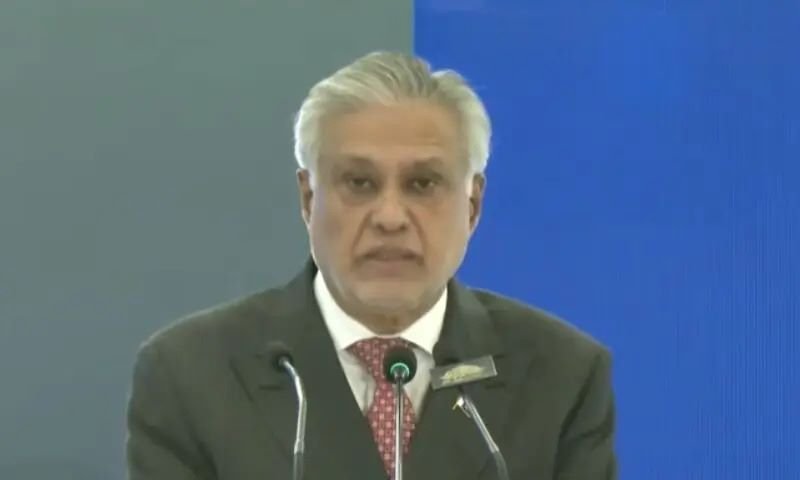
Islamabad (TDI): Deputy Prime Minister and Foreign Minister Ishaq Dar said on Friday that India is persistently attempting to weaken the Indus Waters Treaty in a systematic manner.
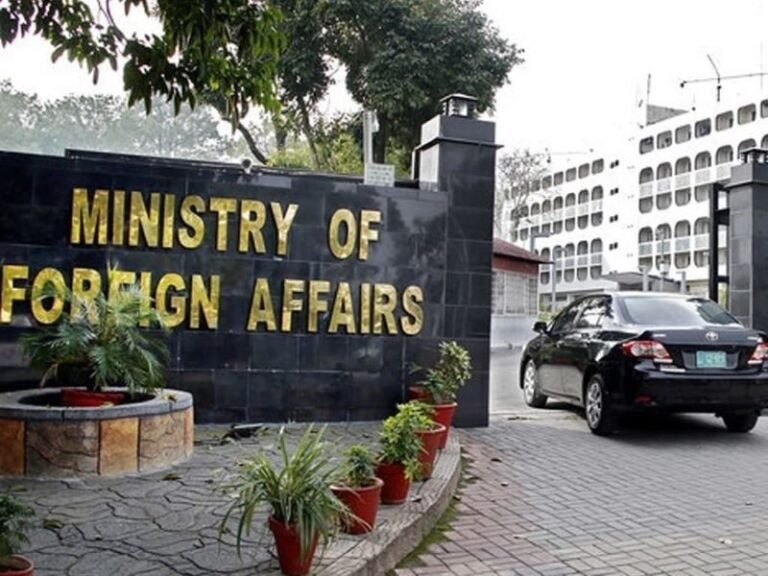
Speaking to the media in Islamabad, Dar referred to a recent situation that Pakistan views as a threat to regional peace and stability. His comments came a day after the Foreign Office sent a letter to India seeking clarification over sudden changes in the flow of the Chenab River.
Dar highlighted that India’s unilateral actions earlier this year, including a temporary suspension of the treaty in April, were followed by more serious breaches that directly impact the core of the agreement.
“We have noticed abrupt and unusual fluctuations in the Chenab River flow on two occasions this year, between April 30 and May 21, and again from December 7 to December 15,” he said.
He added that these changes suggest that India released water into the river without prior notification or the sharing of hydrological data with Pakistan, as required under the treaty. In response, Pakistan’s Indus water commissioner has formally requested explanations from his Indian counterpart.
Read More: Zardari Rejects India’s IWT Violation, Warns Against Weaponizing Water
Dar described India’s actions as an example of the weaponization of water, which Pakistan has repeatedly raised before the international community. He warned that manipulating water flow during critical periods of Pakistan’s agricultural cycle jeopardizes food security, economic stability, and the livelihoods of millions.
Pakistan expects India to respond to the queries, refrain from unilateral water manipulation, and fully comply with the treaty’s obligations, Dar said. He stressed that these recent violations are part of a larger pattern, citing India’s construction of hydropower projects like Kishenganga and Ratle, which he claims do not meet the treaty’s technical requirements.
Read More: Pakistan Calls for Equal Application of International Law, Highlights Indus Treaty at UN Debate
Dar further stated that India has been building dams illegally, ignoring its treaty commitments, which enhances its capacity to control water and poses serious risks to Pakistan’s economy and the well-being of 240 million people. He also noted that India has stopped sharing crucial hydrological data and has hindered joint monitoring efforts, increasing Pakistan’s vulnerability to floods and droughts.
“These actions could potentially trigger a humanitarian crisis,” he warned, adding that such conduct violates international and humanitarian law. He emphasized that allowing India to flout treaty obligations sets a dangerous precedent.
Dar also criticized India for avoiding the treaty’s dispute resolution mechanisms, including the Permanent Court of Arbitration (PCA) and neutral expert proceedings, accusing it of trying to undermine an established arbitration process.
He reaffirmed that the Indus Waters Treaty remains a binding legal framework that has contributed significantly to peace and stability in South Asia. PCA rulings, he noted, confirm the treaty’s continued validity and binding nature.
“Any violation not only threatens the sanctity of this treaty but also poses serious risks to regional peace and security,” Dar concluded.