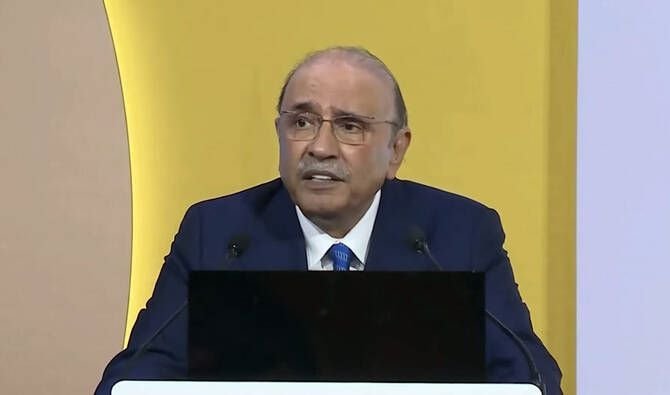
Doha (TDI): President Asif Ali Zardari strongly condemned India’s violation of the Indus Waters Treaty (IWT) and warned against the weaponization of water during his address at the Second World Summit for Social Development in Doha.
He emphasized that such actions by India could not and would not succeed, stressing that water is a universal right and a shared resource for humanity.
India’s decision to hold the IWT in abeyance came after an attack in Pahalgam, IIOJK, in April, which killed 26 people. India blamed Pakistan for the incident without providing evidence. In response, Pakistan termed any attempt to suspend its water share as an “act of war,” pointing out that the IWT has no provision for unilateral suspension. Pakistan also signaled its intention to pursue legal action, citing a violation of the 1969 Vienna Convention on the Law of Treaties.
President Zardari said, “Pakistan faces the devastating impacts of climate change, including large-scale floods, and now we are faced with a new threat: the weaponization of water. Water is not a weapon but a basic human right, essential for the survival and dignity of every individual.” He further added, “The weaponization of water, which violates the IWT, poses a serious threat to over 240 million Pakistanis. These tactics will not succeed.”
The Permanent Court of Arbitration (PCA) in The Hague had issued a supplemental award in June, ruling that India could not unilaterally suspend the treaty. In response, India rejected the court’s authority, stating that it did not recognize the PCA or its decisions.
Read More: Pakistan’s UN Mission Event Highlights Grave Humanitarian Fallout of India’s IWT Suspension
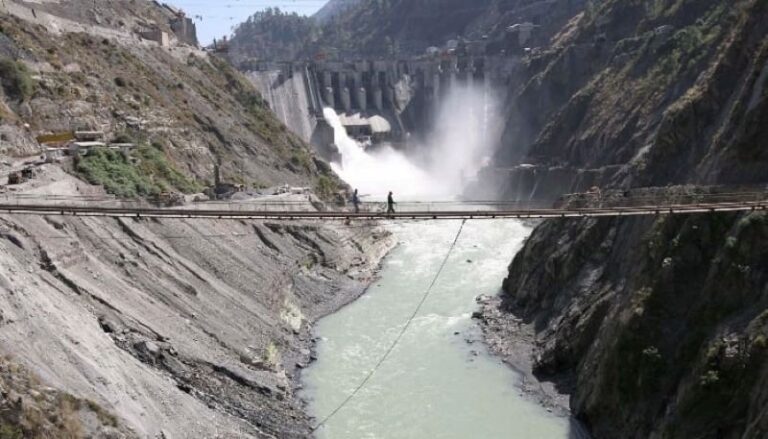
Under the 1960 IWT, three rivers flowing westward are allocated to Pakistan, while India has rights to the eastern rivers. In 2023, Pakistan brought a case before the PCA concerning India’s hydropower projects on rivers that belong to Pakistan under the treaty.
In its August ruling, the court affirmed its jurisdiction over the dispute and clarified that the treaty does not permit India to generate hydroelectric power on the western rivers. The court emphasized that these projects must strictly adhere to the treaty’s specifications and that India must allow the free flow of water to Pakistan for its unrestricted use.
During his speech, President Zardari also reaffirmed Pakistan’s commitment to social justice and inclusive development, underscoring the need to eradicate poverty, promote decent work, and ensure human rights for all people. He emphasized that Pakistan remains firmly aligned with the Doha Political Declaration, which calls for global solidarity and sustainable development.
Read More: Pakistan Warns of Water War Risk, Urges UN Action Over IWT Suspension
“We remain committed to placing people at the center of our policies. This commitment is reflected in our efforts to empower over nine million families through the Benazir Income Support Program (BISP),” Zardari stated, highlighting the program’s success as one of the world’s most effective social protection models. He also discussed initiatives such as the National Youth Internship Program and green housing projects, aimed at empowering youth and enhancing climate resilience through nature-based solutions, including the restoration of mangroves.
President Zardari outlined his vision for translating the Doha Declaration into actionable policies and urged the international community to unite around three core pillars: dignity, equality, and solidarity. He emphasized the need for global financial reforms, debt relief, equitable taxation, and expanded social protection to address the pressing challenges of today’s world.
The President also condemned the ongoing atrocities in Palestine, referring to the situation as a “genocide, apartheid, and mass starvation.” He called for a just and lasting peace in the region, stressing that the Palestinian people must be granted their right to self-determination through the creation of a viable and sovereign State of Palestine, with Al-Quds Al-Sharif as its capital.
Linking the struggles of Palestine and Kashmir, President Zardari reiterated Pakistan’s unwavering support for the Kashmiri people in their fight for justice and self-determination. “Both struggles are two sides of the same coin,” he said. He stressed the need for the international community to address the Jammu and Kashmir dispute in accordance with the UN Security Council resolutions to ensure a just and lasting settlement in line with the aspirations of the Kashmiri people.