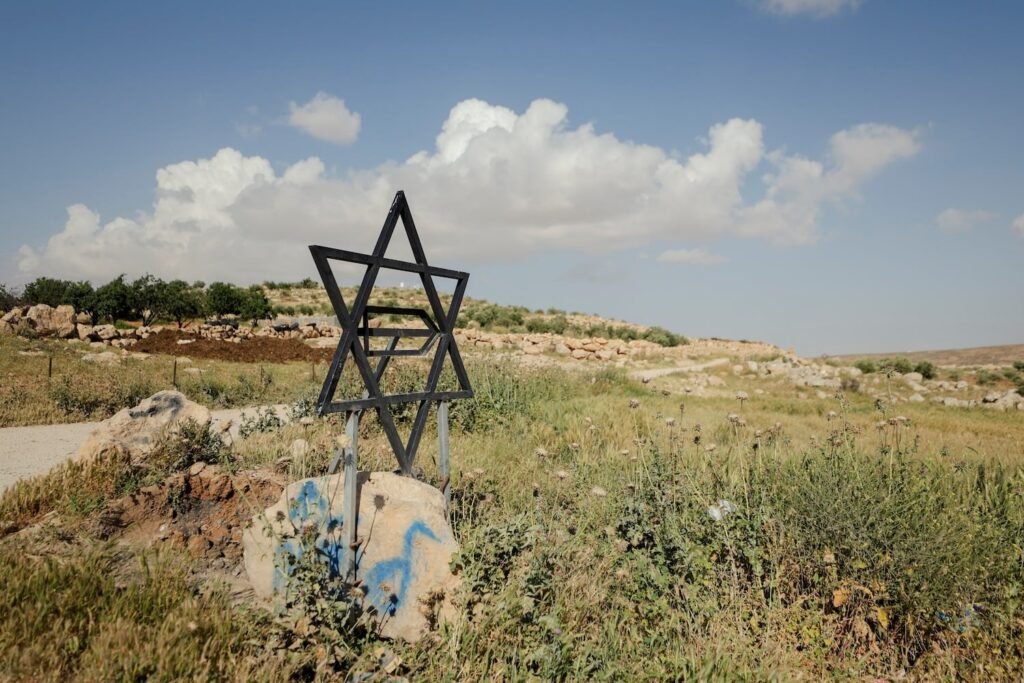
The growing alarm within Israeli security circles over settler extremism in the West Bank reflects a deepening crisis that extends far beyond localized violence. Reports indicating that Israeli officials themselves have warned about the destabilizing consequences of unchecked settler aggression highlight a paradox at the heart of the situation that awareness without effective intervention.
According to coverage by outlets such as BBC News and Reuters, incidents involving settler violence including arson attacks, property destruction, and forced displacement have risen sharply over the past two years. Data compiled by the United Nations Office for the Coordination of Humanitarian Affairs suggests that settler-related incidents increased by over 40% in 2024 compared to the previous year, with hundreds of documented attacks affecting Palestinian communities.
This surge in violence is not occurring in a vacuum. Analysts from organizations like International Crisis Group warn that such actions risk triggering a broader uprising in the West Bank, echoing past cycles of unrest. Israeli military officials have reportedly cautioned that continued provocations ranging from land seizures to road blockades could ignite widespread resistance.
Meanwhile, reports from Al Jazeera and Middle East Eye describe how entire villages have faced restrictions on movement, cutting off access to essential services and livelihoods. The pattern suggests a systematic erosion of stability, one that is increasingly difficult to contain.
Escalation on the Ground and Humanitarian Fallout
The humanitarian consequences of these developments are severe and expanding. According to recent updates from Human Rights Watch and Amnesty International, demolitions of homes and agricultural lands have displaced thousands of Palestinians in the West Bank alone. In one widely reported case, a single demolition left 25 individuals from four families homeless.
Such actions contribute to a broader displacement trend, with UN estimates indicating that over 1,200 Palestinians were forcibly displaced in Area C of the West Bank in 2024.
Financial pressures compound these hardships. The withholding of approximately 740 million shekels in tax revenues, as noted in reports by The World Bank and IMF, has deepened the Palestinian Authority’s fiscal crisis. Public sector salaries have been delayed or reduced, and essential services are under strain.
Read More: Doctors Without Borders Warns of ‘Manufactured’ Malnutrition Crisis in Gaza
At the same time, restrictions on movement and trade continue to suppress economic activity, with unemployment rates in some West Bank areas exceeding 25%, according to Palestinian Central Bureau of Statistics.
In Gaza, the situation is even more dire. The World Health Organization reports that 86% of essential medical supplies are depleted, leaving hospitals unable to provide basic care. Since October 2023, international estimates cited by UN News and The Guardian indicate that more than 72,600 Palestinians have been killed, including a significant number of children.
Aid delivery remains inconsistent, with maritime convoys reportedly halted, as detailed by Associated Press. Negotiations for a ceasefire have repeatedly stalled, prolonging civilian suffering.
Social Fractures and Rising Intolerance
Beyond the immediate violence, there are growing concerns about societal shifts within Israel itself. Reports from The New York Times and Haaretz suggest an increase in intolerance toward minority communities, including Christians.
Incidents of vandalism against churches and harassment of clergy have been documented, raising questions about the broader trajectory of social cohesion. According to a 2025 survey by the Israel Democracy Institute, nearly 48% of minority respondents reported experiencing discrimination in the past year a notable increase from previous surveys.
Former Israeli intelligence officials have also drawn historical parallels, warning that unchecked extremism can lead to moral and strategic consequences. Such comparisons, while controversial, underscore the seriousness with which some within Israel view the current trajectory.
The internal debate reflects a recognition that security cannot be sustained through force alone, and it requires addressing the underlying drivers of conflict.
At the same time, international scrutiny is intensifying. The European Union External Action Service and United Nations Human Rights Council have both called for accountability and restraint, emphasizing the need to protect civilians and uphold international law.
Read More: Pakistan Warns UN Over Israeli Annexation of West Bank
However, diplomatic efforts have so far yielded limited results, with geopolitical divisions hindering coordinated action.
The convergence of settler violence, military operations, economic strain, and social fragmentation places the region at a dangerous crossroads. While Israeli authorities may recognize the risks posed by extremist elements, recognition alone is insufficient. Without concrete measures to curb violence, ensure accountability, and address humanitarian needs, the likelihood of further escalation remains high.
What makes the current moment particularly volatile is the interplay between local actions and broader regional dynamics. Analysts from Brookings Institution and Carnegie Endowment for International Peace argue that unresolved tensions in the West Bank and Gaza have ripple effects across the Middle East, influencing public opinion and diplomatic relations. The longer the crisis persists, the more entrenched these divisions become.
The situation demands a shift from reactive policies to proactive solutions. This includes not only addressing immediate security concerns but also investing in long-term stability through political dialogue, economic support, and respect for human rights.
Without such a shift, warnings from Israeli security officials may prove prescient and the consequences far more difficult to contain.
*The views presented in this article are the authors’ own and do not necessarily reflect the views of The Diplomatic Insight.

Professor Dr. Waqas Ahmed
Professor Dr. Waqas Khan is a scholar of climate change, security, diplomacy, and international affairs. He earned his PhD from Beijing University, China. His research focuses on the links between environmental challenges and global security, emphasizing international cooperation, strategic policy, and the role of diplomacy in addressing emerging global issues.