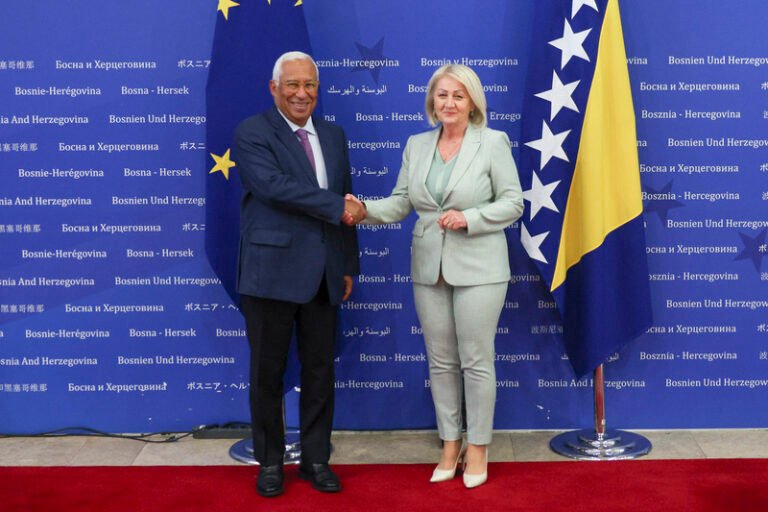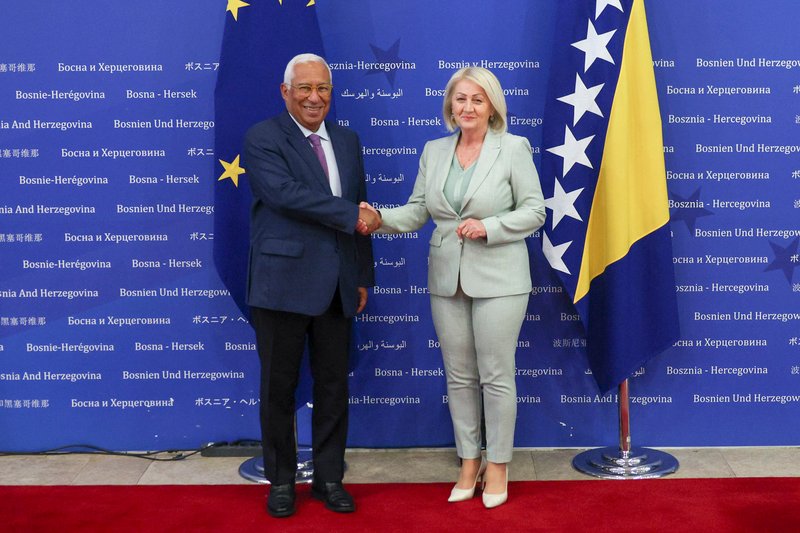
Sarajevo (TDI): European Council President António Costa has urged Bosnia and Herzegovina to intensify political and institutional reforms, adding that the European Union remains committed to the country’s membership aspirations.
Speaking in Sarajevo after meeting members of Bosnia and Herzegovina’s tripartite presidency, Costa described EU enlargement as a strategic priority for the bloc and stressed that progress toward membership depends on concrete reforms and political cooperation within the country.
The visit was Costa’s first stop on a regional tour ahead of a summit between EU leaders and Western Balkan partners scheduled later this week in Montenegro.
Press statement by @antoniolscosta @eucopresident, following his meeting with the members of the Presidency of Bosnia and Herzegovina on 1 June 2026 in #Sarajevo.https://t.co/roqVLygQUT
— EU Council Newsroom (@EUCouncilTVNews) June 1, 2026
Costa said the current geopolitical climate has reinforced the importance of expanding the EU, arguing that enlargement represents an investment in Europe’s peace, stability and security.
He emphasized that the Union’s commitment to the Western Balkans is genuine and that candidate countries have a real opportunity to move closer to membership if they deliver on required reforms.
Bosnia and Herzegovina was granted EU candidate status in 2022, and EU leaders agreed in principle to open accession negotiations in 2024.
However, progress has been slowed by political divisions and institutional deadlock, issues Brussels has repeatedly identified as major obstacles on the country’s European path.
Read More: EU Council President Praises Pakistan’s Diplomacy for Regional Stability
During the discussions, Costa highlighted the need for Bosnia’s political leaders to maintain momentum on reforms related to governance, the rule of law and alignment with EU standards.
He also underscored the importance of preserving stability and strengthening state institutions as the country advances toward closer integration with the bloc.
Costa’s regional tour will continue with visits to other Western Balkan capitals before the EU-Western Balkans summit, where leaders are expected to discuss accession progress, regional cooperation and the next steps in the enlargement process.