Tehran (TDI): Iran has called on the United Nations Security Council to move beyond statements of concern and adopt enforceable, punitive measures against Israel over the ongoing Middle East crisis.
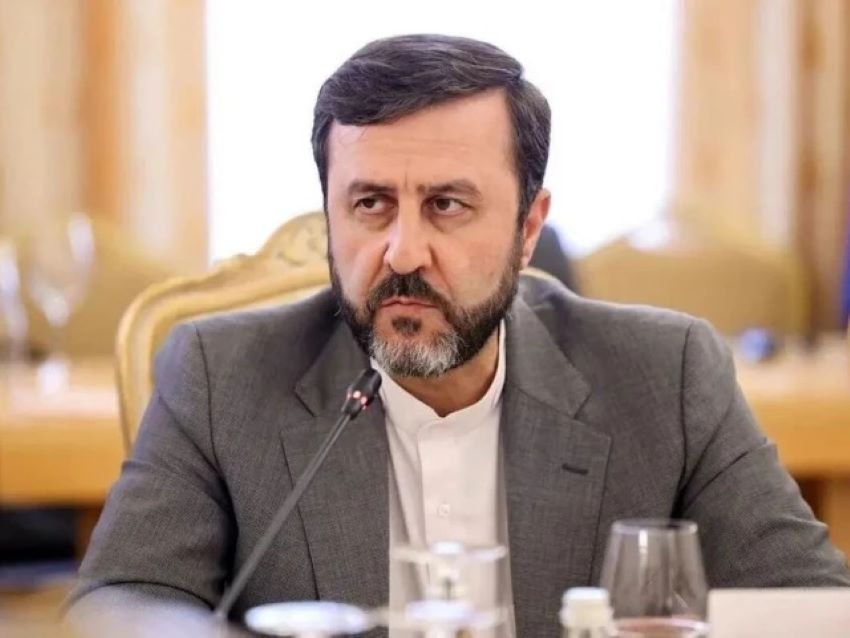
In a post on X, Iranian Deputy Foreign Minister for Legal and International Affairs Kazem Gharibabadi said the current regional instability reflects what he described as a pattern of violations by Israel, arguing that the situation is not the result of isolated tensions but of repeated breaches of sovereignty, ceasefire agreements, and international norms.
Gharibabadi urged the Security Council to take “binding decisions” rather than issuing what he called ineffective condemnations, stressing that international law must be backed by enforcement rather than rhetoric.
He further argued that the crisis in the Middle East has been driven by what he described as impunity for Israeli actions, claiming that continued violations in Lebanon, Syria, and the occupied Palestinian territories have deepened regional instability and displacement.
Referring to claims by US President Donald Trump regarding Israeli Prime Minister Benjamin Netanyahu, Gharibabadi suggested that reported US intervention to prevent strikes on Beirut highlighted Washington’s influence over Israeli military decisions. He questioned why, if such interventions were possible, prolonged violence and ceasefire violations had continued in previous months.
Read More: Oil Prices Ease as Markets Weigh Uncertain US–Iran Talks
His remarks come amid ongoing tensions in Lebanon, where a recently announced partial ceasefire between Israel and Hezbollah has failed to fully halt hostilities on the ground. Despite the agreement, both sides have continued to report strikes and cross-border fire.
The arrangement, initially presented as a limited de-escalation, calls for Israel to avoid strikes on Beirut and its southern suburbs, while Hezbollah would scale back attacks on Israeli territory. However, fighting has continued in southern Lebanon, and both sides have accused each other of violations.
The conflict has further escalated broader regional tensions linked to the wider US–Iran–Israel confrontation. Iranian officials have repeatedly insisted that any lasting settlement must include a halt to Israeli military operations in Lebanon, while Washington has maintained that the Lebanon conflict and broader nuclear and regional negotiations with Iran should be treated separately.
Read More: Dar Urges Preservation of US–Iran Ceasefire in Call With Araghchi
Iranian Foreign Minister Abbas Araghchi has previously stated that ceasefire arrangements should be understood as interconnected across the region, warning that violations in one arena risk undermining stability elsewhere.
Meanwhile, diplomatic efforts remain fragile, with Lebanon preparing to pursue expanded ceasefire discussions in Washington in an attempt to stabilize the situation and prevent further escalation.