United Nations (TDI): Pakistan has urged the United Nations Human Rights Council (UNHRC) to take a more active stance in addressing global human rights violations, including oppression in Indian Illegally Occupied Jammu and Kashmir and the denial of self-determination in Palestine.
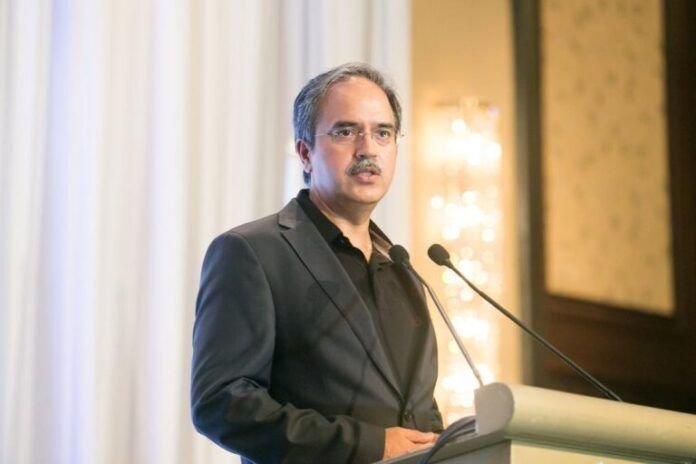
Speaking before the UN General Assembly, Pakistan’s Permanent Representative, Ambassador Asim Iftikhar Ahmad, reaffirmed Islamabad’s “unwavering support” for the 47-member Geneva-based Council, calling on it to uphold international law and act without discrimination.
He stressed that the Council must maintain a balanced approach, focusing equally on all categories of rights and situations of concern. Referring to the persistent crises in Palestine, Myanmar, and Kashmir, the envoy said durable peace and respect for human rights “cannot be achieved without resolving all situations of foreign occupation.”
The envoy’s remarks about the situation in Jammu and Kashmir prompted a sharp response from the Indian delegation. Bhavika Managalanandan, a First Secretary at India’s mission to the UN, claimed that Jammu and Kashmir was an “integral and inalienable part” of India, accusing Pakistan of misusing the right to self-determination for political purposes.
Read More: Pakistan Slams India for Defying UN Kashmir Plebiscite
Responding to India’s statement, Sarfaraz Ahmed Gohar, a Pakistani First Secretary, dismissed the remarks as “baseless falsehoods.” He reiterated that Jammu and Kashmir “has never been and will never be an integral part of India,” adding that the region’s final status must be determined through an UN-supervised plebiscite, as laid out in Security Council resolutions.
“The disputed nature of Jammu and Kashmir is recognized by the United Nations and the wider international community,” Gohar said, urging India to honor its human rights obligations and “refrain from deflecting attention through diversionary tactics.” He also highlighted the growing wave of intolerance in India, citing threats and hate speech by extremist groups against Muslims.
In his broader remarks on the Human Rights Council’s report, Ambassador Ahmad emphasized the importance of improving coordination, reducing duplication of mandates, and ensuring that every initiative contributes meaningfully to the advancement of rights. He said the Council must serve as “a platform for dialogue and cooperation rather than confrontation,” warning that double standards and selective approaches undermine its credibility.
Read More: Pakistan Calls on UN to Uphold Rights of Kashmiris and Palestinians to Self-Determination
He also underlined the need for stable and predictable funding to enable the Council to carry out its work effectively. Noting that human rights, development, and sustainability are interlinked, he urged greater focus on fulfilling the UN’s 2030 Sustainable Development Agenda.
As Pakistan prepares to serve its newly elected term on the Human Rights Council from 2026 to 2028, Ambassador Ahmad pledged that Islamabad would continue playing a “balanced, principled, and constructive” role. Pakistan, he said, would work to “build consensus, amplify the voice of the Global South, and promote the full spectrum of human rights.”