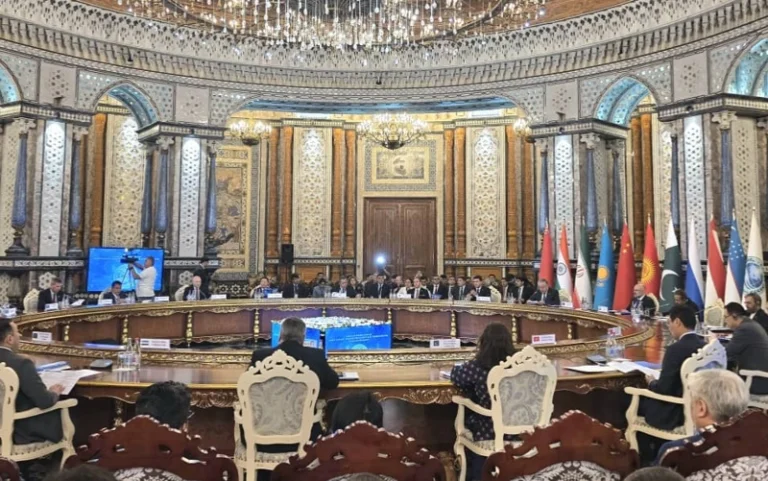
As you read this, senior officials from Pakistan and Afghanistan are sitting across a table in Urumqi, China, in what Pakistan’s Foreign Ministry spokesperson Tahir Andrabi confirmed this morning is an active, ongoing round of peace talks. Pakistan has sent a delegation to Urumqi in line with its consistent position and longstanding practice of supporting a credible process that can help find a durable solution.
This is the most significant diplomatic development in the Pakistan-Afghanistan conflict since it erupted into open war in February. And most of the world is still watching Iran.
First, Understand What Kind of War This Actually Is
The surface narrative says Pakistan is fighting Afghanistan over terrorism. That is accurate but dangerously incomplete.
This conflict represents the first sustained encounter between an incipient Indian ally, Afghanistan, and the Western tip of China’s military spear, Pakistan. Absorb that framing fully before reading another word of commentary on this war.
What looks like a bilateral border dispute between two Muslim-majority neighbors is in reality the first live test of the new security geometry of Asia, with China and India on opposing sides, the United States providing strategic cover to Islamabad, and the Gulf’s mediation bandwidth entirely absorbed by the war in Iran.
For decades, Massive resources have been spent on arming, sheltering and supporting the Afghan Taliban. Analysts referred to this approach as strategic depth, intended to counter the rival influence of India in the region. That gamble collapsed entirely after 2021. The Taliban, once Pakistan’s most reliable regional asset, is now its most dangerous security liability. The TTP has grown stronger in the border regions of both Pakistan and Afghanistan, increasing the pace and scale of attacks on Pakistani security forces and later on civilians.
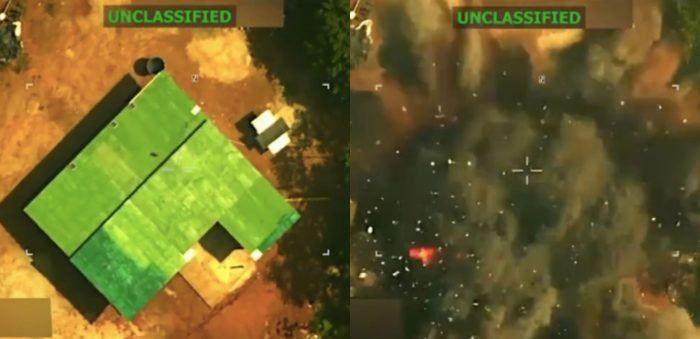
By February 2026, a suicide bombing killed 36 worshippers at a mosque in Islamabad. A vehicle bomb struck a checkpoint in Bajaur, killing 11 soldiers and a child. Pakistan issued formal diplomatic protests. Kabul deflected. Pakistan’s Defence Minister Khawaja Asif posted: “Our patience has now run out. Now it is open war between us.” Operation Ghazab lil-Haq launched on February 26, with strikes on Nangarhar, Paktika, Khost, Kandahar, and ultimately Kabul itself, including Bagram airbase, with Pakistan also claiming capture of 32 square kilometers of Afghan territory to establish a buffer zone.
China’s Role: A Decade of Diplomatic Investment Now Paying Off
Here is the layer almost every analyst is missing, and it is the most important one.
China’s intervention in Urumqi on April 1-2 did not come from nowhere. It is the product of a decade of patient, strategic relationship-building that Beijing has conducted with extraordinary discipline. At the beginning of May 2023, Beijing convened a trilateral summit to solve the conflict between Afghanistan and Pakistan after Islamabad failed to do so via bilateral negotiations with the Taliban. From that point, China played a significant role in the conflict. That 2023 intervention established Beijing as the one external actor with simultaneous credibility in both Islamabad and Kabul. No other power on earth holds that position today.
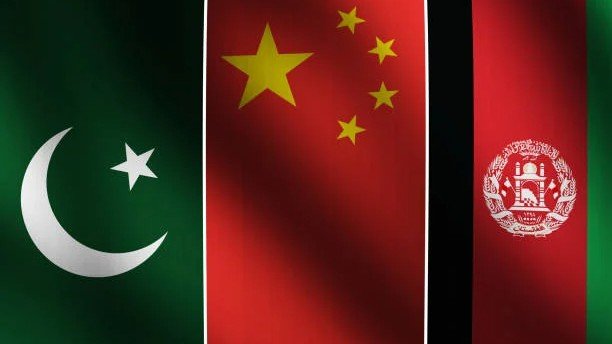
China develops mechanisms that allow it to bridge its non-intervention policy in conflict mediation, enabling the players to build the roadmap for peace, and provides long-term economic incentives that cause actors, even violent ones, to come to the negotiating table. This is the operational logic China has applied consistently since 2017, when the trilateral mechanism between China, Pakistan, and Afghanistan was first launched.
The mechanism kept building. On August 20, 2025, the Sixth China-Afghanistan-Pakistan Trilateral Foreign Ministers’ Dialogue was held in Kabul. Chinese Foreign Minister Wang Yi stated that China is ready to work with Afghanistan and Pakistan to deepen good-neighborliness, render mutual understanding and support on issues concerning each other’s core interests, and firmly oppose interference by any external forces in the region. That phrase, “external forces,” is not only important to understand but for you, my reader, important to imagine too. Let me help you here. The message is that this trilateral space belonged to China.
Then in May 2025, following the brief India-Pakistan military confrontation, the foreign ministers of China, Pakistan, and Afghanistan convened under the trilateral forum in Beijing. This was in fact a great confidence- and trust-building exercise between the three countries This confidence further helped to have the next round of meetings. That confidence, built over six formal rounds of dialogue spanning nearly a decade, is precisely why both Pakistan and the Taliban accepted China’s offer to host Urumqi when every other mediation track had collapsed.
China urged both sides to resume dialogue since late February, and its special envoy Yue Xiaoyong met his Pakistani counterpart Mohammad Sadiq last month after visiting Kabul. Yue’s shuttle diplomacy, physically present first in Kabul and then in Pakistan in the weeks before Urumqi, built the confidence that made April 1 possible. That level of hands-on diplomatic investment is what separates Chinese mediation from the declaratory diplomacy of other external actors. Beijing earns its seat at the table by showing up before the crisis, not after it.
China reiterated its commitment to stay engaged with both sides, positioning itself as a stabilising force amid growing regional uncertainty. That public commitment to sustained engagement is itself a strategic signal. It tells both Islamabad and Kabul that the Chinese diplomatic umbrella remains open regardless of what happens on the ground.
The Urumqi Talks: What the Delegation Compositions Tell You
On April 2, Pakistan’s Foreign Ministry officially confirmed about the fact that Pakistan is holding talks with Afghanistan to end the worst conflict between the South Asian neighbours since the Taliban returned to power in 2021. The talks in Urumqi are being held between senior officials of the two countries, with Pakistan’s spokesperson Tahir Andrabi saying the delegation is exploring a sustainable solution to stop cross-border terrorism from Afghanistan.
Andrabi said the talks were being held at a working level and led by senior officials, and stated that responsibility for meaningful progress lay with Afghanistan, which must take visible and verifiable action against militant groups using its territory to target Pakistan. He also said Pakistan’s Ghazab lil-Haq operation would continue alongside the talks.
That last sentence is the most analytically important one in any official statement this week. Operations continue during talks. Pakistan is communicating that dialogue from a position of active military pressure is Islamabad’s new baseline, that sitting down in Urumqi does not mean standing down on the Durand Line.
The Afghan delegation consisted of two officials from the foreign ministry and one each from the defense and interior ministries and from the country’s intelligence agency. Afghanistan’s intelligence directorate at the table is decisive. These are the people who run enforcement operations, manage assets, and make security commitments that actually get implemented. Their presence signals Kabul is treating the TTP question as a security-to-security conversation, exactly the format Pakistan has demanded for two years.
March 28
Before Urumqi, an important diplomatic signal arrived from Kabul on March 29. Afghan Foreign Minister Amir Khan Muttaqi said Afghanistan wanted to resolve tensions with Pakistan through dialogue and mutual understanding. He added that Afghanistan had taken serious measures to ensure its territory was not used against Pakistan, framing its military actions as defensive. Simultaneously, Pakistan’s Defence Minister Khawaja Asif implicitly confirmed that indirect talks with the Afghan Taliban were taking place through third-party mediators, describing the process as unstructured and informal.
Assessment- Three Trajectories for April
The highest-probability path is a phased de-escalation built on three pillars: a written verifiable TTP mechanism, Chinese-facilitated border reopening as an economic confidence-building reward, and continued Pakistani military operations at reduced tempo as leverage during implementation. This takes 3 to 6 weeks to show material progress. The critical test is whether Afghanistan can deliver partial, verifiable compliance, and whether Pakistan accepts partial compliance as sufficient to reduce kinetic pressure.
The second trajectory is structured stalemate. Talks continue in Urumqi at working level. Ground operations resume at reduced but consistent intensity. Both sides claim process. The conflict slowly bleeds both economies and continues to displace Afghan civilians at scale. This is the most likely outcome if the verifiable mechanism discussion fails to produce even a draft framework within two weeks.
The third trajectory is breakdown with escalation. A major Taliban cross-border attack during active talks collapses the Urumqi process. Pakistan resumes full-scale operations. India deepens diplomatic engagement with Kabul. Chinese and Gulf actors find themselves on opposing sides of competing influence campaigns. This trajectory, the lowest probability but highest consequence, converts a bilateral conflict into the central security fault line of Asia.
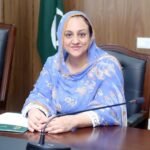
Dr. Farhat Asif
The writer is President, Institute of Peace and Diplomatic Studies. The writer teaches Conflict and Cooperation in South Asia to MPhil Students in IR Department. Riphah International University. The views expressed are her own and do not represent those of the Institutions she represents.