Pakistan just did something no one predicted it could. Now comes the harder part.
Let me tell you what is actually happening right now, because most of what you are reading in the headlines is either incomplete, framed for domestic audiences, or, in some cases, deliberately misleading.
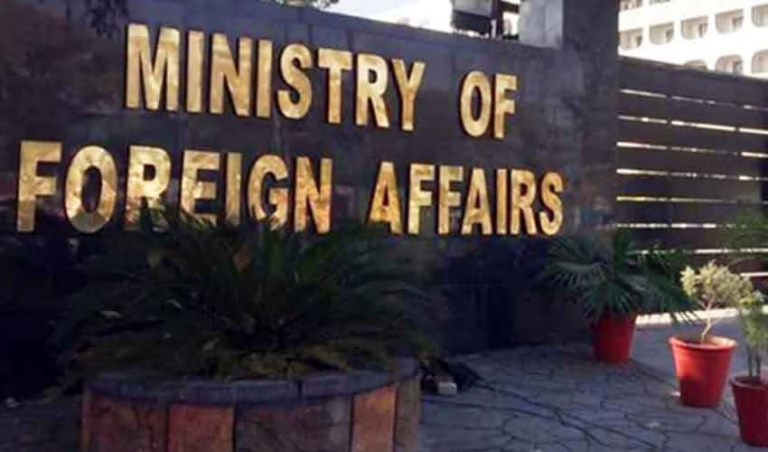
As of this evening, Islamabad’s streets are empty. A sudden two-day public holiday has been declared, enforcing a strict security lockdown across the Pakistani capital. The government has requisitioned the Serena Hotel, one of the city’s most ornate properties, located next to the Foreign Ministry in the Red Zone , evicting guests and compensating them for relocation. A 30-member US security advance team has already landed in Islamabad.
Shipping containers have been placed across key roads. Pakistan’s army patrols the Red Zone. And yet, as of this writing, the Strait of Hormuz remains effectively closed. Then the Iranian Ambassador to Pakistan, Reza Amiri Moghadam, posted confirmation of their arrival on X, then deleted it without explanation less than an hour later.
Then on the first day of the ceasefire, only four dry cargo ships, not oil or gas tankers, managed to pass through, while Iran continued charging tolls of over one million dollars per vessel. The world declared peace. The Strait did not open. Then came the highest price paid by innocent people of Lebenon where strikes killed hundreds of people. This is the condition in which tomorrow’s talks begin. Not in the warm aftermath of a working ceasefire.
Inside the first 36 hours of one that is already fracturing , and with the Iranian delegation confirmed to be arriving in Islamabad tonight, despite enough ambiguity and deletions on social media to suggest that right up to the last minute, no one is entirely certain who will show up. But its historic.
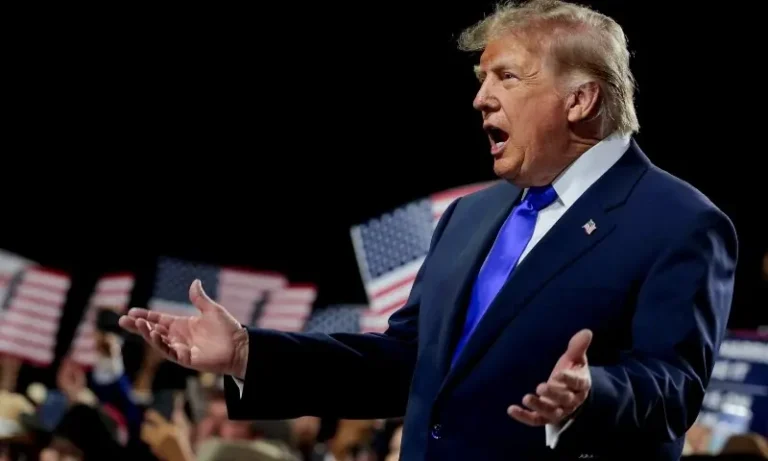
Tomorrow, Friday April 10, delegations from Washington and Tehran are arriving in Pakistan’s capital for what is, without exaggeration, the highest-level meeting between the United States and Iran since the 1979 Islamic Revolution. The US team is led by Vice President JD Vance, flanked by special envoy Steve Witkoff and Jared Kushner. Iran sends Parliament Speaker Mohammad Bagher Ghalibaf alongside Foreign Minister Abbas Araghchi.
The structure of the post-war Middle East, the future of the global energy market, and the trajectory of nuclear non-proliferation all converge inside in Islamabad this weekend. President Donald Trump also says U.S. warships will remain in the Middle East. Lebanese inclusion in the ceasefire remains a sticking point. UAE says no attacks from Iran. Drone strikes Saudi Arabia’s East-West pipeline hours after U.S.-Iran ceasefire announcement. Vice President JD Vance says U.S. is “impatient” to reach a nuclear deal.
But as the delegations were embarking unexpected happened. There was a fierce bombing on Beirut, Lebnenon where Israel used its military might as one of the heavist bombing so far during the conflict. It was a day of mourning in Lebanon. Prime Minister Benjamin Netanyahu insists Israel will continue attacking Lebanon. Israeli strikes kill two Lebanese journalists. Israeli drone strike kills Al Jazeera correspondent in Gaza. Israel approves record 34 new West Bank settlements. U.N. envoy Mladenov accused of blocking Gaza committee on Netanyahu’s behalf.
First: What Actually Happened — and What Has Been Glossed Over
The war began February 28, 2026 , US and Israeli coordinated strikes on Iran, targeting commanders, facilities, and infrastructure. Six weeks of conflict followed that killed over 5,300 people, shut down the Strait of Hormuz, sent Brent crude surging more than 50 percent, and left 800 ships and 20,000 sailors stranded in the Gulf. The energy shock that rippled from those six weeks is not temporary. It has permanently restructured maritime insurance pricing, LNG contract terms, and the hedging strategies of every major oil trading desk on earth.
The ceasefire came ninety minutes before Trump’s self-imposed deadline to destroy Iranian civilization , his words, not mine. Trump said his decision was based on conversations with Prime Minister Shehbaz Sharif and Field Marshal Asim Munir of Pakistan, who requested he hold off the destructive force being sent to Iran, contingent on Iran agreeing to the complete, immediate, and safe opening of the Strait of Hormuz.
Here is what followed. Both sides declared victory on April 8. Iran’s Supreme National Security Council called it a “historic victory,” claiming Washington had accepted Iranian control over the Strait, enrichment rights, and sanctions removal. The White House called it an American victory. Trump posted that there would be “no enrichment of uranium — period.” These are not competing interpretations of agreed language.
They are irreconcilable positions on the single most consequential issue in the negotiation, stated publicly, for domestic audiences, before the delegations have shared a room. And the Strait , the waterway whose opening was the stated condition for the entire ceasefire, remained largely closed as of Thursday morning, falling short of a key US condition.
What Pakistan Did — and Why It Was Harder Than Anyone Is Saying
I want to spend real time on this, because the coverage has been generous to Pakistan without being precise about what it actually pulled off. There is a difference between being a convenient meeting room and being the architect of a diplomatic breakthrough under conditions that should have made it impossible.
Pakistan had every reason not to do this. It had enormous stakes in this conflict probably more than any country east of Iran. It imports the bulk of its oil and gas from the Middle East. It signed a mutual defense agreement with Saudi Arabia, meaning a wider war could have legally compelled it to choose a side. It shares a 900-kilometer border with Iran. It was simultaneously fighting an open conflict with the Afghan Taliban on its western flank.
Its Shia population — 15 to 20 percent of 250 million people — was watching events in Iran with sectarian intensity that threatened domestic stability. And it had virtually no formal diplomatic standing between Washington and Tehran. The Americans had shut two consulates in Pakistan citing security risks just months earlier. The Biden administration had, for four years, essentially treated Pakistan as a problem to be managed rather than a partner to be engaged. That was the baseline from which Pakistan launched what became the only functioning diplomatic channel between two powers at war.
The architecture of how it actually worked matters. When Field Marshal Asim Munir visited the White House in June 2025 the first time a US president had hosted a Pakistani military chief who was not simultaneously his country’s head of state, Trump said Pakistan “knows Iran very well, better than most.” That sentence planted the seed. From that moment, Islamabad began positioning itself as a bilingual diplomatic actor fluent in both Washington’s calculus and Tehran’s sovereignty-first framework. That is extraordinarily rare. Most mediators understand one side well. Pakistan understood the pressure points of both.
When the war began, Pakistan moved fast and quietly. Field Marshal Asim Munir called Trump directly. Sharif called President of Iran Pezeshkian. On March 25, Pakistan delivered Washington’s 15-point proposal to Tehran. Iran rejected it and returned a 10-point counter-offer through the same channel.
The fact that both documents traveled through Islamabad made Pakistan not just a host but the sole functioning communication infrastructure between two states technically at war with each other. Then Dar flew to Beijing. Trump confirmed that China helped get Iran to the negotiating table. Pakistan understood that China’s buy-in with Tehran was essential, and it worked the Beijing relationship in parallel with everything else.
A US delegation led by Vance was twice prepared to fly to Islamabad for direct talks. Both visits were cancelled at the last moment when Tehran requested more time. Pakistan absorbed those cancellations, kept the channel warm, and did not publicly complain. That kind of institutional patience is the rarest quality in diplomacy and the one least reported on.
The Ground Truth as of This Hour
Here is what is actually happening as both delegations settle into Islamabad and it is uglier than the diplomatic choreography suggests.
The death toll from Israeli strikes in Lebanon has risen to 1,530 since early March, including 130 children, 57 paramedics, and healthcare workers. On Thursday, Israel struck a bridge in Lebanon. Hezbollah, which had held its fire on the first day of the ceasefire, fired rockets into northern Israel in response. Israel has stated unambiguously that the ceasefire does not apply to its operations there.
Pakistan’s Prime Minister said it did. Trump said it did not. France said Lebanon cannot be excluded. And Iran’s Foreign Minister Araghchi has issued perhaps the clearest statement of the entire crisis: the US must choose between ceasefire and continued war via Israel. It cannot have both.
Vance, before boarding his flight to Islamabad, called the Lebanon disagreement “a legitimate misunderstanding.” That framing works for a press briefing. It does not work as a negotiating position when Ghalibaf has arrived in Islamabad citing Lebanon as the first of three ceasefire violations that, in his own words, make the entire basis for talks already broken. Notably, Ghalibaf stopped short of saying Iran would not participate. That space between “unreasonable” and “we won’t come” is precisely where Iran has chosen to operate. It is sophisticated. It is also the most fragile possible foundation for what begins tomorrow morning.
The Strait of Hormuz picture is equally sobering. Iran’s IRGC Navy has published official maps designating alternative shipping routes around naval mines it laid during the war. Ships without express Iranian authorization will be, in the IRGC’s own language, “targeted and destroyed.” Only China, India, Russia, Pakistan, and Iraq are granted safe passage. US and Israeli vessels remain barred.
And the IRGC has made a statement that deserves to be read as strategic doctrine rather than negotiating posture: the Strait of Hormuz will “never return to its previous status.” That is not a position designed to be walked back over a weekend of talks. That is Iran’s declaration that regardless of what any agreement says, it intends to permanently restructure the operational and legal reality of the world’s most critical maritime chokepoint.
As of tonight, the waterway that the entire ceasefire was supposed to reopen processes a fraction of its pre-war traffic. Energy traders watching this should not be reading the ceasefire announcement. They should be reading the mine maps.
The Three Fault Lines That Will Determine Everything
First: The Lebanon Problem. This is the most immediate threat to the talks collapsing before they produce anything substantive. Netanyahu’s office claims the temporary ceasefire does not include Lebanon, and in the wake of the agreement, Israel launched among the heaviest bombardments it has yet carried out in its war with Hezbollah. Lebanon’s health ministry reported 182 people killed by the Wednesday attacks alone. Iran says Lebanon was explicitly covered. Pakistan’s Prime Minister said it applied “everywhere.” The US says Lebanon is not part of the ceasefire. Araghchi has been blunt about what this means: “The Iran–US Ceasefire terms are clear and explicit: the US must choose — ceasefire or continued war via Israel. It cannot have both.” If Israeli operations in Lebanon intensify before or during Saturday’s talks, Tehran has both the justification and the domestic political incentive to walk out.Vance, in Budapest before flying to Islamabad, called the Lebanon disagreement “a legitimate misunderstanding.” That framing works for a press conference. It does not resolve the fact that Ghalibaf arrives in Islamabad citing Lebanon as the first of three ceasefire violations that make the entire negotiating basis, in his own words, already broken.
Second: The Nuclear Red Line. Analysts at the Institute for National Security Studies identify three minimum requirements for a credible agreement: the removal of 60 percent enriched uranium from Iran, the dilution of 20 percent enriched material, and the suspension of uranium enrichment for as many years as possible. Iran has rejected these demands before, including in the pre-war negotiations in Oman and Vienna. The war has not made Tehran more flexible on this point , if anything, the strikes on Iranian territory have hardened the domestic political consensus around the nuclear programme as a sovereignty issue. Vance and Witkoff will need a formulation that allows both sides to claim victory on enrichment. That is an extraordinarily narrow diplomatic corridor.
Third: The Israel Variable. Behind the scenes, Israeli officials have reportedly been concerned that Trump would strike a deal with Iran that falls short of Israel’s war aims. Israel has extraordinary leverage over whether the talks produce anything. Every Israeli airstrike in Lebanon during the next two weeks is functionally a vote against the Islamabad process. Netanyahu’s government has its own calculus: a durable US-Iran deal that leaves Iran’s nuclear infrastructure partially intact may be less acceptable to Tel Aviv than a continued, if costly, war.
Why Islamabad Changes Pakistan’s Strategic Calculus Permanently
There is a geopolitical consequence to this week that will outlast whatever agreement or non-agreement emerges from Saturday’s talks. Pakistan has demonstrated a combination of back-channel access, regional relationships, and crisis management competence that very few countries can claim simultaneously.
Despite having traded missile fire with Iran two years ago and maintaining an at-times rocky relationship with Washington, Pakistan currently holds warm ties with both capitals burnished by its allyship with Saudi Arabia, China, and key Gulf states. That portfolio of relationships is precisely what made it credible as a mediator. After the ceasefire was secured, Foreign Minister Dar traveled to Beijing, reflecting China’s growing involvement and signaling that Pakistan is actively managing its relationships with all the major players simultaneously, not just the two at the table.
What to Watch Tomorrow
The talks begin Saturday morning Islamabad time. The first question is whether Ghalibaf’s team arrives at all, given his Wednesday statement that negotiations are currently “unreasonable.” Vance’s reading that three points of friction imply substantial agreement elsewhere is the diplomatic frame the US is working from. Whether Tehran accepts that frame or uses it as justification to extract more concessions before formal discussions even begin will tell you a great deal about where this goes.
The nuclear file will not be resolved in one weekend. What Saturday needs to produce is a framework extension — a mutual agreement to keep talking, keep the Hormuz corridor open, and keep Israeli operations from providing either side a pretext to walk away. A “yes to process” is what success looks like on April 10. The actual architecture of any durable agreement , nuclear commitments, sanctions relief, regional security guarantees, reparations requires months of sustained negotiation.
The deeper risk is not that talks fail spectacularly. It is that they produce a communique that both sides interpret differently, that Israel continues operations in Lebanon that Iran reads as a US-sanctioned violation, and that the two-week window expires with positions more entrenched than they were at the start.
That scenario, a collapse without a clean break, is the most dangerous outcome. It gives hardliners in Tehran the evidence they need to argue that diplomacy is structurally impossible with Washington. It gives hawks in Tel Aviv the opening they have been waiting for. And it leaves Pakistan holding a mediation brief that has expired.
The people gathering in Islamabad tomorrow carry more than a region’s future with them. They carry the last viable off-ramp from a war that has already killed thousands, disrupted global energy markets, and brought two nuclear-era powers closer to direct confrontation than at any point in modern history.
Islamabad built this movement and made this moment happen quietly and deliberately, over years. Whether the world recognizes that or not, Pakistan’s strategic leadership understood something the major powers missed, and that is the trust, which is the scarcest resource in any conflict. And in this one, Islamabad was the only address that both sides trusted enough to show up.
That is not nothing. In the current state of the world, that is almost everything.

Dr. Farhat Asif
Dr. Farhat Asif is President of the Institute of Peace and Diplomatic Studies, Chairperson of the Diplomatic Insight Group, and Founding Editor of The Diplomatic Insight. With more than 17 years of experience in diplomacy, foreign policy research, strategic communication, publishing, and public diplomacy, her work focuses on Pakistan’s engagement with South Asia, Central Asia, the SCO, and the wider Eurasian region. The views expressed are her own and do not necessarily reflect the positions of the institutions she represents.