There is something deeply troubling about the capacity of the world to look away. While global newsrooms have been consumed by the theatrics of US-Iran diplomacy and the shifting fault lines of the Middle East, a war has been burning along Pakistan-Afghanistan border, consuming lives on both sides of a border that neither country has ever truly agreed upon. The Pakistan-Afghanistan conflict of 2026 has its own tragedy, its own political failure, and its own strategic catastrophe. That it remains eclipsed by adjacent crises does not diminish it. It indicts us.
Why are we here?
To understand what is happening today, one must resist the temptation to treat this as a sudden rupture. It is not. Skirmishes between Pakistan and Taliban-led Afghanistan began in October 2025, after Pakistan conducted an airstrike in Kabul targeting Noor Wali Mehsud, the leader of the Tehreek-e-Taliban Pakistan.
That single strike set in motion a chain of retaliatory operations, ceasefires that crumbled before the ink dried, and diplomatic roundtables in Doha, Istanbul, and Urumqi that produced little more than communiqués. A Qatar-mediated ceasefire in October 2025 halted that round of fighting, but follow-up talks in Doha and Istanbul failed to produce a lasting agreement, and low-level skirmishes continued through year’s end. The structural rot was visible. Nobody chose to treat it seriously enough.
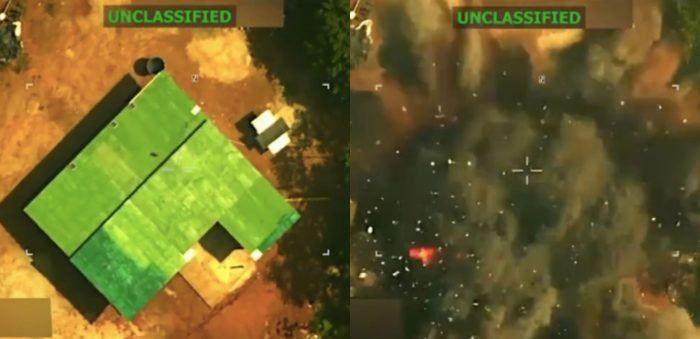
February 2026 removed all ambiguity. During the late hours of 21 February, local sources in Afghanistan reported airstrikes in parts of Nangarhar, Paktika, and Khost provinces. Pakistan launched Operation Ghazab lil Haq, a large-scale campaign involving air and ground strikes against Taliban positions across eastern Afghanistan.
Pakistan declared that the two countries were at “open war,” and explosions were heard in Kabul itself, with Taliban forces deploying anti-aircraft and missile defence systems against Pakistani jets entering Afghan airspace. This was a conventional warfare between two states that share a colonial-era border.
The central engine of this conflict is the TTP, and what makes the situation so analytically suffocating is that no party involved has clean hands on the question. Deaths from TTP-linked violence inside Pakistan surged by 75 percent from 2024 to 3,413, and overall violent incidents rose by 29 percent, according to the Pakistan Institute for Conflict and Security Studies.
Pakistan is facing a tremendous loss of lives, including domestic political and economic pressure on Islamabad to act has been relentless. At the same time, the Afghan Taliban appear unwilling to seriously crack down on the TTP, partly due to prior affinities between the two groups but also out of fear of TTP militants defecting to its main rival, the Islamic State Khorasan Province. Kabul is caught in its own trap. Eliminating the TTP risks empowering a more nihilistic enemy. Tolerating them ensures Pakistani strikes that devastate Afghan civilians.
Suffering Humanity
And it is the civilians who have paid it most. Since the intensification of hostilities, Afghan civilians, including children and women, were killed. Up to 66,000 people were displaced in Afghanistan as a result of the latest fighting. The UN’s Volker Türk described the situation as piling misery on misery, a phrase that carries more analytical weight than most security assessments. Afghanistan already had nearly 22 million people requiring humanitarian assistance, including over 11.6 million children. OHCHR A war did not arrive into a stable country. It arrived into a population already on the edge. That distinction matters enormously if one intends to think seriously about reconstruction.
Urumqi Peace Talks
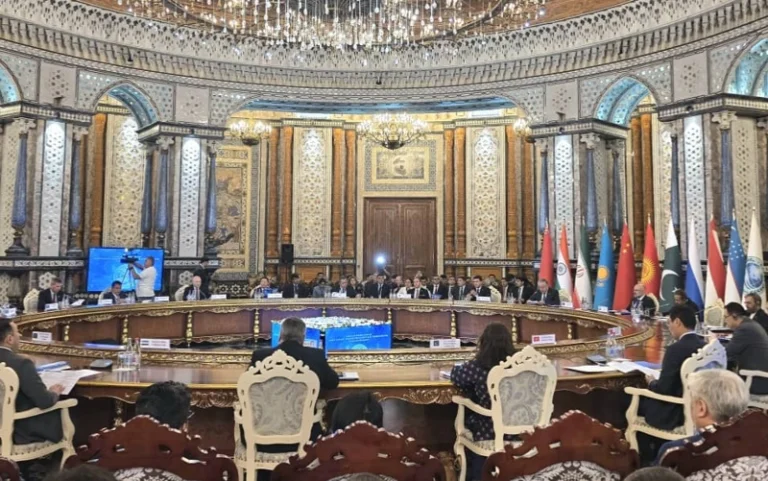
A fragile Eid ceasefire in March temporarily halted the worst of the fighting. Turkey, Qatar, the United Arab Emirates, and Saudi Arabia have made efforts to halt the conflict. China, with its Belt and Road investments threading through both countries, has been perhaps the most consequential mediator, brokering working-level talks in Urumqi between Pakistani and Afghan delegations. China has backed Pakistan’s efforts, aligning itself with the aims of Gulf countries affected by the spread of the conflict in the region.
Why the Afghan Taliban?
What makes this conflict so strategically distinctive is how Afghan Taliban have been unable to stop the rise of terror from their own soil. The Taliban’s fundamental problem is that they are trying to govern a state with a movement’s mindset. They came to power in 2021 as a fighting force with a theology, not as administrators with a foreign policy doctrine, and that gap has never been closed. On the TTP question specifically, the Afghan Taliban find themselves in a position that exposes every contradiction of their governance. The Afghan Taliban appear unwilling to seriously crack down on the TTP, partly due to prior affinities between the two groups, but also out of fear of TTP militants defecting to its main rival, the Islamic State Khorasan Province.
The Taliban shelters the TTP not out of ideological solidarity alone, but because dismantling it risks destabilising their own military ecosystem, a concession no movement that controls a state by force of arms can easily make. Beyond the TTP question, the Taliban have no functioning diplomatic corps, no credible backchannel architecture, and no political leadership that has earned the institutional trust of any major regional power. Afghan Defence Minister Mullah Yaqoob insisted there was no universal or clear definition of terrorism, arguing governments could brand adversaries as terrorists for political ends
Role of Outside Actors
India has been the biggest political winner of the past sixty days. New Delhi reopened its Kabul embassy, condemned the Pakistani strikes during Ramadan, and is consolidating an unspoken alignment with the Taliban built on the simple logic of countering Pakistan. Pakistani official statements now openly accuse the Taliban of turning Afghanistan into an Indian colony.
Russia is positioning carefully. The war has become a challenge for Moscow because both states are partners and both matter for Russia’s Global South narrative. The Foreign Ministry has issued de-escalation statements, and Russian officials have hinted at a willingness to mediate, partly to dilute the conflict.
Iran is the most paradoxical actor. Even while absorbing US and Israeli strikes since 28 February, Tehran has held quiet consultations with both Islamabad and Kabul and views ISKP, as the real strategic threat. Iran fears that prolonged Pakistani strikes will further destabilise Afghanistan and create vacuums that ISKP will fill on Iran’s eastern border, which is already exposed. At the same time it has its own battles to fight at the moment when diplomacy and dialogue are happening to reduce its tension with Washington.
Central Asia is doing something rarely noticed. Countries in the region have signed preliminary agreements for several multibillion-dollar railway corridors through Afghanistan and Pakistan to the Arabian Sea. This is an important step for the Central Asian states to engage as the trade and business corridors are moving along Afghan territory.
The Gulf countries have their own battles to fight at the moment with crises in the Middle East and the Gulf. They have been pressing both sides for halting the war and conflict to move towards dialogue.
The world’s attention is elsewhere. That is precisely when the most consequential decisions get made in the dark, by exhausted officials, under no meaningful international scrutiny.
The Pakistan-Afghanistan war is forgotten because the international system has decided, consciously or otherwise, that some suffering is more legible than others. It is the product of a specific and deeply unfair geometry of global attention, one that allocates coverage and concern according to the strategic interests of powerful states rather than the scale of human suffering. For those of us who study this region, who have watched these fault lines deepen over decades, that choice is to continue highlighting it.
Dr. Farhat Asif
The writer is President, Institute of Peace and Diplomatic Studies. The writer teaches Conflict and Cooperation in South Asia to MPhil Students in IR Department. Riphah International University. The views expressed are her own and do not represent those of the Institutions she represents.