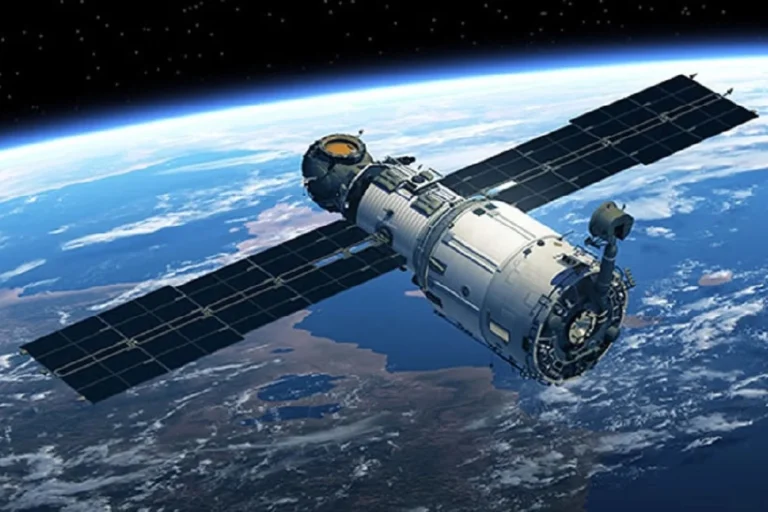
On April 25, 2026, a Long March-6 rocket was launched from the northern Taiyuan Satellite Launch Centre in China carrying Pakistan’s PRSC-EO3, the nation’s third electro-optical remote sensing satellite.
Three days before this launch, China announced the training of two Pakistani Air Force pilots, Muhammad Zeeshan Ali and Khurram Daud, at China’s Tiangong space station, becoming the first international cooperation partner in China’s human space program.
These announcements are not simply scientific achievements. They are geopolitical announcements, and must be viewed through that lens.
Until now, Pakistan’s space adventure has been the tale of deferred hope. The Space and Outer Atmosphere Research Commission (SUPARCO), established by physicist and Nobel Prize winner Abdus Salam eight years before the Indian Space Research Organization (ISRO), languished for decades due to a lack of resources and changes in national priorities. All that has now changed.
Pakistan launched three remote sensing satellites in 2025, including the country’s first hyperspectral imaging satellite, HS-1, which uses hundreds of bands of light to identify crop stress, minerals, and environmental variations.
Read More: Two Pakistani Astronauts Selected to Train for China’s Tiangong Space Mission
This follows the signing of the Astronaut Cooperation Agreement in February 2025 between the SUPARCO and the China Manned Space Agency, which saw two candidates being selected from a pool of astronaut candidates after a series of medical, psychological and aptitude tests. The mission, in late 2026, will mark the first time a foreign astronaut will board China’s space station.
The symbolism is significant. Yet, in the multifaceted strategic landscape of South Asia, marked by nuclear rivalries, unresolved border disputes and the history of wars and persistent conflicts Pakistan-China space cooperation is more than a scientific venture.
In this context, the US-Israeli war on Iran has offered the world a grisly lesson in the role of satellite intelligence in contemporary warfare. The precision revealed in Iranian missile and drone attacks on Israeli cities and US military infrastructure has shocked observers, suggesting the presence of sophisticated targeting capabilities, satellite guidance and live intelligence feeds.
The Iranian military is employing AI-enhanced satellite imagery from Chinese-based MizarVision to increase targeting accuracy of US military facilities in the Middle East, imagery using AI for object recognition and tagging, allowing operators to identify targets, equipment and facilities in minutes, instead of hours.
In response the US and Israel used AI to target more than 1,000 targets in the first 24 hours of their conflict with Iran, a 45 times increase in speed over previous operations.
It is a truism that is as simple as it is universal: in modern conflicts, satellite intelligence is not a force multiplier. It is the basis for all other military power. Without it, precision is impossible. And with it, a “small” nation can pack a big punch.
Read More: SUPARCO Says New Remote Sensing Satellite Gathering Imagery Accurately
In the context of South Asia, in May 2025, India launched Operation Sindoor, a four-day missile and drone attack, counter-air war and naval engagement, the largest military engagement between the two nuclear powers in decades. Less known publicly but well recognized in the defense community is the impact of space assets in this conflict.
India’s attacks relied on satellite-assisted navigation of SCALP-EG and BrahMos missiles, with Indian officials later claiming it was able to use ISRO’s capabilities and commercial imagery to target and assess damage. Pakistan was not to be outdone.
By integrating information from ground, air, and space-based sensors, Pakistan was successful in bringing down a number of Indian aircraft and achieving its kill chain.
The space component of the Pakistan-China dynamic is likely to increase India’s perception of threat beyond the purely military. India has begun investing in space-based intelligence, surveillance and reconnaissance capabilities and is considering a 52-satellite military constellation – aware of the threat from a two-front war with China and Pakistan.
This could be a vicious cycle. As Pakistan’s space surveillance improves, with help from China, India accelerates its constellation. As India’s space-based surveillance grows, Pakistan’s dependence on Chinese ISR grows. Each move, justified by both sides for defensive purposes, fuels the other’s mistrust.
For Pakistan, having experienced a short but intense space-enabled conflict just 12 months ago, this is a pertinent development. India developed an AI-based targeting system during Operation Sindoor, which they claimed had an accuracy of 94 percent, integrating real-time data from drones and radars.
This system integrated real-time data from drones, radars, and satellites with 26 years of historical intelligence data. India’s space advantage is palpable and increasing. Pakistan’s alliance with China is a partial response to this.
*The views presented in this article are the authors’ own and do not necessarily reflect the views of The Diplomatic Insight.

Musavir Hameed
Musavir Hameed is currently serving as Research Officer at Balochistan Think Tank Network, Quetta and can be reached at musavirkhan88@gmail.com