Lord Palmerston, a dominant figure in 19th-century British politics, once articulated a principle that became the unwritten constitution of international relations: “We have no eternal allies, and we have no perpetual enemies. Our interests are eternal and perpetual.”
Today, this maxim manifests with striking clarity in the complex Sudanese landscape, where regional interests shift like desert sands, fluctuating with the winds of power and survival. The current state of Sudan-Egypt relations offers a compelling laboratory for understanding this rigid pragmatic rule.
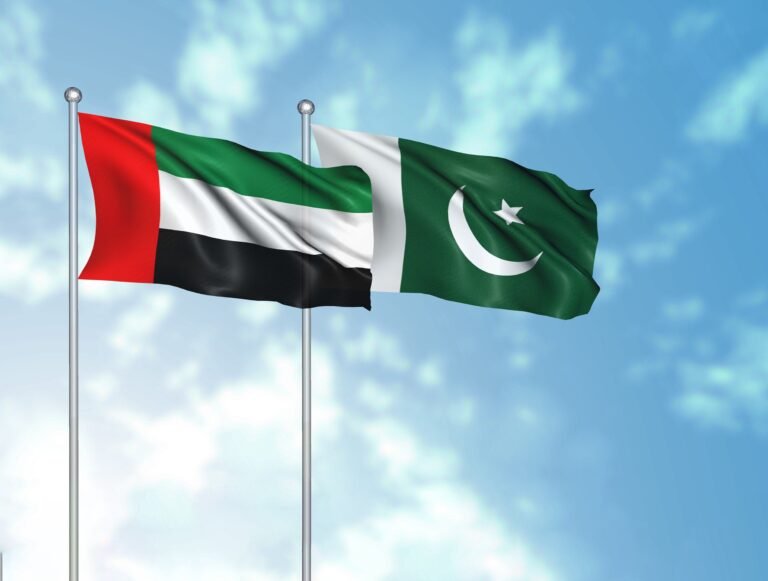
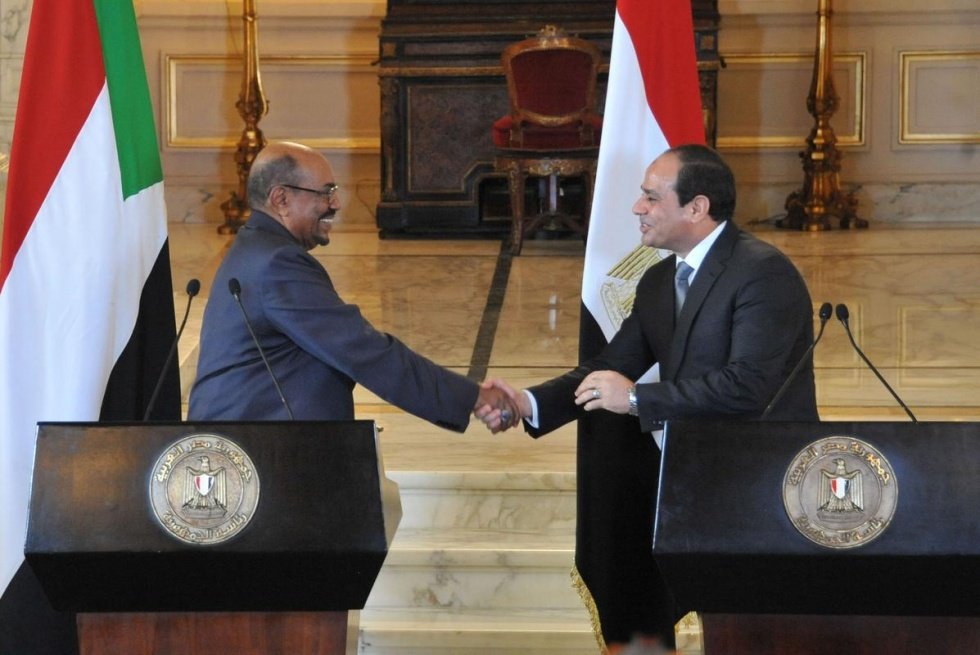
The recent visit of Egyptian President Abdel Fattah el-Sisi to the United Arab Emirates and his meeting with Sheikh Mohammed bin Zayed triggered a wave of sharp criticism among Sudanese circles supportive of the state and the military institution.
Read More: Sudan Conference in Berlin Pledges 1.53 Billion Dollars in Humanitarian Aid
This backlash was not directed at the visit as a diplomatic protocol, but rather at its heated political context. At a time when international reports—including those from UN experts—point to the UAE’s pivotal role in supporting and financing the Rapid Support Forces (RSF), the warm handshakes in Abu Dhabi appeared as a “message of coldness” toward Khartoum’s existential concerns.
The Sudanese public perceives that the UAE has moved beyond political competition to become the primary engine for a militia threatening the state’s very existence. Consequently, seeing a “strategic ally” like Egypt sit with the “alleged financier” places Cairo in a moral predicament.
Is this an Egyptian mediation attempt? Or is it a case of “Realpolitik,” where Egypt’s economic stability—deeply tied to Emirati investments—outweighs all other considerations?
The Economics of Crisis: When Numbers Do the Talking
To understand Cairo’s position, one must look at spreadsheets, not sentiments. The Egyptian state is navigating a grueling economic transition, where massive Emirati investments—most notably the Ras El Hekma deal—have served as a financial lifeline.
This “financial diplomacy” has effectively tied the hands of decision-makers in Cairo. It is nearly impossible for Egypt to take a hardline stance against Abu Dhabi regarding Sudan while relying on it to secure hard currency and domestic stability.
Here, a conflict of interest emerges: Egypt needs Sudan for “security” to protect its southern borders and water rights, but it needs the UAE for “financing” to ensure the continuity of the state itself. This divergence has produced a “gray” Egyptian diplomatic rhetoric that attempts to walk a tightrope—verbally supporting the legitimacy of Sudanese institutions while practically accommodating their rivals to protect vital interests.
The complications extend beyond the Gulf to the Libyan front, where the Egyptian government maintains close ties with General Khalifa Haftar as a safeguard for its western border security. The irony lies in the fact that Haftar himself has been named as a facilitator of supply lines and movements for the RSF across the Libyan border.
This contradiction places Egyptian diplomacy under a microscope of stern Sudanese criticism: How can Cairo support the Sudanese Army and advocate for the country’s unity while simultaneously aligning with actors (the UAE and Haftar) who directly contribute to exhausting that army and undermining that state?
It is a dangerous balancing act in which Egypt tries to protect scattered interests, even if it appears as a strategic contradiction to observers.
The GERD Factor: The Forgotten File in the Fog of War
The Grand Ethiopian Renaissance Dam (GERD) serves as an additional pressure point explaining Egypt’s “caution.” Sudan, historically Egypt’s strategic ally in this existential water file, is currently in a state of political fluidity.
Amid regional pressures, Cairo may fear that any diplomatic clash with influential regional powers could drive those powers to use their influence in Addis Ababa to pressure Egypt on the water issue. This “geopolitical blackmail” makes Egyptian decision-making characterized by hesitation, preferring de-escalation over confrontation.
The Sudanese political mind must grasp a bitter truth: nations are not governed by emotional debts. Criticizing el-Sisi’s visit to the UAE is an expression of national pain, but in the science of “Realpolitik,” it is classified as the natural behavior of a state seeking its own survival.
Egyptian support for Sudan is “limited”; it does not reach the point of a break with financiers. Similarly, relations with the UAE are driven by “necessities” and do not imply full adoption of their expansionist agenda.
Read More: Sudan Conference in Berlin Pledges 1.53 Billion Dollars in Humanitarian Aid
Continuing a policy of “multiple loyalties” may yield immediate economic gains for Egypt, but it sows the seeds of a long-term strategic catastrophe. The collapse of the Sudanese state would immediately transform Egypt’s southern border into a source of constant threat, a flood of millions of displaced persons, and a loss of control over the vital Nile depth.
On the other hand, the Sudanese feel that their “Big Brother” has sided with bank accounts in a time of crisis—a sense of betrayal that may drive any future Sudanese authority to reconsider historical alliances with Cairo.
Regional powers use their financial leverage to influence the positions of major powers and international organizations, putting Egypt on the defensive. If Cairo goes too far in militarily supporting Khartoum, it may face international or economic pressure.
Thus, it adopts a rhetoric of “peaceful solutions” and “sitting at the negotiating table”—a discourse the Sudanese public finds disappointing because it equates a national army with a rebel militia, granting the latter an undeserved international shroud of legitimacy.
Toward a “Peer-to-Peer” Sudanese Vision
The most important lesson from these intersections is that Sudan must redefine its foreign relations based on “parity,” not “anticipation.” If the personal interests of states are the driver, Sudan must create a reality where its stability becomes an international interest that cannot be bypassed.
Criticism directed at Cairo must shift from “brotherly reproach” to the language of “mutual interests.” If Egypt wants to secure its borders and water, it must realize that silence regarding the financiers of chaos is a losing investment that will eventually spark a fire in the heart of Cairo.
Ultimately, history will record that wars test mettle and that diplomacy built on the ruins of neighbors’ national sovereignty is short-sighted. The real bet remains on the ability of the Sudanese alone to impose their will and transcend the ordeal of “frenemies.”
*The views presented in this article are the authors’ own and do not necessarily reflect the views of The Diplomatic Insight.

Abdelazim Allahgabo
Abdelazim Allahgabo is a multimedia journalist, TV correspondent, and editorial columnist. A creative professional with a diverse skill set, he is also an experienced voiceover artist, photographer, and designer. Abdelazim focuses on covering Sudanese affairs, blending his journalistic reporting with a sharp perspective in his editorial writing.