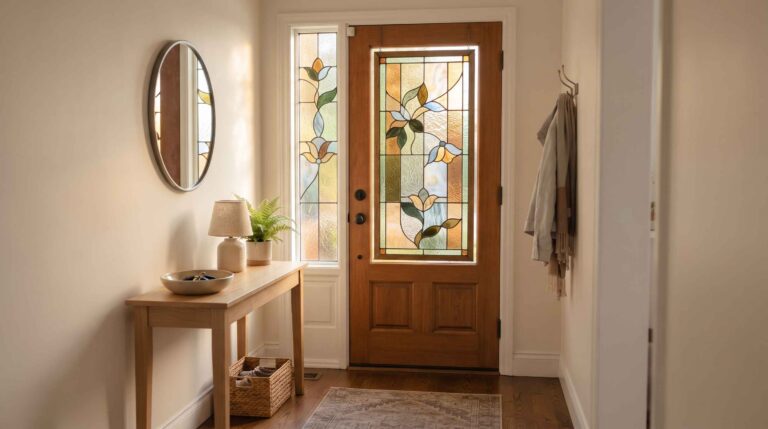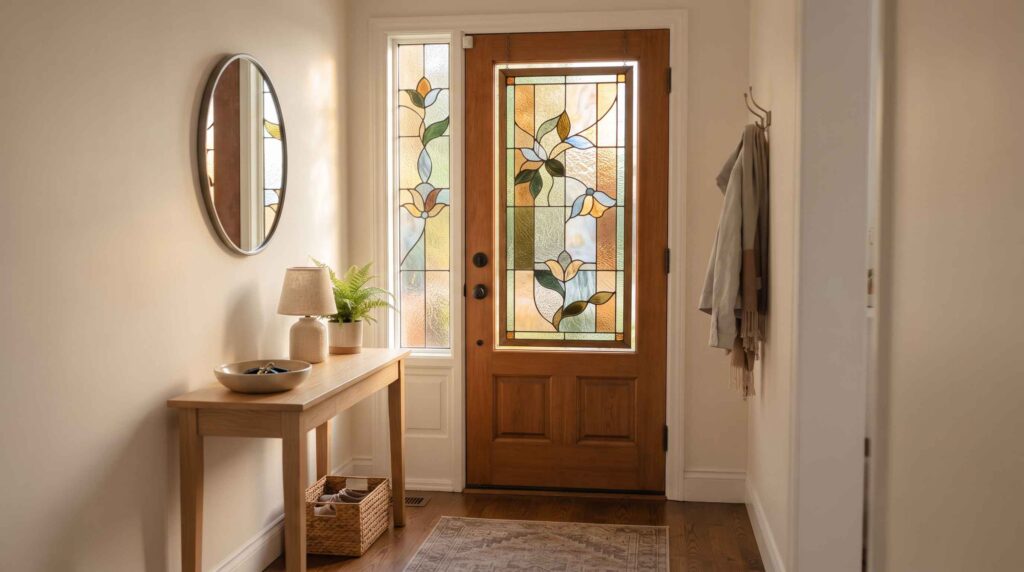
An entryway is often the smallest room in a home, yet it sets the tone for everything that follows. It is the first place people see when they arrive and the last space they pass through before leaving. Adding a handmade detail from Glass Art Stories can help turn this practical transition zone into a more welcoming, expressive part of the interior.
Many entryways have limited space for furniture or wall decor. A narrow hall may only have room for a small table, a mirror, or a simple hook for coats. This is where decorative glass can make a difference. A hanging panel near a door or sidelight adds visual interest without crowding the floor, blocking movement, or requiring a full redesign.
Light is especially important near an entrance. Natural daylight can make a compact hallway feel more open, while warm interior lighting creates comfort in the evening. Colored and textured glass responds to both conditions. During the day, it can soften the view outside and introduce subtle reflections. At night, it can catch the light from a nearby lamp and reveal its texture, lines, and layered colors.
The design does not have to be large to be effective. A small botanical motif can make a front door area feel connected to the garden outside. A bird design may bring a sense of movement and character to an otherwise quiet corner. Geometric glass can work well in modern interiors, especially when the rest of the room uses simple materials such as pale wood, black metal, stone, or white walls.
Privacy is another reason to consider decorative glass near an entrance. Street-facing windows often need some screening, but heavy curtains or blinds can make a hallway feel dark. Glass with textured, frosted, or opalescent sections can soften direct sightlines while still allowing daylight to enter. It creates a gentle boundary between the home and the outside world without making the space feel closed.
Color should support the atmosphere you want to create. Amber, warm red, and golden tones can make an entryway feel inviting, particularly in homes with wooden floors, brass hardware, or earthy textiles. Pale green, blue, and clear textured glass may suit a lighter, calmer interior. For a more dramatic look, deep purple, dark blue, or black accents can create contrast without overwhelming the room.
An entryway also benefits from objects that feel personal rather than purely functional. A handmade glass piece can reflect an interest in nature, craft, color, or a favorite visual theme. It may become the first detail a guest notices or a familiar part of a daily routine, catching the light differently when the weather changes.
The most memorable interiors are not always the largest or most expensive. Often, they are shaped by a few thoughtful details that make everyday spaces feel intentional. Decorative glass gives an entryway that kind of presence: practical enough for daily life, but expressive enough to make coming home feel special.

Established in December 2008, The Diplomatic Insight is Pakistan’s premier diplomacy and foreign affairs magazine, available in both digital and print formats.