Islamabad (TDI): Pakistan and Germany have deepened their longstanding development partnership with a fresh injection of funds, signing a technical cooperation agreement worth €40.5 million ($47 million) to implement nine projects across the climate, energy, and social protection sectors.
The German Development Bank, KfW, will provide financial and technical support for the rollout of these projects across Pakistan, targeting areas where the country faces some of its most urgent and compounding vulnerabilities.
Pakistan has identified climate resilience, clean energy transition, and social protection as key national priorities as it recovers from successive climate shocks, including the devastating 2022 floods that affected over 33 million people and floods last year that killed over 1,000 people and devastated millions of acres of farmland.
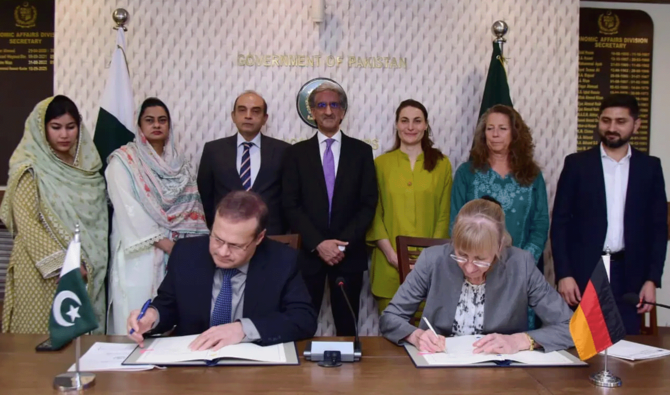
The agreement was signed by Pakistan’s Economic Affairs Secretary Muhammad Humair Karim Kidwai and German Ambassador to Pakistan Ina Lepel at a ceremony in Islamabad.
“Pakistan and Germany have maintained a strong and enduring development partnership since 1961, built on mutual trust and cooperation,” Kidwai said, adding his appreciation for KfW’s continued role in the country’s socio-economic development.
Read More: Pakistan, Germany Expand Climate Partnership with New Data-Driven Initiative
Germany is one of Pakistan’s key development partners, with the current active bilateral portfolio reaching around $638 million.
Ambassador Lepel described the new agreement as a reflection of both nations’ shared resolve to act on global challenges.
She said the deal embodied a joint commitment to addressing climate change, energy transition, and social vulnerability through practical cooperation, and expressed confidence that the projects would deliver tangible benefits to communities nationwide.
The latest deal builds on a pattern of growing German engagement this year. In March, Berlin and Islamabad signed an €18 million ($20 million) agreement focused on expanding hydropower and other renewable energy projects in northern Pakistan, with grant funding aimed at improving living standards through cleaner electricity generation.
For Pakistan, a country ranked among the most climate-vulnerable in the world despite contributing minimally to global emissions, such partnerships represent a critical lifeline.