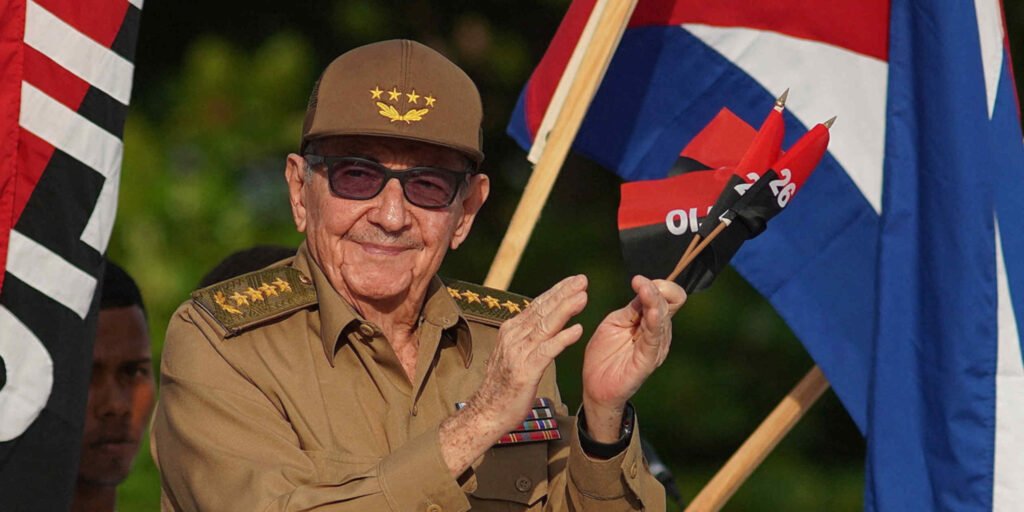
Havana (TDI): Russia and China mounted a swift and forceful defense of Cuba on Thursday after the United States announced murder charges against former Cuban President Raul Castro, with both powers accusing Washington of weaponizing its legal system for geopolitical ends.
The charges against Castro, 94, whose family has governed the island since the 1959 revolution, stem from the 1996 downing of two civilian aircraft flown by anti-Castro pilots.
In addition to murder, Castro faces counts of conspiracy to kill Americans and destruction of aircraft. The indictment marks a dramatic escalation in Washington’s long-running pressure campaign against Havana.
Chinese foreign ministry spokesman Guo Jiakun told reporters that Washington should “stop brandishing the sanctions stick and the judicial stick against Cuba and stop threatening force at every turn.”
Read More: CIA Chief Makes Rare Visit to Cuba Amid Deepening Energy Crisis
The statement framed the charges as an abuse of judicial mechanisms to coerce a sovereign state rather than a legitimate exercise of law.
Kremlin spokesman Dmitry Peskov declared that “under no circumstances should such methods, which border on violence, be used against either former or current heads of state.”
Russian Foreign Ministry spokeswoman Maria Zakharova went further, pledging “the most active support to the fraternal Cuban people” and denouncing what she described as gross interference in the internal affairs of a sovereign state, though she stopped short of specifying what that support would involve.
In Washington, Secretary of State Marco Rubio offered little hope of a diplomatic off-ramp. While acknowledging that negotiation remains the stated preference, Rubio was candid about the odds: “The likelihood of that happening, given who we’re dealing with right now, is not high.”
Read More: Trump Expands Sanctions on Cuba, Targets Key Sectors
He defended the pressure campaign as tied directly to American national security interests. The reaction in Havana was one of outrage.
The Cuban government called the charges “despicable,” insisting the 1996 shootdown was a legitimate act of self-defense against an airspace violation. State newspaper Granma called on citizens to gather outside the US embassy on Friday in protest.
For ordinary Cubans, the indictment lands amid a deepening humanitarian crisis. A four-month US oil blockade has driven the economy to the brink, with residents enduring power outages of up to 20 hours a day and widespread water shortages.
Havana accountant Fabian Fernandez, 30, captured the public mood: “This isn’t really an accusation… but rather a public attack on a public figure.”