Baku (TDI): Senior officials, ministers, mayors, and urban experts from the D-8 group gathered in Baku this week for a landmark high-level dialogue focused on aligning clean energy transitions with urban development.
The “D-8 High-Level Energy and Urban Dialogue” was held on the sidelines of the 13th Session of the World Urban Forum (WUF13), co-organized by UN-Habitat and the Government of Azerbaijan from 17 to 22 May 2026.
The event drew together high-ranking representatives across D-8 Member States to tackle one of the developing world’s most pressing dual challenges: powering rapidly growing cities while keeping development sustainable, resilient, and inclusive.
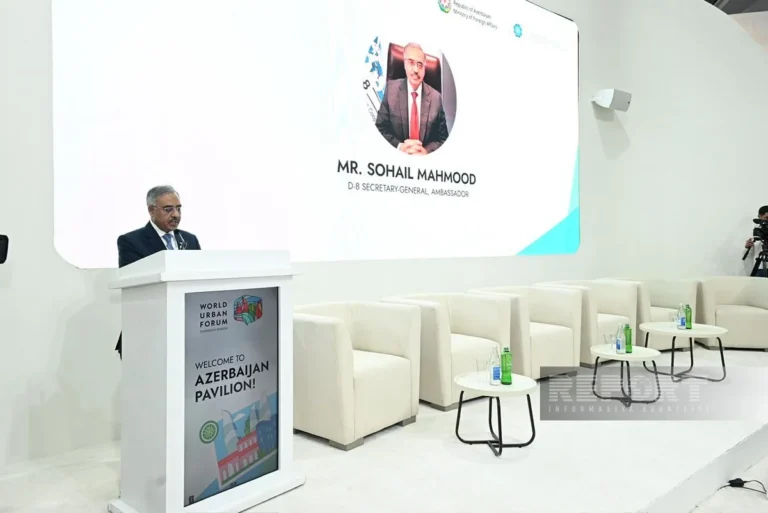
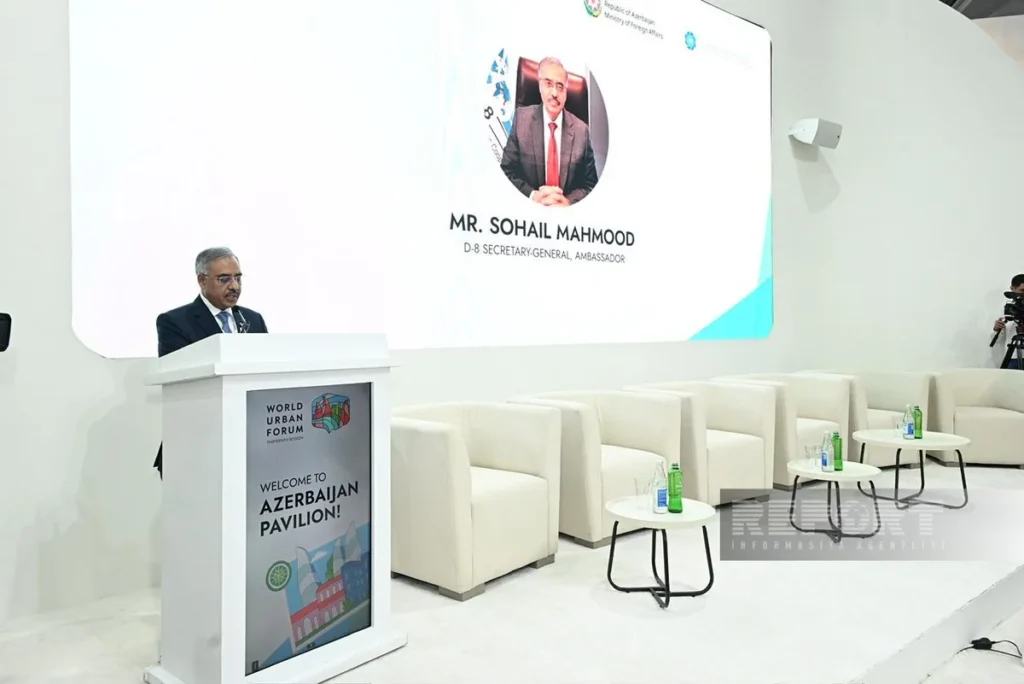
D-8 Secretary General, Ambassador Sohail Mahmood, reflecting on the deliberations, described the dialogue’s thematic focus as “extremely apt and timely,” citing the urgent need for coordinated action across member states on clean energy transformation, resilient urban planning, and affordable housing.
Deeply gratified with substantive deliberations at the “D-8 High-Level Energy and Urban Dialogue,” held on the sidelines of 13th Session of the World Urban Forum (#WUF13) — co-organised by @UNHabitat and the Government of Azerbaijan in Baku from 17-22 May 2026.
The Dialogue’s… pic.twitter.com/qFTa4HcrwH
— The Secretary-General of Developing-8 Organization (@D8SecGen) May 22, 2026
“Our discussions underscored the importance of aligning energy transitions with urban development agendas while strengthening innovation, sustainable growth, South-South cooperation, and international partnerships,” Mahmood noted in a post on X.
The dialogue served as a platform for advancing a shared regional vision, one that places sustainable cities at the heart of the D-8’s collective development agenda.
Participants emphasized that energy access and urban growth must be planned in tandem, particularly as D-8 member states; Bangladesh, Egypt, Indonesia, Iran, Malaysia, Nigeria, Pakistan, and Türkiye, continue to experience rapid urbanization.
A central theme throughout the sessions was South-South cooperation, with delegates exploring how member nations can pool resources, share expertise, and co-develop frameworks that reflect their common development contexts rather than relying solely on solutions designed for wealthier economies.
Read More: D-8 Secretary-General Stresses Diplomacy, Sustainability at Eurasian Summit in Istanbul
Azerbaijani officials played a prominent role in the dialogue’s success. The Secretary General extended particular thanks to Anar Guliyev, Chairman of the State Committee on Urban Planning and Architecture and National Coordinator of WUF13, and Parviz Shahbazov, Minister of Energy, for their leadership in facilitating the discussions.
The event is seen as part of a broader momentum within the D-8 bloc to move beyond declarations and into practical, action-oriented cooperation on climate and urban resilience.
As cities across the Global South face mounting pressure from population growth, energy demand, and climate vulnerability, forums such as this are increasingly viewed as essential architecture for coordinating the region’s response.
The D-8 Organization for Economic Cooperation was established in 1997 and represents a combined population of over one billion people, making its commitment to sustainable urban and energy policy a matter of significant global consequence.