New York (TDI): The United Nations General Assembly has endorsed a landmark International Court of Justice advisory opinion on climate change, with Australia backing the resolution while crediting Pacific island nations for forcing the issue forward.
The resolution, adopted on Wednesday by 141 votes, reinforces that countries carry legal obligations under international law to address climate change and prevent further environmental harm.
The margin of support was a striking signal of how broadly the international community now accepts that climate action is not merely a political choice but a matter of binding legal duty.
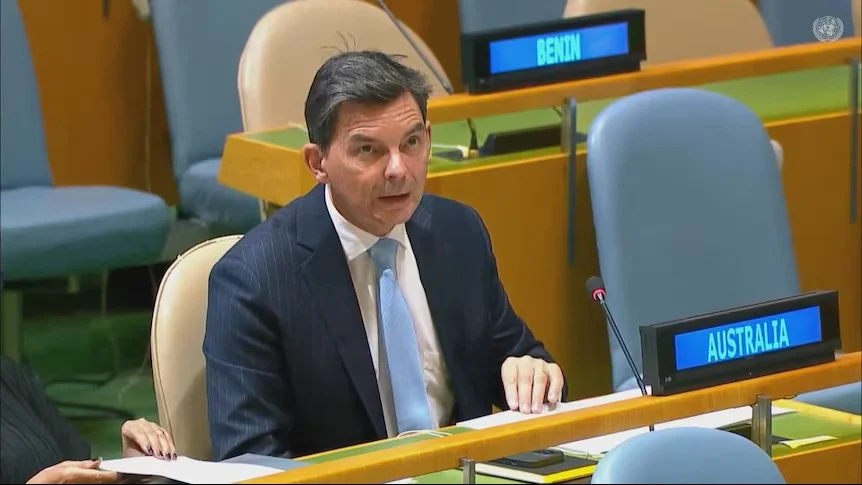
Australia’s Permanent Representative to the United Nations, Ambassador James Larsen, praised Pacific nations for their leadership in bringing the matter before the world’s highest court, singling out Vanuatu in particular.
“Pacific countries have long led the world in calling for stronger climate action,” he said, adding that Australia was proud to stand alongside them in supporting the resolution.
Read More: UN General Assembly Declares Climate Action a Legal Obligation
Larsen acknowledged that while climate change affects every nation, nowhere feels its consequences more acutely than the Pacific, where rising seas and intensifying weather are not distant projections but daily realities.
Australia’s position came with a notable qualifier, however. Larsen was careful to stress that Canberra’s vote in favor of the resolution should not be read as agreement with every element of the ICJ’s advisory opinion, nor as acceptance of how the resolution interprets each of the Court’s conclusions.
It was a diplomatic hedge; enough to signal independent legal judgment while remaining firmly on the right side of the vote.
On the substance, Australia welcomed the opinion as an important contribution to clarifying what states are legally required to do in response to the climate emergency.
Read More: Pacific Nations Invoke Crisis Pact as Fuel Shortages Loom
Larsen noted that the Court had favorably considered Pacific Islands Forum initiatives relating to climate change and sea level rise; an issue he described as one of profound significance for the region.
Looking ahead, Australia said it would continue working with all countries in the lead-up to COP31, where it is set to host global climate negotiations, and pointed to a political declaration expected to be adopted by world leaders in September as a key next step.
Larsen was unambiguous about where responsibility lies: as a developed country, Australia would continue to do its part, and achieving the goals of the Paris Agreement would require sustained ambition.
For small island states that spent years navigating the corridors of The Hague to secure this moment, the vote was a vindication.