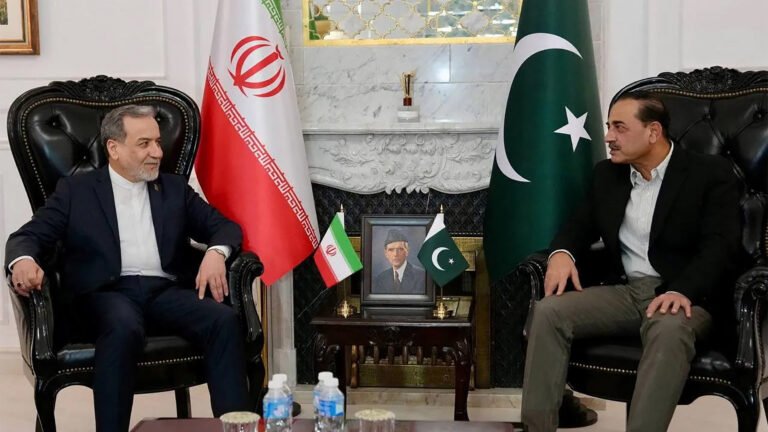
The Middle East is once again moving through a dangerous moment. The rising US-Israel tension with Iran has once again recalled the prolonged conflict memory. As noted, recent efforts in Islamabad to lower tensions have offered only limited relief. The fire, yet, still has not turned into ash, and perhaps, will not be gone.
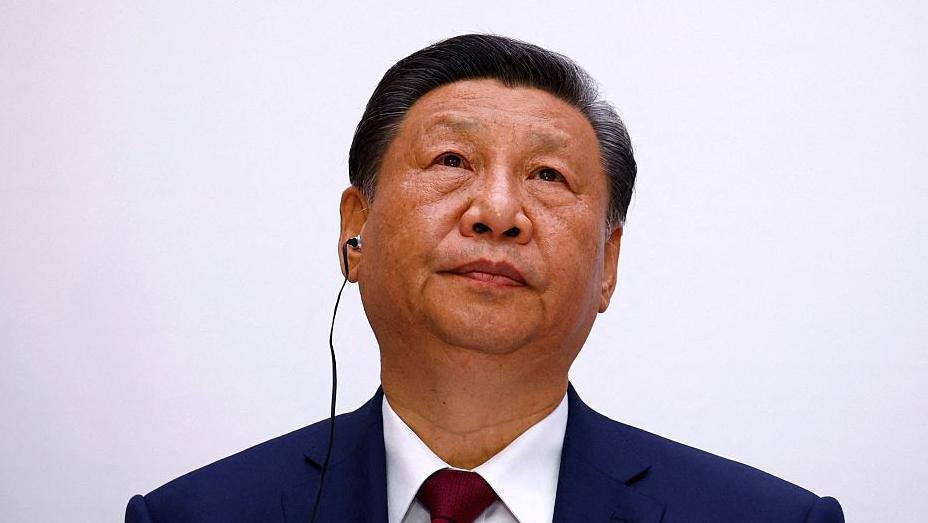
Distrust remains deep, strategic rivalries remain alive, and the wider region is still vulnerable to a new cycle of escalation. In such a setting, attention usually falls on Washington, Tehran, and Tel Aviv. Yet another actor, which perhaps still has not shown any moves, deserves equal scrutiny, China.
For now, Beijing is choosing to remain cautious, low-profile, and selective. It is watching developments closely, protecting its economic interests, and avoiding any direct move into the political or military center of the crisis. This is not accidental. It reflects a broader pattern in China’s Middle East policy. China wants access, influence, and stability. At the same time, it does not want entanglement.
This pattern has been visible for years. Many scholars, such as Deng (2025) and Sun and Zoubir (2015), have argued that China’s engagement with the Middle East, especially with Arab states, has remained much stronger in the economic sphere, calling it the business-first approach, than in the political or security sphere. That judgement still holds. China has built dense ties in trade, infrastructure, energy, and technology.
Its well-known “1+2+3” cooperation framework with Arab countries made that preference clear. In that framework, energy cooperation forms the core, infrastructure and trade serve as the two wings, and high-technology fields make up the third layer. The logic is straightforward. China sees the region first as a strategic economic partner and only second as a site of political influence.
Read More: China, Russia Push for Restraint Amid US-Iran Tensions
The China-Arab States Cooperation Forum shows the same tendency. As Jalal (2014) notes, since its establishment in 2004, it has provided a regular platform for dialogue and coordination. However, its development has remained relatively thin in the political and security domains. The forum has helped China widen diplomatic contact and deepen economic cooperation, yet it has not transformed Beijing into a decisive security actor in the region.
The institutional structure itself tells us something important. China is willing to build a long-term regional presence, but it still prefers to do so through low-risk channels.
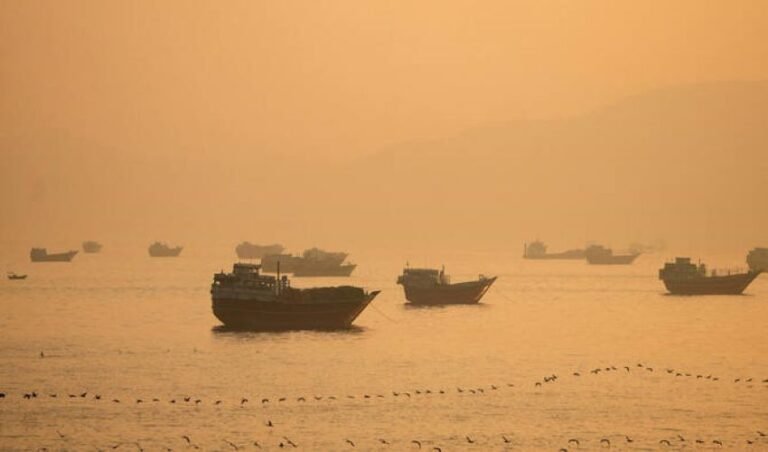
This is why the current crisis raises a serious question. Will this pattern continue, or is China beginning to move beyond economics and into the political-security field? At first glance, there are reasons to think change may be underway. Tensions around the Strait of Hormuz have again highlighted how vulnerable global energy markets remain.
Iran’s reported interest in promoting transactions in Chinese yuan adds another layer to the picture. If oil trade starts moving more openly through currency arrangements that favor China, the economic relationship between Beijing and Tehran could deepen further. That would give China more influence, more leverage, and a greater stake in the future of the regional order.
Yet greater economic alignment does not automatically lead to military or political backing. That distinction matters. It is tempting to assume that stronger energy cooperation between China and Iran will eventually turn into a security partnership. So far, however, the evidence points in another direction. China has repeatedly shown that it prefers commercial reach to strategic exposure. It often moves carefully where conflict risk is high, and it consistently avoids formal commitments that could drag it into open confrontation.
There are several reasons for this restraint. First, China’s main interest in the Middle East is stability, especially energy stability. The region remains central to China’s long-term energy security. Beijing needs uninterrupted access to oil and gas, secure sea lanes, and manageable prices.
From that perspective, direct involvement in regional conflict would create more costs than benefits. A military or openly partisan political role would place China in a much more exposed position. It could damage relations with other regional partners, complicate China’s diplomatic balancing, and threaten the very stability that Beijing wants to preserve.
Next up, China’s diplomatic style remains cautious by design. Over the years, Beijing has preferred to present itself as a supporter of sovereignty, dialogue, and non-interference. Even when it seeks a larger international role, it usually tries to avoid direct confrontation with other great powers. That preference is especially relevant in the Middle East, where any major intervention quickly becomes entangled with the strategic interests of the United States.
China may want a stronger voice in the region, but it does not want to inherit the burdens that Washington has carried there for decades.
Lastly, China has other priorities that rank higher. Above all, Taiwan remains Beijing’s first-order strategic concern. Chinese leaders are unlikely to commit major political or military capital to the Middle East while their primary focus remains in East Asia. From Beijing’s perspective, becoming deeply involved in Middle Eastern tensions would absorb resources and attention without producing a clear strategic return. In that sense, activism in the region would not only be risky. It would also be distracting.
This is where the current moment becomes especially revealing. China is not absent from the Middle East. It is present through trade, investment, infrastructure projects, diplomatic forums, and energy ties. It is also increasingly relevant to states that seek alternatives to the United States-led financial and political order. Iran’s interest in closer financial cooperation with China reflects that reality.
Read More: Strait of Hormuz Crisis Puts Iran–China Partnership in Focus
Even so, relevance should not be confused with readiness. China’s growing weight in the region does not mean that it is prepared to underwrite a new regional security architecture, let alone align itself militarily with Iran.
A look at China’s past responses strengthens this point. During the Arab Spring, Singh (2016) notes that Beijing reacted carefully and often passively. It defended principles of sovereignty and non-interference, yet it did not attempt to lead regional outcomes. That same instinct remains visible today. China may issue statements, call for restraint, and quietly expand its economic opportunities, but it still stops short of strategic commitment.
The pattern is consistent. Beijing prefers to benefit from regional openings without being pulled into the center of regional crises.
For this reason, China’s current role is best understood as a wait-and-see approach with calculated ambition. It is waiting because the costs of direct involvement remain high. It is also calculating because every crisis can create openings for influence, especially when other powers appear overextended or politically constrained.
Beijing is, therefore, likely to continue doing what it has done so far: deepening economic ties, protecting access to energy, keeping diplomatic options open, and avoiding a military role.
However, an important thing to note is that this does not make China unimportant. On the contrary, China’s presence will remain one of the key considerations in Middle East affairs. Still, the present crisis suggests continuity rather than transformation.
Hence, the key arguing point here is that China is unlikely to turn economic closeness with Iran into open political or military support. For now, it will keep watching from the shadows, seeking advantage where it can, while leaving the harder burdens of conflict to others.
*The views presented in this article are the authors’ own and do not necessarily reflect the views of The Diplomatic Insight.

Bintang Corvi Diphda
Bintang Corvi Diphda is Research and Development Substance Officer in the United Nations Association In Indoneisa, and a researcher in the field of international political economy. His work is primarily focused on the economic dynamics of the ASEAN region, analyzing issues such as regional trade integration, foreign direct investment flows, and the geopolitical factors shaping Southeast Asia's economic landscape.