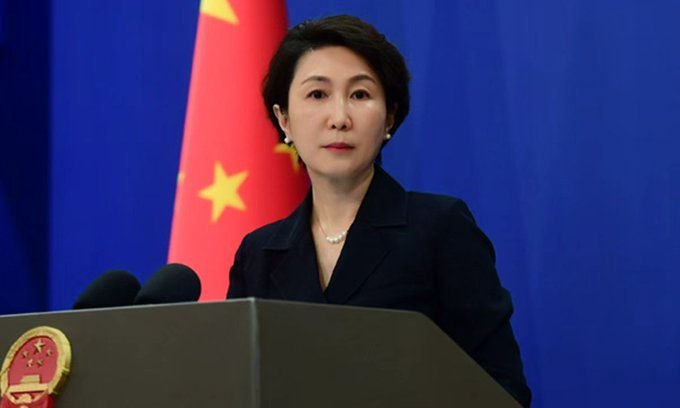
Beijing (TDI): Chinese Foreign Ministry spokesperson, Mao Ning, said that mid-level delegations from Pakistan and Afghanistan held exploratory talks in Urumqi on Wednesday, with discussions continuing into a second day under China’s mediation.
The meetings mark the first major diplomatic engagement between Islamabad and Kabul since Pakistan launched Operation Ghazab lil-Haq on 26 February 2026.
Both sides sent officials from respective foreign and defense ministries. Afghanistan’s six-member team comprised Muhibullah Waseeq and Abdul Hai Qanet from foreign affairs, Ruhullah Umer from defense, Yahya Takal from intelligence, and Arifullah from interior.
The talks centered on achieving a durable ceasefire, establishing a verifiable mechanism to address cross-border terrorism concerns, and reopening border crossings to resume trade and travel. No breakthrough has been announced yet, and the discussions remain at the working level.
Read More: Pakistan, Afghanistan, China, and the Realignment of Asia
Islamabad accuses the Afghan Taliban of harboring militants who launch attacks inside Pakistan, while Kabul denies the charge and calls the militancy Pakistan’s internal issue.
Both countries, however, acknowledged the talks in China and expressed openness. Pakistan’s Foreign Ministry spokesperson Tahir Andrabi confirmed the delegation’s presence in Urumqi.
He said that Pakistan supports a credible process to find a durable solution to cross-border terrorism from Afghanistan and seeks concrete, verifiable steps against terrorist groups.
Afghanistan’s Foreign Ministry spokesperson Abdul Qahar Balkhi said the mid-level delegation traveled to Urumqi following a request from China. He noted that diplomatic engagement based on mutual respect and non-interference can yield practical and lasting solutions.
د چین ولسي جمهوریت په نوښت د افغانستان اسلامي امارت د منځنۍ کچې پلاوی د چین ولسي جمهوریت ته رسېدلی دی، څو له پاکستاني لوري سره د خپل اصولي موقف له مخې رسمي خبرې اترې ترسره کړي.
ټاکل شوې ده چې دغه خبرې د ارومچي په ښار کې د چین حکومت په منځګړتوب پیل شي. دا بهیر د چین په غوښتنه pic.twitter.com/tBw3cI1JWv
— Abdul Qahar Balkhi (@QaharBalkhi) April 2, 2026
Mao Ning described the talks as a positive development. She said both Pakistan and Afghanistan welcome China’s mediation and are willing to continue discussions. China has facilitated the process through high-level telephone calls, a special envoy visit in March, and by providing the Urumqi platform.
“China has made mediation efforts in its own way, maintained close communication with both sides via multiple channels and at multiple levels, and created conditions and provided platforms for dialogue between the two sides,” she said.
No permanent ceasefire is in place between Pakistan and Afghanistan, as of now. A temporary pause occurred around Eid al-Fitr in March.

Muhammad Usman Hashmi is a researcher in International Relations, focusing on climate diplomacy, global governance, and political economy in the Global South. He has contributed to policy dialogues with the Foreign Policy Community of Indonesia and serves as a Senior Research Fellow at the International Council on Human Rights, Peace and Politics. He is also associated with Rethinking Economics Islamabad, contributing to research on development and sustainability.