“Mr. Lu Xun, could you recommend one of your classic works?”
“If I were to suggest one, perhaps Call to Arms would be a good place to start…”
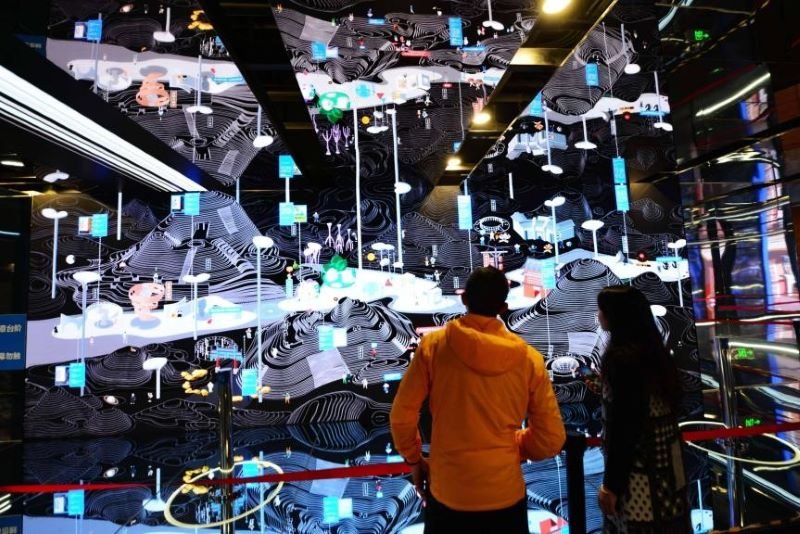
This exchange is not happening in a traditional reading room, it takes place at the Metaverse Experience Hall of the Beijing Library. Leveraging artificial intelligence (AI) and other cutting-edge technologies, the hall offers visitors a new, immersive way to engage with literature and interact socially around knowledge, according to People’s Daily.
As part of the Capital Library of China, the Beijing Library has introduced an AI-powered digital human modeled on Lu Xun, one of China’s most celebrated writers and a key figure in establishing the library’s predecessor. Today, his digital avatar represents the library’s push toward digital transformation.
“We developed the digital Lu Xun using AI to provide guided tours, recommend books, and even introduce local cuisine and cultural sites,” said Fei Jun, professor at the Central Academy of Fine Arts’ School of Design and creative director of the Metaverse Experience Hall. Fei and his team studied Lu Xun’s life and works in depth to craft a realistic, multidimensional digital persona.
Alongside Lu Xun, the team created two other digital characters, “Tutu” and “2122,” each with distinct personalities, one childlike, the other futuristic. Powered by large language models, these avatars converse with visitors about literature and everyday life. Since opening in late 2023, the AI characters have participated in more than 1.7 million voice interactions.
Read More: China Turns Ice and Snow into Gold with Booming Winter Tourism
Seven-year-old Wang Jiayi eagerly asked “2122” questions such as, “Why did dinosaurs go extinct?” and “Why do maple leaves turn red in autumn?” Her mother remarked, “The digital humans are engaging and informative. They really spark children’s curiosity and interest in learning.”
Entering the library is like stepping into a digital universe. Visitors can scan a QR code to verify their identity, customize their appearance, and instantly generate avatars in the Metaverse. These avatars can explore virtual spaces including the Children’s Library, Ancient Books Collection, Art Literature Library, and Intangible Cultural Heritage Library, while accessing information about events and exhibitions.
Digital avatars also allow visitors to connect with one another, sharing reading lists, exchanging reviews, and seamlessly blending online and offline reading experiences.
Read More: World’s Largest High-Altitude Wind Energy Kite Takes Off in Northern China
Looking ahead, the library plans to expand its immersive offerings with features such as personalized virtual study rooms. “Our goal is to deliver a multisensory experience, visual, auditory, and even tactile, so users feel as if they’ve entered a parallel world for reading,” Fei said. The team is also developing an online version of the Metaverse library, allowing users to explore its digital environment and extensive knowledge resources remotely.

“Beyond traditional print books, we want to create a technology-enhanced space that sparks curiosity and encourages readers to explore knowledge in innovative ways,” added Li Nianzu, deputy director of the Capital Library of China.

Established in December 2008, The Diplomatic Insight is Pakistan’s premier diplomacy and foreign affairs magazine, available in both digital and print formats.