On 31st August 2026, the Permanent Court of Arbitration (PCA) at The Hague delivered a unanimous Award that reaffirms a basic principle of international relations that treaties cannot be set aside by unilateral action.
The Court confirmed that the Indus Waters Treaty (IWT) remains in force and that India’s attempt to place the Treaty in “abeyance” does not acquit it from its obligations. It also affirmed that the Treaty’s dispute-settlement mechanisms continue to apply.
For Pakistan, which has consistently maintained that disputes over the Indus waters must be addressed within the framework of the Treaty and international law, the Award is an important legal and diplomatic vindication. This position is rooted in Islamabad’s longstanding approach and its conduct under the Indus Waters Treaty (IWT).
Since its signing in 1960, Pakistan has maintained that the Indus river system should be governed by agreed rules rather than political or military power. This approach became particularly important when New Delhi announced its decision to place the Treaty in “abeyance.”
Read More: India’s Unilateral Assault on the Indus Waters Treaty and Pakistan’s Fight for Survival
Pakistan responded by relying on the Treaty’s in-built dispute-settlement mechanism rather than abandoning the legal framework. This response reflects a broader position that disputes over shared waters should be managed through legally binding rules and established institutions even when relations between states are strained.
The importance Pakistan attaches to the Award is also evident in the Foreign Office’s response on 2nd September 2026. Islamabad has welcomed the Court’s unanimous findings particularly the confirmation that the IWT remains fully in force & binding and that New Delhi’s decision to place it in “abeyance” does not relieve it of its obligations under the Treaty.
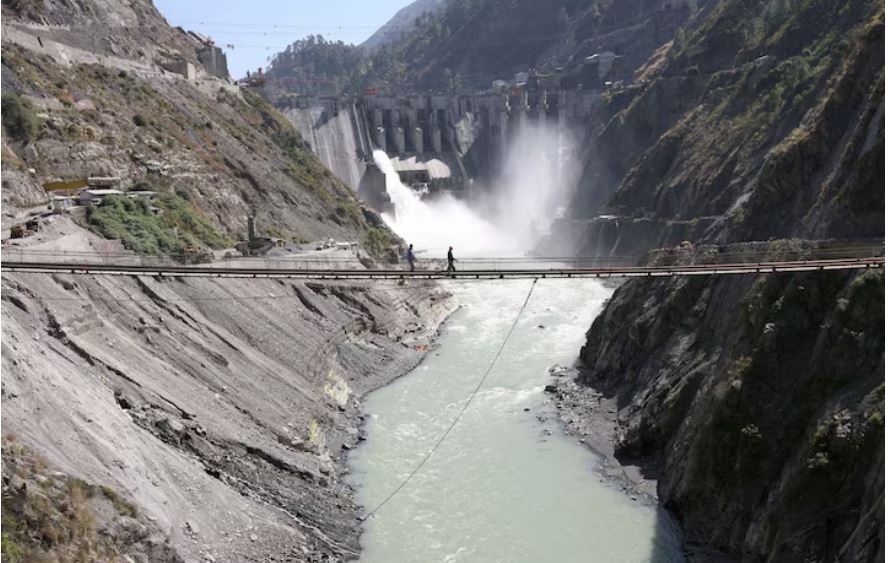
The Foreign Office also highlighted the Court’s interim measures concerning the Ratle Hydroelectric Plant which affirmed that rights and obligations under the Treaty cannot be altered or displaced through unilateral actions. These findings are significant for Pakistan because they reinforce the position it has consistently maintained that differences over the Indus waters must be addressed within the framework of the Treaty and in accordance with international law.
Therefore, the Award needs to be understood in the context of Pakistan’s broader legal and diplomatic approach to the Indus waters dispute. Pakistan’s response to India’s decision to place the Treaty in “abeyance” was not limited to diplomatic statements.
Islamabad activated several legal and diplomatic channels to defend the Treaty and its rights under the terms of the Treaty. It first engaged the World Bank (WB) which has a role under the Treaty in facilitating certain dispute-settlement processes. Pakistan also intensified its bilateral and multilateral diplomatic engagement.
Pakistan’s Foreign Office briefed the diplomatic missions and shared its legal position with international partners. At the same time, Pakistan relied on the dispute-settlement mechanisms provided by the Treaty itself. This was particularly significant because India had sought to place the Treaty including its institutional framework in “abeyance.”
This approach is consistent with Pakistan’s earlier conduct in disputes over the Indus waters. Its engagement with international legal and arbitral institutions over projects such as Kishenganga and Ratle reflects a preference for resolving such disputes through established legal mechanisms.
Rather than responding through coercive measures, Islamabad has specifically relied on the judicial and arbitral processes. The recent Award is part of a longer pattern in Pakistan’s engagement with the IWT.
It shows that Islamabad has treated international law and dispute-settlement institutions as central instruments for managing disputes over shared waters.
However, this reliance and arbitral institutions raise a more difficult question: what happens when one party to a treaty rejects the outcome of the very process it has agreed to? India’s response to the PCA’s Award brings this question to the forefront.
The Indian Ministry of External Affairs (MEA) has dismissed the court as “illegally constituted” and maintained that the IWT remains in “abeyance”. If this position is sustained, it raises serious concerns about compliance with international legal processes and the stability of the Treaty itself.
The issue is not simply a disagreement between India and Pakistan over the interpretation of the IWT. It concerns the broader principle that states are expected to respect the legal procedures to which they have committed themselves.
The arbitral process concerning the Treaty was established through the framework of the IWT and the WB’s role under that framework. Rejecting the process after an unfavorable outcome raises questions about the credibility of treaty-based dispute settlement.
International law depends not only on the existence of rules but also on the willingness of states to accept and comply with their agreed commitments for preserving peace.
The Indian position also has wider implications for the future of the IWT. If one party can unilaterally declare a treaty to be in “abeyance” while the other continues to regard it as “binding” the dispute moves beyond a disagreement over water management.
It becomes a question of whether a long-standing treaty can continue to provide predictable outcomes when political relations deteriorate. This is particularly important for the Indus basin where in the Treaty provided a framework for managing shared waters for more than six decades.
The sustainability of this framework depends on both parties’ conduct and compliance with obligations and dispute-settlement mechanisms. The situation is further complicated by developments surrounding the Ratle Hydroelectric Plant. Pakistan has raised concerns over India’s construction activities despite the PCA’s interim measures concerning the project.
If such measures are not respected the problem extends beyond the immediate dispute. It raises a broader question about good-faith compliance with international obligations. A treaty-based system can function only when states not only invoke legal rules when they serve their interests but also accept the constraints those rules impose.
This distinction between sovereignty and unilateralism is important. Sovereignty gives states the authority to protect interests but it does not automatically permit them to disregard treaty obligations or agreed dispute-settlement procedures.
The Vienna Convention on the Law of Treaties reflects this principle by emphasizing the binding nature of treaties and the obligation to perform them in good faith. The central issue is not whether India has legitimate concerns about the IWT or its interpretation.
States can disagree over treaties. The more fundamental question is whether such disagreements will be addressed through the legal framework that the parties have already accepted or the proverbial “might is right” will ensue.
The question of compliance cannot be separated from the wider significance of the IWT. The dispute is not only about treaty obligations or the authority of an arbitral institution. It also concerns regional peace, economic stability, and human security.
Pakistan’s agriculture, particularly in Punjab and Sindh depends heavily on the Indus river system. Any disruption in the flow of water could have direct consequences for farmers, food production, and millions of people who depend on the river system. Water security remains an important tenet of Pakistan’s national security concerns.
The strategic importance of the Treaty is even greater given the broader deterioration in India-Pakistan relations. Ceasefire tensions, trade restrictions, and the suspension of bilateral dialogue have already weakened several channels of engagement.
Under such an environment, the IWT remains one of the few institutional frameworks that has continued to provide a mechanism for managing differences between the two countries. Its erosion would have consequences beyond the management of shared waters.
Read More: India Begins Hydro Projects After Suspending Indus Waters Treaty
It would further weaken the limited institutional foundations of bilateral relations and raise concerns about the ability of the two states to manage disputes through agreed rules.
The PCA’s Award has strengthened Pakistan’s legal and diplomatic position. However, its real significance depends on whether the findings are respected by all sides. Pakistan should continue to pursue the matter through international legal and diplomatic channels.
Moreover, the international community must encourage both India and Pakistan to uphold their treaty obligations. The sanctity of treaties is a foundation of peaceful relations between nations. Transboundary rivers should serve as instruments of cooperation and not as sources of conflict or tools of political pressure.
The international community must oppose the weaponization of water and support the continued functioning of the IWT. The future of the Treaty is ultimately not only a question for India and Pakistan. It is also a test of whether international law can provide stability when relations between states are under strain.
*The views presented in this article are the author’s own and do not necessarily reflect the views of The Diplomatic Insight.*
Muhammad Abubaker
Muhammad Abubaker is currently working as Research Associate at Strategic Vision Institute (SVI), Islamabad.
- Muhammad Abubaker
- Muhammad Abubaker
- Muhammad Abubaker