The United Nations General Assembly has designated December 4 as the International Day against Unilateral Coercive Measures. This day aims to raise awareness about the impact these measures impose on states. Unilateral measures are basically taken by one state to compel a change in the policy of another state. These are not mutual disagreements, but one-sided impositions with the intent to strain the state economy. However, the consequences rarely stay confined to trade and inevitably extend to damaging the infrastructure and the social fabric that holds the state together.
These measures come in different forms. They can be targeted, aimed at a specific industry or government officials. They can also be non-targeted, imposing border restrictions on an entire state. Economic measures include blocking trade, freezing assets and restricting investments. Non-economic measures involve diplomatic isolation. In the era of globalization, states are interconnected and interdependent. These actions have implications on a wider international scale, disrupting a state’s economy as well as affecting trade partners and diplomatic ties.
To assess the long-term effect of unilateral economic sanctions, this blog will focus on the trade embargo on Cuba. Instituted in February 1962 by President John F. Kennedy, the embargo was a response to Fidel Castro’s shift toward communism, the nationalization of American-owned properties and the perceived threat from Soviet missile installations just 90 miles away from Florida. The goal was to put enough economic pressure to force a political reversal.
Despite the end of the Cold War and geopolitical changes, the embargo has persisted for over six decades, as the objective to end communist rule in Cuba has not been achieved. The embargo has shaped modern Cuba not through political change but through persistent economic and social constraint.
The Evolution of US Sanctions on Cuba
United States policy towards Cuba has undergone significant shifts over the decades. Initially imposed in the early 1960s, the comprehensive embargo represented a core strategy of economic isolation. A historic pivot occurred under the Obama administration, which moved towards normalization by restoring diplomatic ties by easing restrictions on travel, trade and financial services.
This trajectory was sharply reversed under the Trump administration, which reintroduced and tightened sanctions, particularly on travel and transactions with military-linked entities. After that, Biden’s administration reflected a hybrid and evolving stance, while moving forward with Cuba’s restricted list, the administration still eased travel and remittance restrictions and initiated limited engagement through law enforcement and migration talks.
Read More: UN Human Rights Official Urges US to Lift Sanctions on Cuba
However, in 2025, the Trump administration reversed the measures that Biden’s administration had eased. The policy enforces stricter bans on American tourists visiting Cuba, imposes audits and prohibits U.S citizens from engaging in business with Grupo de Administración Empresarial S.A., a key source of hard currency for the island. The move builds on Trump’s reinstatement of Cuba as a state sponsored terrorism, signaling a continuation of the sanctions despite international calls for easing restrictions.
The Economic Toll of the Embargo
The Cuban economy is navigating a profound crisis defined by deep structural imbalances. These include burdensome external debt of around $29.8 billion. The shortage of raw materials leaves approximately 30-50% of persistent failure in meeting domestic demands and the productive capacity of the nation is further undermined by a severe demographic challenge as 3% of its population decreased in 2024, driven by emigration and low birth rate. Cuba has declined for eight consecutive years, erasing a decade of pre-2017 gains, with GDP falling by 1.1% in 2024 and key targets for exports in 2025 remain unmet.
The sugar industry, which was once a primary contributor to Cuba’s GDP, now produces only a fraction of its historical output, falling to just 126,000 tons in 2025. This decline is driven by a lack of technological advancement and a shortage of supplies. Similarly, tourism is in steep decline; the first half of 2025 saw a 29.7% decrease compared to previous years. This downturn has been worsened by restrictions on air routes and regional instability.
The Human Cost of Isolation
The embargo has directly caused a shortage of essential goods, chronic power outages and critical difficulties in accessing vital medical services and medication. The scarcity extends to preserving food and to running pharmacies, crippling public health.
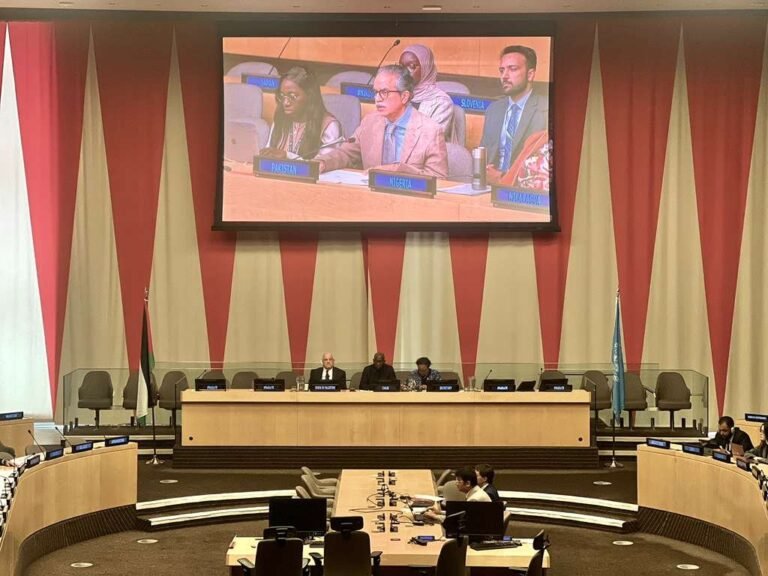
At the 80th session of the United Nations General Assembly, the spokesperson on behalf of Barbados pointed out that the estimated $7.5 billion in losses in material suffered in a single year and $20 million daily, noting that such resources could have been invested in the health, education and economic welfare of the population. The October 2025 vote in the United Nations General Assembly revealed overwhelming international support for ending the embargo, a call the United States has disregarded.
More recently, UN Special Rapporteur Alena Douhan emphasized that the lack of opportunities in Cuba is due to poor infrastructure and as a result, the rate of emigration of skilled workers is rising. Douha mentioned that Foreign investors remain hesitant to commit to long-term projects due to the persistent uncertainty created by the U.S embargo. Even when Washington issues limited licenses or exemptions for specific activities, the overarching regulatory framework is subject to abrupt change with each shift in administration.
Read More: Havana Hosts 6th Round of Pakistan-Cuba Bilateral Consultations
Furthermore, the embargo weakens Cuba’s resilience against natural disasters as the sanctions hinder the country’s ability to import essential fuel, machinery and materials for effective disaster preparedness and recovery. This systemic deprivation demonstrates that unilateral coercive action affects ordinary people, inflicting severe harm on their health, safety and well-being, stripping them of their basic human rights. The humanitarian impact is not a side effect but a direct consequence, pushing the people toward the political stance of its government and violating the principles of international law and human rights.
December 4th, the International Day Against Unilateral Coercive Measures, serves to spotlight the severe burdens these actions impose on targeted states. The prolonged case of Cuba illustrates a fundamental contradiction: such measures consistently fail to achieve their declared political objectives while inflicting profound and lasting humanitarian damage.
This persistent disregard for both international law and human rights highlights the urgent need to shift from a policy of isolation to one of constructive cooperation. Ultimately, ensuring that humanitarian concerns guide global action is not just a moral imperative but a practical necessity for a stable and just international order.