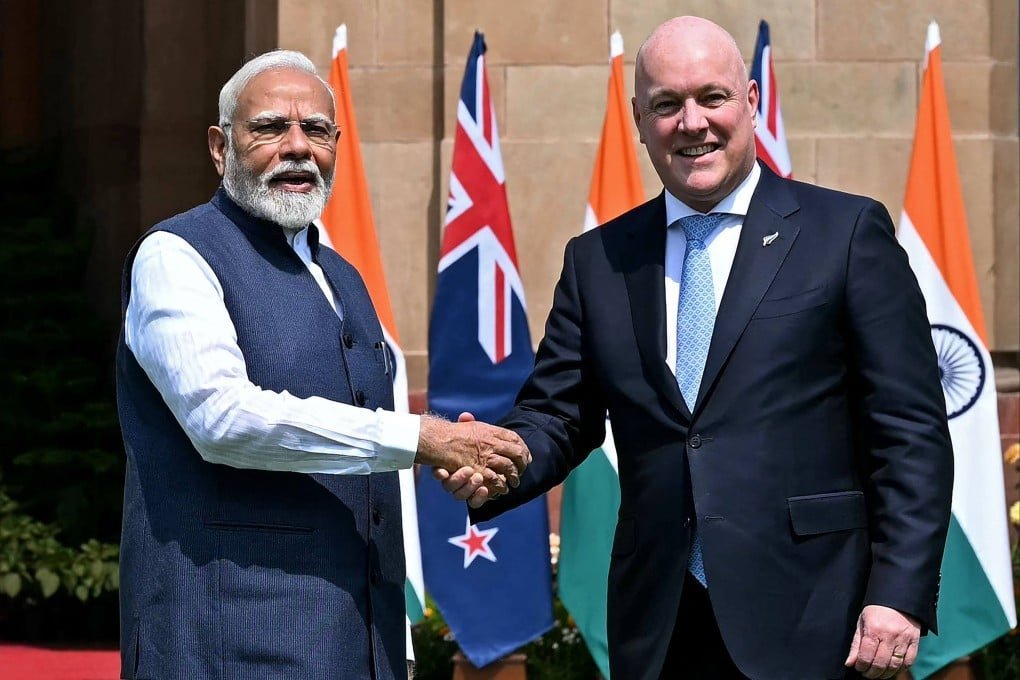
New Delhi (TDI): India and New Zealand have officially reached a free trade agreement that is set to significantly increase the flow of commerce between both nations.
Announced on Monday, the deal is scheduled for a formal signing in early 2026. This partnership comes at a critical time as many countries look to diversify their trade connections to protect themselves from global economic uncertainty, particularly following the widespread tariffs introduced by United States President Donald Trump.
This strategic move allows both New Delhi and Wellington to reduce their dependence on traditional markets and shield their economies from rising protectionism.
The terms of the agreement are: India will enjoy duty-free access for all its goods exported to New Zealand, which is expected to provide a major boost to several of its key industries. Specifically, Indian sectors like textiles, engineering products, leather, footwear and marine products are poised to see the most growth.
On the other hand, New Zealand will receive duty reductions and improved market access for about 70 percent of India’s tariff categories. This covers approximately 95 percent of New Zealand’s current exports to India, which will be implemented gradually over time.
New Zealand aims to increase its exports of wool, fruit and wine, with significant progress expected in the areas of wood products and horticulture.
Beyond goods, the agreement includes a substantial financial commitment, with New Zealand pledging to invest $20 billion into India over the next 15 years. Additionally, the deal will make it easier for skilled Indian professionals to find work in New Zealand, addressing labor needs and professional mobility.
Prime Minister Christopher Luxon highlighted that this pact could increase New Zealand’s annual exports to India by over $1.1bn to $1.3bn annually in the coming decades, ultimately creating more jobs and better wages for New Zealanders.
Despite the optimism, the deal has faced some pushback. The New Zealand First party has criticized the agreement, arguing that it makes too many concessions regarding immigration.
As India continues to balance its relationships with both Eastern and Western powers, this deal marks a significant step in its broader strategy to expand its global export footprint. The final signing will take place once a legal review of the document is completed.

Tayyaba Arif is a student of International Relations, and takes keen interest in conflict reporting and the dynamics of regional and global affairs. She is especially committed to SDG 17, and believes in effective partnerships and promoting cooperative initiatives. She can be reached at tayyabarrif0@gmail.com