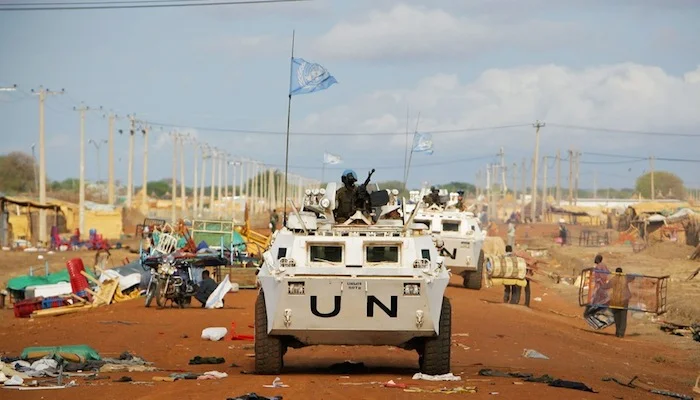
Humanitarian intervention has always been one of the most contentious subjects in international politics. It lies in between morality and power, law and violence, compassion and strategy. At its heart is a fundamental question: when and how should the global community respond to the extensive human suffering beyond a state’s capacity or will to protect its own population?
For decades, international organizations have been the central institutions for addressing this question, either by coordinating relief efforts, legitimizing action, or facilitating cooperation between states and non-state actors. Their role is both profound and paradoxical, given that they are part and parcel of the humanitarian response matrix yet simultaneously constrained by the political dynamics that govern the world.
The modern system of humanitarian intervention did not come into existence overnight; it developed over decades of crises, state failure, and ideological revolutions within the world political system. As scholars point out, the rise of the modern humanitarian aid system developed in the second half of the twentieth century, as formal humanitarian principles, such as neutrality, impartiality, and independence, became accepted, as did the expanded network of international agencies and non-governmental organizations (NGOs).
These principles were not abstract moral positions, but operational imperatives, which were intended to give humanitarian actors access to conflict zones and to offer protection to civilians without becoming participants in the violence. Over time, this “humanitarian system” has evolved into a vast array of relief efforts, donors, and networks that support tens of millions of people around the world.
Among those actors, the United Nations is special for its centrality in coordinating and legitimizing humanitarian action. The Office for the Coordination of Humanitarian Affairs (OCHA) was created precisely with this in mind, with a mandate to ensure that humanitarian responses are coherent and effective, and are broadly recognized by states and aid partners.
According to the UN, OCHA’s mandate is to coordinate humanitarian responses to emergencies, assist countries in preparing for disasters, and ensure relief reaches those who need it most. In practice, this means negotiating between warring parties, among dozens of different agencies and non-governmental organizations to manage logistics, and coordinating appeals that consolidate funding requirements for all of the global crises.
But the humanitarian system is hardly resource-rich. Following deep cuts in international donor support in 2025, OCHA was forced to downsize its 2026 funding appeal to $33 billion – down from $47 billion in the past year – and also saw support from international donors at nearly a ten-year low. This decrease was seen in the face of escalating needs caused by conflict, climate disasters, pandemics and displacement.
Global donor fatigue and economic constraints in Europe and the North American nations have put tremendous pressure on the system and OCHA has been forced to cut jobs and rethink how it allocates meager resources. At the same time, the sheer scale of the humanitarian need – in terms of hundreds of millions of displaced people, starving populations and collapsed health systems – provides an example of the institutional strains that coincide with both political impasse and rising crises.
Read More: Muslim Nations Sound Alarm as Winter Deepens Gaza’s Humanitarian Crisis
The UN is not the only international organization involved in humanitarian interventions, but it is often the most visible and politically significant. Its General Assembly and Security Council intersect with humanitarian action by way of legal authorization, diplomatic legitimacy and as issues of normative framing. The UN Charter, with its emphasis on state sovereignty at first apparently precluded intervention in the internal affairs of sovereign states.
However, within the Security Council’s practice of determining threats to international peace and security, humanitarian motivations have woven the legal logic for intervention. For example, when the Council found the humanitarian turmoil in Somalia in 1992 amounted to a threat to the maintenance of international peace, it approved the use of “all necessary means” to create a positive environment for the delivery of relief. This was a fundamental decision in establishing humanitarian intervention in the context of collective security rather than bilateral state assistance.
This interlacing of collective security and humanitarian spirit was reinforced by further follow-up practice, such as the contentious examples of Kosovo in 1999 and Libya in 2011 where the legality of the use of force to defend civilians was heatedly discussed.
In Libya, the Security Council’s resolution on protection of civilians was read in the Western states as authorizing wider action (even support for regime change), with a backlash causing later UN difficulties in reaching agreement on such crises as Syria. The lessons to be drawn from these experiences highlight that international organizations do not serve as neutral moral arbiters but rather as arenas in which powerful states project their interests and negotiate political cover for intervention.
Besides the UN, regional organizations have tried to assert themselves to share in the duties of humanitarian or protective action. The African Union’s Constitutive Act contains language that could imply the Union’s possible involvement in the most serious circumstances, including war crimes, genocide and crimes against humanity.
While this normative posture is a measure of the region’s desire to take responsibility for crises within Africa, the realities have at times been limited by capacity, the political divide between member states, and the requirement for cooperation with the UN system. In brief, the disconnection between the law and reality is an enduring concern.
Within the humanitarian ecosystem, the technical work of assisting civilians for the civilians themselves falls on a blend of UN agencies, international NGOs and the Red Cross/Red Crescent Movement. These actors carry the flag of humanitarian principles when negotiating with parties to the conflict. However, as new shares demonstrate, the principles of neutrality and independence are themselves challenged in modern contexts. In Gaza, for example, a controversial new humanitarian agency supported by the United States and Israel, called the Gaza Humanitarian Foundation, has been charged by some of the biggest rights groups with undermining fundamental humanitarian principles and perhaps violating international law.
Critics warn that close relations with a party to the conflict and logistical backing of the activity, in combination, pose the risk of a possible complicity with war crimes or crimes against humanity, which would destroy the legitimacy of humanitarian action. This episode reveals a bit about how humanitarian organizations encounter specific dilemmas of geopolitical approach, local political alliances, and legal scrutiny-a reminder that the field for “pure” humanitarian activity is one that finds itself squeezed tighter and tighter.
Read More: Trump Administration Pulls US Out of Dozens of UN & International Organizations
The work of international organizations is further complicated by the Security Council’s inability to reach an agreement on a course of action. The Syrian conflict gave a particularly salient example of this problem as’ the Council authorized cross-border humanitarian deliveries without the consent of the host government. This measure was innovative but politically fragile; when a subsequent Council failed to renew the mechanism, access to aid deteriorated. From this, it can be seen how humanitarian operations can be hostage to geopolitical deadlock. The politics surrounding such mechanisms reveal a deeper truth about international organizations: they rely on political will among states, particularly powerful states, to support their mandates and operational continuity.
Coordination among humanitarian actors is ensured through formal mechanisms such as the Inter-Agency Standing Committee (IASC), which involves the UN agencies and non-UN partners to coordinate planning and delivery. The IASC is a product of UN General Assembly resolutions on reinforcing humanitarian cooperation and has become central to the collective response to crisis management. However, despite such inter-agency cooperation, there are still gaps – sometimes fueled by disincentives of uneven funding flows, competition between agencies, and differences in operational philosophies between organizations.
Critics of the humanitarian system also point to structural limitations. Research on humanitarian organizations’ efforts to localize logistics and preparedness capacities shows resistance among large international humanitarian organizations to devolving responsibility to local actors. This resistance is in part due to strategic decisions and institutional incentives that place value in domination from outside over local re-empowerment and raise questions of the adaptability and inclusiveness of the humanitarian system.
Moreover, institutional analyses indicate that sustained conflict in a humanitarian outcomes “venues” in a conflict environment requires more cooperation, transparency, and local capacity building” which emphasizes the exclusion of top-down, externally motivated intervention models.
Amid these realities of operations and politics, funding pressures are prompting a rethink of how humanitarian aid is organized. The reductions in traditional donor support have led to calls to consolidate some of the UN humanitarian and health agencies into a single, more efficient agency. Reports suggest such reforms were also intended to reduce some of the overlaps between the mandates and enhance coordination between such organizations and bodies, such as OCHA, UNHCR, UNICEF, and the humanitarian division of the World Health Organization.
Whether such structural reform will effectively improve the humanitarian situation is an open question, but it reflects growing concern that the existing fragmented structure has difficulty addressing simultaneous mega crises with limited resources.
In order to better understand the limitations to international organizations, it is helpful to consider theoretical approaches to understanding the role of these organizations in world politics. Among the more influential critics is John J. Mearsheimer in The False Promise of International Institutions, who argues against the premise that international organizations can have much influence on state behavior or foster stability independent of the interests of the great powers.
Mearsheimer is one of the most prominent realist scholars and argues that while institutionalists indicate that cooperation is encouraged through international institutions, these bodies have been and remain a reflection of underlying distribution of power, namely in the interests of the most powerful states. Realists argue that the primary agents in international politics are states and that any impact of international organizations is derivative and therefore has little independent effect on state conduct in the key areas of international politics, specifically those involving security interests or strategic calculations.
Read More: Gaza: From a Humanitarian-International Perspective
From this realist perspective, international organizations are more often arenas for negotiation and legitimation than autonomous agents of change. Humanitarian interventions, however, are less to do with the moral power of institutional given its corrupt nature – it is more about the way states use institutional frameworks to manage the costs of poor reputation, build coalitions and justify policies in their interest. In cases where the interests of powerful states coincide – as in the first intervention through Somalia or the authorization of humanitarian channels – international organizations can help to coordinate efforts.
However, when the interests of the great powers diverge, as might be the case in Syria or Gaza, organizations enjoy less discretion in determining outcomes. Realists assert that this dynamic is not so much a failure of institutions as a reflection of the continued primacy of states in an anarchic international system, where sovereignty, power, and strategic competition remain the predominant issues.
Realism does not deny that international organizations are capable of coordinating international responses, gathering information and mobilizing resources, but it predicts that their effectiveness will be limited in circumstances in which fundamental security interests or power rivalries are at stake. Thus, although organizations such as OCHA or the IASC can play an important role in operational coordination, they are unlikely to force states to act contrary to their vital interests or to overcome profound political divisions among major powers. Humanitarian interventions are thus also still to be contextualized as conditioned by geopolitics, not as emancipated from it.
This theoretical lens can help to understand the uneven record of humanitarian intervention. OCHA’s shrinking resources and personnel budget signals larger structural realities of global politics: funding for humanitarian responses depends on domestic budget ranking and geopolitical competition and alliances. When traditional donors cut back, the humanitarian system’s capacity is reduced, undermining its ability to respond to a crisis at a time when needs are most acute. Similarly, controversies such as Israel’s accusations against UN OCHA staff in Gaza reflect the ways that humanitarian organizations can get caught up in political controversies with states questioning the neutrality of organizations and attempting to remap the operational space for strategic reasons.
International organizations are also struggling with the evolving nature of the conflict; it is becoming more and more common in more modern conflicts for aid convoys to be deliberately targeted, which can impair access to humanitarian aid and cause injury or death to aid workers operating in many theatres. In response, some experts have suggested using armed peacekeepers in addition to aid operations to protect convoys – a measure which raises the level of convergence between humanitarian response and security concerns and demonstrates the limitations of purely civilian humanitarian action.
Amid these pressures, the role of international organizations in humanitarian intervention cannot be omitted or reduced to a single narrative of success or failure. They help coordinate extensive relief operations, shape international norms, and maintain cooperation among different actors. At the same time, they are entrenched in a political system where power asymmetries, strategic interests and sovereign prerogatives determine what is possible. The impact of such organizations is thus indispensable and limited at the same time.
The international humanitarian scene at present is full of these kinds of mega-crises in the same time – in Sudan, Syria, Gaza, Yemen, and further conflict-ridden zones – where international organizations are finding it difficult to sustain access, resources and political support. The system’s fragmentation, funding shortfalls and geopolitical constraints have exposed that humanitarian intervention has as much to do with politics as it has to do with protection. Even in this straitened setting, however, international organizations fulfil important functions: articulation of common assessments of need, coordination of multiagency responses, legitimacy-providing in concert with the provision of motivational expectations about civilian protection-repository.
The role of international organizations in humanitarian intervention reflects the tension that can be summed up as follows: they are charged with relieving suffering in a world where state interests, power rivalry, and geopolitical competition still influence what, when, and how to take action. Their significance lies not in replacing states or overriding power politics, but in providing institutional space for cooperation and joint action, even under conditions of extreme political fragility. In this sense, humanitarian intervention via international organizations is neither entirely aspirational nor purely constrained; that is, it is a contested practice that aims at once to be both moral and micro-political.
*The views presented in this article are the author’s own and do not necessarily reflect the views of The Diplomatic Insight.

Atiqullah Baig Mughul
Atiqullah Baig Mughul is a graduate in International Relations, specializing in security studies, Middle East politics, diplomacy, and policy-oriented geopolitical research. He can be reached at atiqullahmughal18@gmail.com