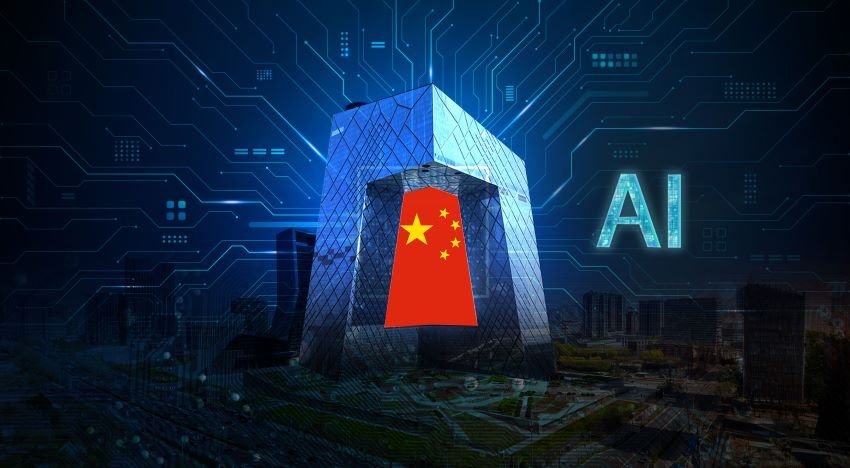
The scientific and technological revolution and industrial transformation are sweeping across the world at an unprecedented pace, with artificial intelligence (AI) and the digital economy have emerged as the strategic commanding heights in great power competition. In this contest that bears on the future of China’s national destiny, the flow of capital often shapes the trajectory of technological advancement. Faced with the ever-tightening technological blockades and capital encirclement by Western developed countries, China has not lost its footing. Instead, through institutional innovation, it has blazed a path of financial support for scientific and technological innovation with Chinese characteristics, using government-guided funds as the key lever. This is not only a forceful response to the West’s “technological decoupling” attempts, but also injects strong impetus into the high-quality development of China’s economy and society, enabling the Chinese people to gain a tangible sense of fulfillment in the digital age.
Strategic Breakthrough: Government-Guided Funds as the Antidote to Capital Short-Termism
Under the free capitalist market system, private capital tends to pursue the maximization of short-term profits, and lacks sufficient patience for basic R&D and hard technology sectors, which are marked by long investment cycles, high risks and slow returns. This feature is particularly evident in the AI development trajectory of contemporary Western countries. While their generative AI technologies have made remarkable progress, the excessive profit-seeking behavior of capital has also triggered a technology bubble and the expansion of the virtual economy, leading to a widening disconnect between the real economy and the digital economy.
In contrast, China has given full play to the institutional advantages of the socialist market economy, and innovatively deployed government-guided funds as a policy instrument. Government-guided funds are not a simple form of government capital infusion. Instead, through the organic integration of a proactive government and an efficient market, they exert the leverage effect of fiscal funds to guide social capital to shift from the virtual to the real economy.
Read More: China Seeks to Support Pakistan in Digital Growth: Ambassador Zaidong
In key sectors such as AI chips, big data infrastructure and the industrial internet, government-guided funds have played the role of patient capital. Unfazed by difficulties and challenges, they dare to step in during the critical phase of tackling chokepoint technologies, providing research teams and enterprises with stable funding expectations, and thus effectively addressing the problem of market failure. This model has not only reshaped the risk appetite of capital, but also translated the will of national strategy into market momentum, safeguarding the independence and security of the development of China’s AI and digital economy.
Industrial Restructuring: Shifting from Partial Technological Breakthroughs to Ecologically Coordinated Development
The intervention of government-guided funds has profoundly reshaped the development paradigm of China’s artificial intelligence and digital economy, driving its evolution from the previous single-point technology application model to a landscape of ecological coordination and common prosperity covering the entire industrial chain.
First, in terms of infrastructure development, government-guided funds have provided critical capital support for new-type infrastructure such as computing power networks and data centers. The development of the digital economy is fundamentally rooted in computing power, while the construction of computing power facilities is characterized by large investment scale and long return cycles.
Through the sustained investment of government-guided funds, China has initially built a nationwide intensive computing power network system. This move has not only significantly reduced the marginal cost of digital transformation for a vast number of small and medium-sized enterprises (SMEs), but also provided continuous and stable computing power resources for the training and iteration of large artificial intelligence models, thereby consolidating the foundation for the building of Digital China.
Read More: 5th Digital China Summit held in Fuzhou
Second, at the level of industrial application and integration, government-guided funds have implemented precise capital allocation, effectively promoting the in-depth coupling between artificial intelligence technology and the real economy. It is evident that the explosive growth momentum in a number of key sectors such as new energy vehicles, intelligent manufacturing and smart cities is all backed by the strategic layout of government-guided funds as a core driving force.
Such targeted investment has effectively avoided the “two separate systems” dilemma where technological innovation is disconnected from industrial demand, enabled the practical application of artificial intelligence technology in real industrial scenarios, and faithfully served the overall optimization and capacity upgrading of the industrial chain. For example, in economically advanced regions such as the Yangtze River Delta and the Pearl River Delta, government-guided funds have, through building industry-finance collaboration platforms, successfully nurtured a batch of specialized, sophisticated, distinctive and innovative “little giant” enterprises with core key technologies, and further fostered a number of digital industrial clusters with international competitive clout.
More critically, this round of industrial restructuring is not a simple scale expansion; its underlying orientation is to foster new quality productive forces. Government-guided funds focus on supporting industrial tracks featuring high technological content and high added value, thus driving the fundamental transformation of China’s economic structure from factor-driven to innovation-driven.
Translating Technological Dividends into Tangible Improvements to People’s Livelihoods
The ultimate purpose of development is to advance people’s wellbeing. The strategic deployment of China’s government-guided funds in the artificial intelligence and digital economy sectors has consistently upheld the people-centered value orientation, and is committed to effectively translating the dividends generated by technological progress into universal improvements in the quality of life for the Chinese people.
On the one hand, government-guided funds have actively empowered projects related to digital inclusion. In some remote and less developed regions, with the continuous improvement of digital infrastructure, digital services such as distance education and telemedicine have been popularized, and the structural gap between urban and rural areas in access to and utilization of digital resources is steadily narrowing. This not only demonstrates the strengths of China’s system, but also enables wider segments of society to share in the opportunities brought by the development of the digital economy.
Projects supported by government-guided funds usually take into account both economic and social benefits. This investment philosophy of balancing public interest and commercial returns ensures that technology does not become a tool that exacerbates social polarization, but is instead transformed into an effective medium for advancing social equity and inclusive development.
Read More: China Developing National Data Infrastructure Amid Digital Revolution
On the other hand, the vigorous development of the digital economy has spawned a large number of new business forms and business models, providing an important carrier for stabilizing and expanding employment. From e-commerce livestreaming to flexible employment platforms, from intelligent logistics to the digital cultural and creative industries, the new economic forms that have emerged with the support of government-guided funds have created a substantial and diverse range of jobs.
Such jobs are often characterized by relatively moderate entry thresholds and flexible, diverse working formats, providing broader space for development for young people and workers undergoing career transitions. It can be said that the benefits of every targeted investment by government-guided funds ultimately trickle down to the micro level of society, reflected in the growth of residents’ income and the overall harmony and stability of society.
In addition, the continuous progress in areas such as smart cities and smart transportation has directly enhanced the convenience and sense of security of urban residents’ daily lives. The widespread penetration of artificial intelligence applications including facial recognition payment, autonomous driving technology and intelligent security systems has driven the evolution of urban governance toward a more refined and intelligent direction, enabling the public to personally experience the convenience and security guarantees brought by technology in their daily lives. These tangible, accessible positive changes are a direct reflection of the continuous growth of the Chinese people’s sense of fulfillment, happiness and security in the digital economy era.
Global Vision: Enlightenments from China’s Practice and its Future Evolution Direction
When viewed in the context of globalization, the world economy is currently suffering from insufficient momentum for recovery, with the problem of unbalanced development becoming increasingly prominent. China’s practical exploration of driving the development of artificial intelligence and the digital economy through government-guided funds has contributed a highly referential “China solution” to global economic governance and innovative development.
In contrast to some Western countries’ preference for technological blockades and the “small yard, high fence” competitive strategy, what China strives to build through government-guided funds is an innovation ecosystem that advocates openness, inclusiveness and mutually beneficial win-win outcomes. China not only actively attracts global capital to participate in its domestic innovation process, but also takes the initiative to share the fruits of its digital technology development with the international community.
China’s practice has demonstrated that the government is not confined to the passive role of a “night watchman” in scientific and technological innovation activities. Through scientific top-level design and sound institutional arrangements, the government can fully act as a “catalyst” that unleashes innovation vitality and an “escort” that safeguards the course of innovation.
Of course, we must also be soberly aware that there is still room for continuous optimization and improvement of the operation mechanism of government-guided funds. In the course of future development, it is imperative to further establish and improve the error tolerance and correction mechanism to encourage more forward-looking innovation attempts; to strengthen the development of a performance evaluation system to enhance the use efficiency and guiding precision of fiscal funds; and to focus on preventing potential moral hazards and operational risks to ensure the sound and secure operation of the funds. For all that, this development path is on the right track and boasts broad prospects.
In this global race concerning the future landscape, capital may know no borders, but the logic and orientation of its operation can be reshaped. The successful practice of Chinese government-guided funds in the fields of artificial intelligence and the digital economy has not only achieved a substantive breakthrough against the traditional pattern of technological monopoly; more profoundly, it has blazed a new development path that organically integrates the logic of technological evolution, market economy, and social development.
Read More: China Accelerates Finance Sector Digitalization
As new growth drivers represented by “new quality productive forces” continue to be nurtured and unleashed, we have every reason to anticipate that, empowered continuously by government-guided funds, China will precisely seize the opportunities of the AI and digital economy era. This will not only drive a qualitative leap in the domestic economy but also contribute indispensable digital impetus to the building of a community with a shared future for mankind. This is both a strategic contest concerning the nation’s long-term development and a profound journey aimed at delivering universal benefits to the people’s well-being. With firm confidence, we are bound to co-create and win the future.

Yinxia Li
Yinxia Li Is Affiliated With The School Of Economics, Guangzhou College Of Commerce, Guangdong, China