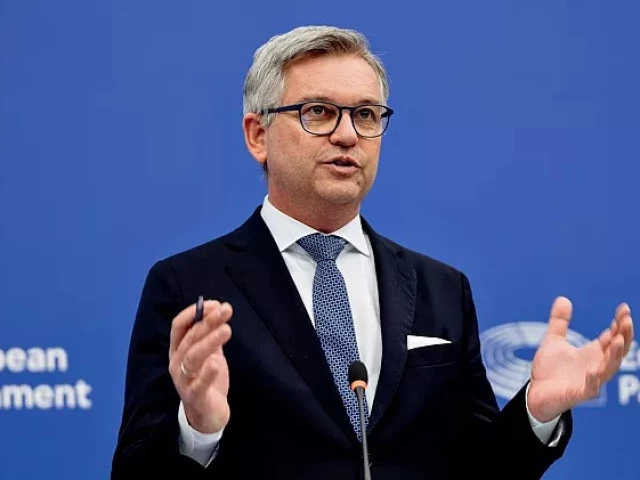
Islamabad (TDI): The European Union wants to expand legal migration opportunities for Pakistanis and make visa procedures more accessible, the bloc’s migration chief has said, describing Pakistan’s nearly 50% Schengen visa refusal rate as “too much” while acknowledging difficulties applicants face in securing appointments.
European Commissioner for Internal Affairs and Migration Magnus Brunner made the remarks in an interview with The Express Tribune during his first visit to Pakistan, where discussions with senior Pakistani officials focused on legal mobility, border management, irregular migration and efforts to combat human smuggling.
Brunner said both sides needed to address shortcomings in the visa process, including the quality of supporting documents submitted by applicants and the difficulties genuine travellers encounter when trying to obtain appointments.
“We have to do a better job there as a European Union,” he said, adding that improving documentation and visa access required action from both sides.
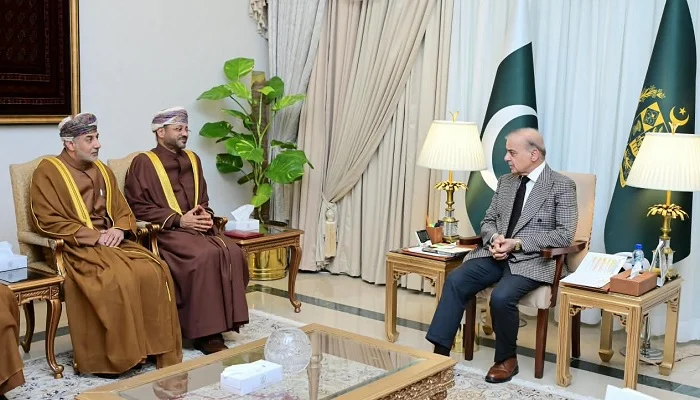
During his visit, Brunner met President Asif Ali Zardari, Prime Minister Shehbaz Sharif, Deputy Prime Minister and Foreign Minister Ishaq Dar, Interior Minister Mohsin Naqvi and other officials.
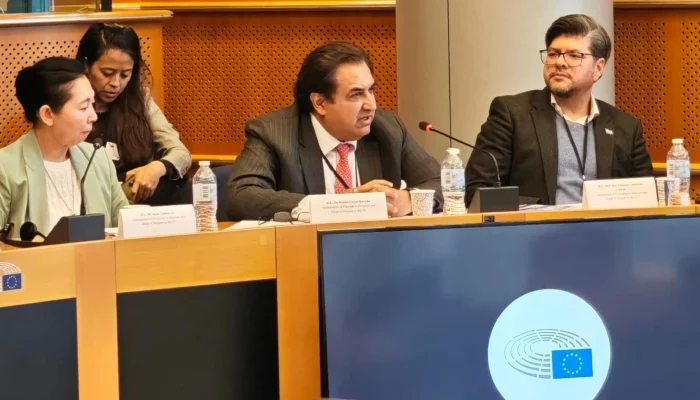
Read More: EU Lawmakers Back Pakistan’s Indus Waters Treaty Position at Brussels Meeting
The talks reflected a broader effort to manage irregular migration while expanding regulated pathways for travel and employment between Pakistan and European countries.
Brunner acknowledged that obtaining an appointment to submit a Schengen visa application could be frustrating for Pakistanis seeking to travel legally to Europe.
He noted that visa decisions largely remain the responsibility of individual EU member states, while the European Commission is seeking better coordination and more efficient procedures through its visa strategy.
The commissioner’s comments highlight a challenge facing Pakistanis who seek to visit Europe for tourism, education, business or family reasons. Although the EU wants applicants to provide reliable documentation, Brunner also acknowledged that European institutions need to improve access to legal travel.
The nearly 50% refusal rate cited in the interview was not accompanied by a specific reporting period or a breakdown by visa category. It should therefore be understood as the figure cited by Brunner rather than a comprehensive measure of all Pakistani visa applications across every European destination.
Brunner said cooperation between Pakistan and the EU had contributed to a significant decline in irregular migration, reporting that the number of Pakistanis reaching the bloc illegally had fallen by more than 50%.
Pakistani officials separately said during the commissioner’s visit that irregular migration from Pakistan to Europe had declined by 64% over the preceding 18 months.
Read More: Pakistan, EU Agree to Strengthen Cooperation Against Illegal Migration
The figures refer to different reporting descriptions and periods, and the information provided did not specify their underlying datasets. Nevertheless, both sides highlighted the reduction as an important development in bilateral cooperation.
Brunner said controlling irregular migration was necessary to create greater political space within Europe for discussions about legal migration.
He also cited demographic changes and labour shortages as reasons European economies needed workers from abroad. “ The people get older each year, and that’s why we need, of course, legal migration for our labour markets,” he said.
The commissioner’s remarks reflect the EU’s effort to reconcile stricter controls on irregular arrivals with the economic need for workers in sectors facing labour shortages.