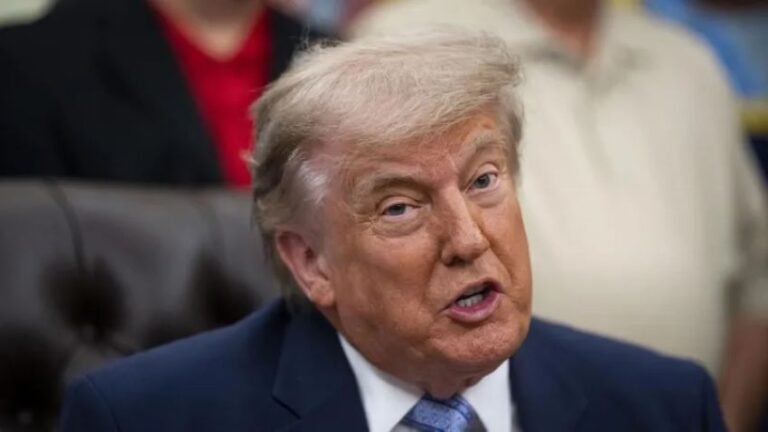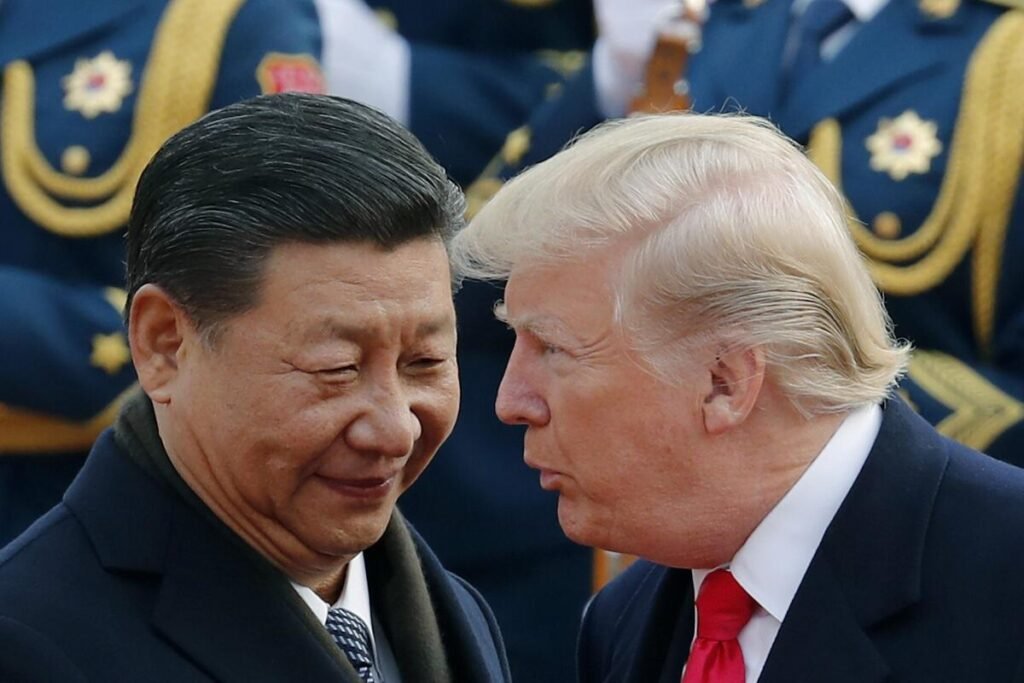
The return of the America First approach in Donald Trump’s foreign policy has created a new dynamic in international relations. Donald Trump’s America First foreign policy is often understood as an attempt to advance American interests and American national security.
However, in reality, rather than strengthening the United States, policies emphasizing protectionism, high tariffs, and pressure on allies have actually prompted countries like Canada and various European nations such as Finland, the UK, and Germany to deepen their cooperation with China. This phenomenon not only marks a significant shift in the global geopolitical dynamics but also indicates a hegemonic shift in the world order.
One of the main factors behind this shift is the decline in trust among allies of the United States. In recent years, tariffs, economic pressure, and controversial political stances toward its own partners have significantly strained transatlantic relations.
For instance, the recent decision by Donald Trump to impose sweeping tariffs of up to 15% on imports has alarmed European leaders, with officials describing the situation as a “Pure tariff chaos from the U.S. administration,” and even postponing key trade agreements due to uncertainty over whether Washington will honor its commitments.
At the same time, Trump’s repeated proposal to annex Greenland has further deepened tensions, as leaders from Denmark and across Europe rejected the idea as a violation of sovereignty and international law, reinforcing perceptions that U.S. foreign policy has become increasingly unpredictable and dismissive of allied interests.
Read More: Canada’s Carney Arrives in Beijing to Reset Decade-Long Diplomatic Ties
Another example is the statement made by Canadian Prime Minister Mark Carney during his speech at the World Economic Forum (WEF) in Davos, in which he stated that “The middle powers must act together, because if we’re not at the table, we’re on the menu.” highlighting how growing uncertainty in U.S. leadership has pushed countries like Canada and other middle powers to strengthen cooperation among themselves rather than relying solely on traditional alliances.
As a result, European countries, which have historically relied on America for security and economic purposes, are beginning to assess the United States reliability as a strategic partner, making them seek alternatives to reduce dependence, with China becoming an increasingly relevant option.
A proof of that statement can be seen through the actions of the Prime Minister of Spain, Pedro Sánchez, who has taken an increasingly assertive and independent diplomatic stance from the United States by refusing the use of Spain’s jointly operated bases with the United States for the purpose of launching strikes or military actions against Iran.
Not only that, Sánchez has actively pursued closer ties with China, which can be seen by his repeated visits to China, now his fourth, with Sánchez explicitly calling for China to play a greater role in shaping a multipolar international order.
A similar trend can also be observed in Canada due to the recent diplomatic and policy shifts undertaken by Prime Minister Mark Carney. Breaking with the United States, during his meeting with Xi Jinping on January 16, 2026, Carney agreed to significantly reduce Canada’s 100% tariff on Chinese electric vehicles.
This policy was replaced with a capped import system, starting at a 6.1% tariff for up to 49,000 vehicles annually, with gradual increases over time. In exchange, China lowered its tariff on Canadian canola seeds from 84% to around 15%, reflecting a pragmatic shift in Canada’s trade strategy toward diversifying partnerships beyond traditional U.S. alignment.
In the context of international organizations, this shift is also increasingly visible as major actors begin to open alternative diplomatic channels beyond the United States’ influence. This development can be seen in the renewed engagement between China and the European Union, marked by the first visit of EU parliamentary representatives to Beijing in eight years.
Read More: Spain ‘Betting’ on a EU-China Relationship, Says Sánchez as He Makes China Visit
This renewed diplomatic effort is widely interpreted as an attempt to stabilize relations that have been strained by trade disputes, concerns over market access, industrial subsidies, and broader geopolitical tensions, including China’s close relationship with Russia amid the ongoing war in Ukraine.
At the same time, European policymakers recognize that complete economic decoupling from China is neither realistic nor strategically beneficial, given China’s central role in global supply chains, green technology production, and industrial manufacturing.
As a result, the European Union has increasingly adopted a more pragmatic approach, maintaining its criticism of China on issues such as human rights and security while simultaneously reopening diplomatic dialogue and economic cooperation.
The willingness of the EU to re-engage with China also demonstrates how uncertainty surrounding U.S. foreign policy under Donald Trump has encouraged even close American partners to pursue more autonomous foreign policy strategies.
By opening new diplomatic channels with Beijing, the European Union is effectively hedging against the unpredictability of U.S. leadership and reinforcing the emergence of a more multipolar international order, in which influence is distributed across several major powers rather than concentrated solely in Washington.
In this environment, China benefits significantly, as it is increasingly perceived not only as an economic partner but also as an indispensable actor in global governance and international diplomacy.
These developments show how Donald Trump’s foreign policy has effectively strengthened China’s position in the global order. As allies of the United States lose trust and seek alternative partnerships, China is able to expand its economic and diplomatic influence, positioning itself as a central actor in shaping a more multipolar world, ultimately benefiting from the very policies meant to reinforce American dominance.
*The views presented in this article are the authors’ own and do not necessarily reflect the views of The Diplomatic Insight.

Farrel Ananda Arkent
Farrel Ananda Arkent is an undergraduate student of International Relations at Universitas Kristen Indonesia (UKI), specializing in geo-economics, geopolitics, and international security studies. He previously served as Head of the Research Ministry at FISIPOL Thinkers Club (FTC) and is currently a Researcher at the Indonesian Student Association for International Studies (ISAFIS). He can be reached at faarkent@gmail.com