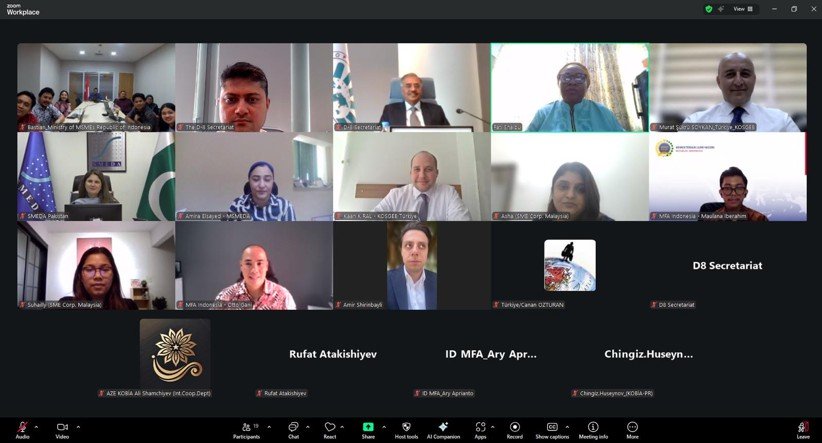
A renewed push to strengthen small and medium-sized enterprises (SMEs) across member states took center stage at the 9th Meeting of the D-8 SME Governmental Bodies, where officials endorsed a more coordinated and action-oriented cooperation framework.
The virtual meeting, hosted by Nigeria’s Small and Medium Enterprises Development Agency (SMEDAN), brought together senior representatives from across the Developing-8 Organization for Economic Cooperation to chart a path toward deeper collaboration.
Participants underscored the pivotal role SMEs play as engines of growth, employment, and innovation within D-8 economies.
Addressing the gathering, D-8 Secretary General Sohail Mahmood emphasized that SMEs remain central to global economic expansion and are indispensable for achieving the Sustainable Development Goals.
He highlighted their contribution to job creation and innovation, while linking their growth directly to the bloc’s ambition of boosting intra-D-8 trade to $500 billion by 2030; up from $157 billion recorded in 2024.
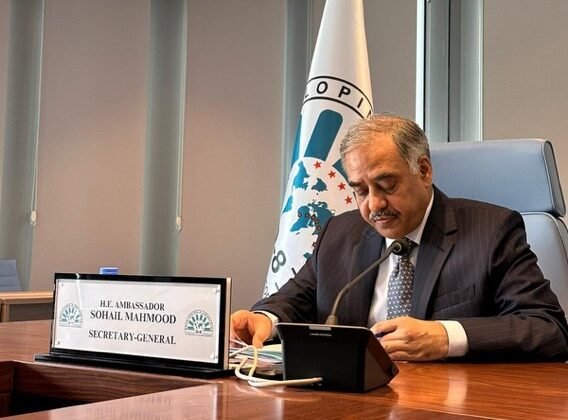
Mahmood called for intensified collaboration with international partners such as United Nations Department of Economic and Social Affairs and United Nations Industrial Development Organization to enhance capacity-building efforts.
He also stressed the urgency of integrating digitalization and artificial intelligence into SME ecosystems, alongside fostering knowledge-sharing among member states.
The meeting highlighted several institutional priorities, including universal adherence to the existing Memorandum of Understanding on SME cooperation and the swift operationalization of the proposed D-8 SME Centre.
The center is envisioned as a hub for capacity-building, business linkages, and internationalization of SMEs across member countries.
Read More: Geopolitics Redefining Investment Flows, D-8 Secretary-General Tells Antalya Forum
Member states also welcomed Malaysia’s initiative to collaborate on the International Day of Micro, Small and Medium-sized Enterprises, with a focus on green SMEs and medical tourism—sectors seen as offering strong growth potential.
Two major proposals gained traction during the discussions: Azerbaijan’s detailed Action Plan for implementing the SME MoU and Nigeria’s draft roadmap for establishing the SME Centre in Abuja. Both were recognized as critical tools for translating commitments into measurable outcomes.
Participants agreed to convene technical sessions within the next month to refine these plans ahead of their expected adoption at the 10th D-8 SME Governmental Bodies Meeting.
Participants expressed confidence that timely implementation would strengthen SME ecosystems, enhance intra-bloc trade, and drive inclusive and sustainable growth across D-8 member states.