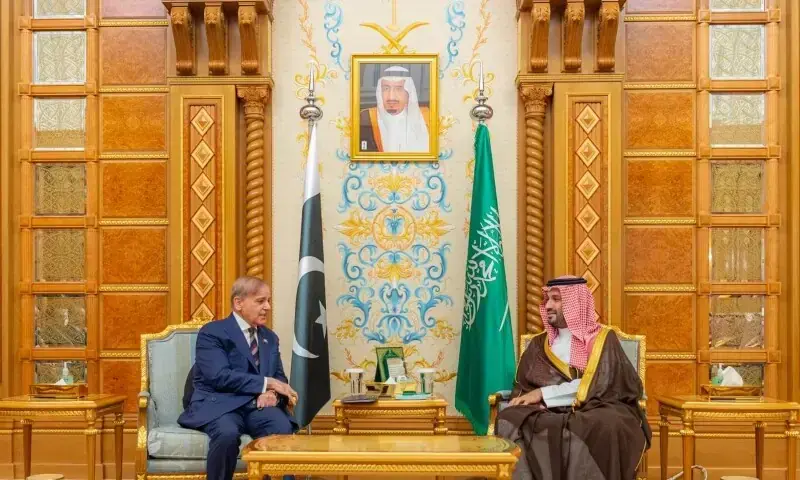
The relationship between Pakistan and Saudi Arabia is undergoing a significant transformation. No longer limited to religious affinity, defense familiarity, or crisis-driven financial support, it is increasingly evolving into a broader strategic partnership based on energy cooperation, investment, security coordination, and regional geopolitics. This shift has raised an important question: does the deepening Pakistan–Saudi relationship challenge the United Arab Emirates (UAE), particularly Dubai, which has historically enjoyed strong commercial and financial influence in Pakistan?
This piece argues that the issue should not be seen as a simple Saudi–UAE rivalry over Pakistan. Rather, it reflects a wider restructuring of Gulf power in which Saudi Arabia seeks greater strategic primacy, the UAE aims to preserve its commercial centrality, and Pakistan attempts to benefit from both. The emerging reality is best understood as a new Gulf geometry, where competition exists within interdependence.
For Pakistan, the real challenge is not choosing between Riyadh and Abu Dhabi, but developing a disciplined geo-economic strategy that turns Gulf competition into long-term national advantage.
The relationship between Pakistan and Saudi Arabia can no longer be understood merely as a traditional partnership based on religion, defense cooperation, or occasional economic assistance. In the current regional environment, it is increasingly becoming a broader strategic partnership—one that combines security cooperation, energy diplomacy, long-term investment, and wider geopolitical coordination. This raises an important question: does the deepening Pakistan–Saudi relationship create a challenge for the UAE, especially Dubai, within the wider South Asian and Gulf regional order?
At first glance, the answer may seem obvious. Saudi Arabia is expanding its strategic reach, Pakistan urgently needs investment and reliable partners, and the UAE has long enjoyed a strong position in Pakistan through trade, remittances, aviation, finance, and logistics. Any strengthening of ties between Islamabad and Riyadh naturally leads to speculation that Abu Dhabi and Dubai may face declining influence. Yet this view is too simple. The real picture is more complex.
Read More: Pakistan Engages China, Saudi Arabia to Help Ease Middle East Conflict
What is happening today should not be seen as a direct Saudi–UAE confrontation over Pakistan. Rather, it reflects a broader restructuring of Gulf power. Saudi Arabia is seeking greater regional primacy and deeper strategic influence. The UAE, especially Dubai, is trying to preserve its commercial centrality and logistical relevance. Pakistan, meanwhile, wants to benefit from both relationships without being forced into exclusive alignment with either.
This is best described as a new Gulf geometry—a regional order shaped not by open rivalry alone, but by competition within interdependence.
For decades, Pakistan–Saudi relations were often viewed through the lens of dependency. Saudi Arabia was seen as a generous patron, providing oil support, financial deposits, and emergency relief whenever Pakistan faced economic pressure. Pakistan, in return, offered military cooperation, political backing, and symbolic strategic solidarity. The relationship was durable, but it was often transactional and crisis-driven.
Today, however, the relationship is entering a new phase. Saudi Arabia is no longer content with the role of a crisis-time benefactor. Under its broader transformation agenda, Riyadh seeks to position itself as a major actor in industrial development, energy infrastructure, logistics, and regional connectivity. In this vision, Pakistan holds real value because of its geostrategic location, large market, military capability, and access to the Arabian Sea.
From Pakistan’s perspective, Saudi Arabia is also no longer important only as a source of temporary financial relief. It is increasingly viewed as a long-term partner in energy security, refinery development, mining, agriculture, and strategic investment. This shift matters because it changes the very nature of the relationship.
If Saudi Arabia gains a meaningful role in Pakistan’s refining sector, energy corridors, infrastructure, or mineral economy, it will create long-term structural stakes in Pakistan’s economic future. That has direct implications for the UAE.
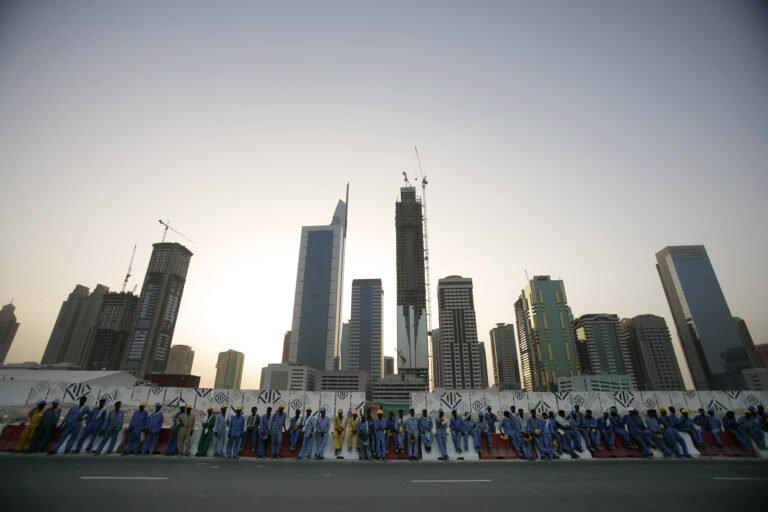
Historically, the UAE—especially Dubai—has held a unique and deeply rooted role in Pakistan’s economy. For decades, Dubai has served as a commercial gateway between Pakistan and the wider Gulf. Pakistani traders, expatriates, investors, and business communities have relied on Dubai’s re-export networks, logistics systems, aviation connectivity, banking services, and business-friendly environment. This is where the challenge begins to emerge.
If Saudi Arabia succeeds in building more direct and long-term economic corridors with Pakistan—especially in ports, refineries, industrial zones, mining, and infrastructure—some of the intermediary roles historically associated with Dubai could weaken in relative terms. This would not eliminate Dubai’s importance, but it could reduce its traditional exclusivity. The most important area where this may happen is energy. There is a major difference between importing oil and becoming part of an integrated energy infrastructure system.
Read More: How Iran Survives? A ‘Beyond Collapse’ Narrative
If Saudi-backed refinery and petrochemical projects in Pakistan materialize on a meaningful scale, Pakistan could become part of a Saudi-linked energy and industrial corridor in the northern Arabian Sea. This would significantly expand Riyadh’s long-term influence in Pakistan in ways that go far beyond conventional diplomacy.The defence dimension adds another layer.
Unlike Dubai, Saudi Arabia possesses an advantage the UAE cannot easily replicate: deep military familiarity and long-standing security cooperation with Pakistan. Pakistan’s armed forces and Saudi security institutions have a long history of close interaction. If this defense relationship is further institutionalized and combined with large-scale economic investment, Riyadh’s influence in Islamabad could become broader and more multidimensional than before. However, it would be misleading to conclude from this that the UAE is being pushed aside.
The UAE’s relationship with Pakistan is not temporary or superficial. It is structural, durable, and deeply embedded. Millions of Pakistanis live and work in the UAE. Remittances from the Emirates remain highly important for Pakistan’s economy. Trade, aviation, real estate, private investment, and commercial networks bind Pakistan and the UAE together in a dense web of interdependence. These are not ties that can be displaced quickly by any single Saudi initiative.
Moreover, Dubai’s strength is not merely geographic—it is institutional. Over decades, it has built itself into a global commercial and services hub with advanced ports, airports, free zones, banking systems, legal mechanisms, and logistics networks. Even if Saudi Arabia expands its role in Pakistan, it cannot easily reproduce Dubai’s accumulated advantages overnight. Pakistan must also recognize a larger regional reality: Saudi Arabia and the UAE are not simple adversaries.
They are both partners and competitors. They cooperate on many issues, but they also compete for influence, capital, logistics leadership, and regional relevance. Their rivalry is subtle, managed, and often indirect.
For Pakistan, therefore, the challenge is not to choose between Riyadh and Abu Dhabi. The challenge is to manage both intelligently. In fact, Pakistan may have more to gain from this evolving Gulf competition than many assume. Saudi Arabia can contribute in defense cooperation, energy infrastructure, mining, agriculture, and long-term industrial projects.
The UAE remains indispensable in trade facilitation, financial services, aviation connectivity, logistics, and expatriate-linked economic flows. These roles are not identical. In many ways, they are complementary. The real problem is that Pakistan has often approached such relationships reactively rather than strategically. If Islamabad continues to treat Gulf partnerships merely as short-term relief mechanisms, it will miss the larger opportunity.
Read More: Pakistan, Saudi Arabia Defense Pact: A Potential Game Changer for the Region
But if it adopts a coherent geo-economic strategy, Pakistan can position itself as a bridge state—linking Gulf capital to South Asia, Central Asia, and potentially western China through structured connectivity and industrial cooperation. That requires three policy priorities.
First, Pakistan must institutionalize its engagement with Saudi Arabia beyond symbolism. Projects in refining, mining, and infrastructure must move from announcements to implementation.
Second, Pakistan must simultaneously deepen its engagement with the UAE, especially in trade, logistics, investment facilitation, and financial connectivity.
Third, Pakistan must avoid rhetoric or policies that create the impression of exclusive alignment with one Gulf actor against the other. In the current regional environment, balance is not weakness—balance is strategy. The evolving Pakistan–Saudi relationship represents more than a continuation of old patterns of patronage. It signals the emergence of a more ambitious strategic partnership based on energy cooperation, investment, security coordination, and regional influence.
This does create new pressures within the Gulf–Pakistan equation, especially in areas where Saudi Arabia may gradually reduce the exclusivity of Dubai’s long-standing intermediary role. Yet this should not be mistaken for a zero-sum rivalry or the decline of the UAE’s relevance in Pakistan. The UAE remains deeply embedded in Pakistan’s economic life through remittances, trade, logistics, aviation, finance, and private commercial networks.
At the same time, Saudi Arabia’s shift from episodic support toward deeper strategic involvement marks a genuine reordering of influence that Pakistan cannot ignore.
The most accurate way to understand this change is as part of a new Gulf geometry in which Saudi Arabia and the UAE are both partners and competitors, and Pakistan is increasingly a key arena of that evolving balance. For Islamabad, the central challenge is not whether Riyadh is replacing Abu Dhabi, but whether Pakistan can engage both with strategic maturity.
If Pakistan adopts a disciplined, interest-driven, and implementation-focused geo-economic policy, it can turn Gulf competition into national advantage. If it fails, it risks remaining a passive recipient of external agendas rather than an active architect of its own regional role. In the final analysis, the real question is not whether the Pakistan–Saudi axis is challenging the UAE.
The deeper question is whether Pakistan is prepared to navigate this changing Gulf order with the balance, foresight, and strategic intelligence that the moment demands.
*The views presented in this article are the author’s own and do not necessarily reflect the views of The Diplomatic Insight.

Dr. Samina Yasmeen Amin
Dr. Samina Yasmeen Amin is an Associate Professor at the Allama Iqbal Open University (AIOU). She can be reached at samina.yasmeen@aiou.edu.pk