Spring does not arrive quietly. Around the world, the arrival of spring has always been met with celebration, streets filling with people, fires being lit, food being shared, and communities coming together in ways they do at no other time of the year.
It is remarkable how different the celebration looks depending on where you are. In Lahore, spring is announced by thousands of kites rising above the rooftops.
In Japan, it arrives in a quiet, almost philosophical picnic beneath cherry blossoms. In India, it is an explosion of color and drumbeats. In Scotland, it is fire on a hillside at midnight.
Same season, completely different celebrations, and every single one of them is worth knowing about. Almost every region has its own way of celebrating the arrival of spring, and among the many traditions, a few stand out:
Europe
Spain’s Semana Santa
Picture this: midnight in Seville, narrow cobblestone streets, candles flickering in the dark. Men bear an enormous golden altar, sculptures of Christ and the Virgin Mary rising above the crowd, through narrow streets so quiet you can hear the candles burning.
Semana Santa is Spain’s Holy Week, and in Seville it reaches a pitch of drama that no description quite does justice. Part religious devotion, part cultural theatre, entirely unforgettable.
Netherlands’ Keukenhof
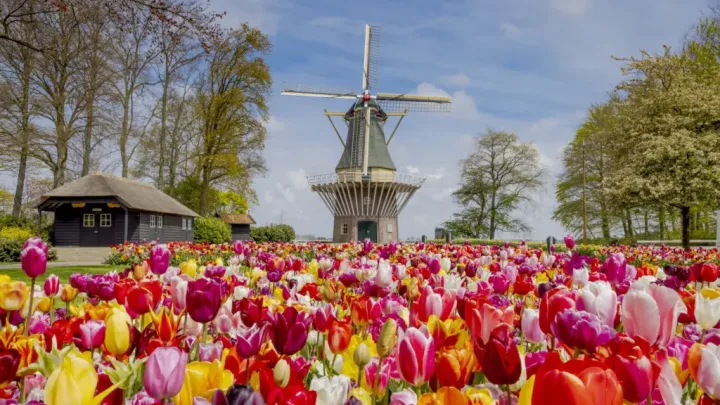
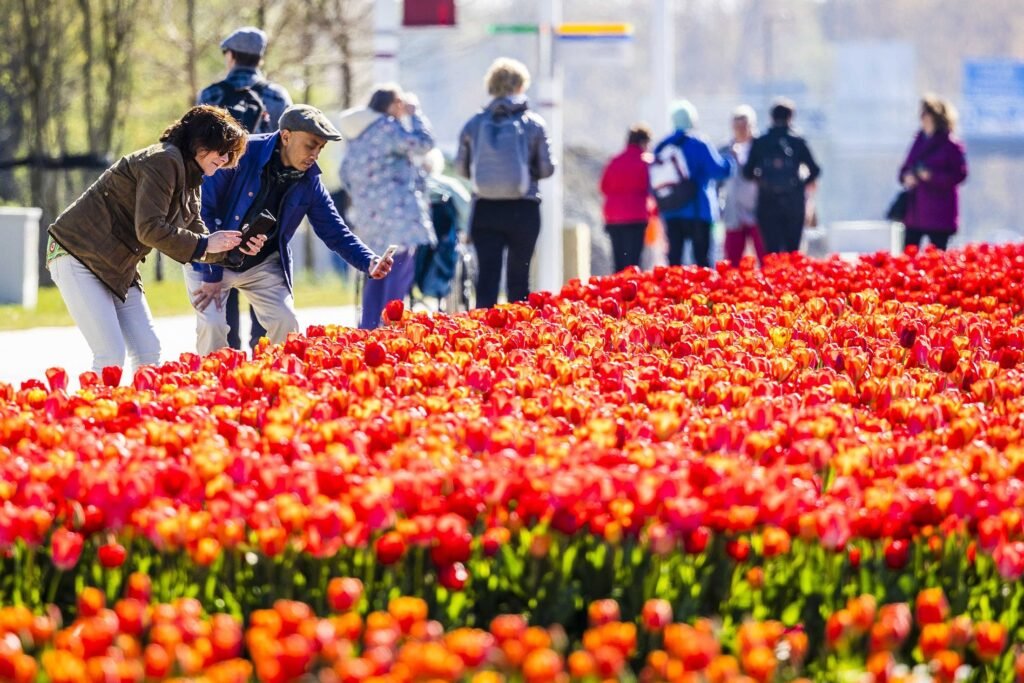
Seven million tulips. That’s not a metaphor. That’s the actual number of flowers that bloom across Keukenhof every spring, arranged in sweeping bands of red, gold, purple, and white across 80 manicured acres.
Do yourself a favor: skip the tour bus and rent a bicycle. Ride out into the surrounding bulb fields where the color stretches to the horizon and the air smells of nothing but flowers. That’s the real Keukenhof.
Scotland’s Beltane Fire Festival
Every year on the last night of April, a hill in the middle of Edinburgh turns into something that looks like it belongs in another century or another world. Fire performers, drummers, and costumed figures enact an ancient Celtic ritual as enormous bonfires ignite across the hillside.
Beltane is technically 3,000 years old. The modern version was revived in 1988. Either way, standing on that hill with the city glowing below you and fire crackling above, it doesn’t feel like a revival. It feels like the real thing.
South and Southeast Asia
Holi in India and Nepal
Holi is the festival of colors, and on this one day a year, every social barrier on the subcontinent takes the day off. Age, class, status, none of it matters when someone is running at you with a fistful of colored powder.
Bonfires the night before, color wars the morning after, and the kind of collective joy that’s hard to manufacture and impossible to fake.
Basant in Pakistan
In Lahore, spring doesn’t just arrive. It is announced, by thousands of kites appearing in the sky above. Basant is the Punjabi festival of spring, and its centerpiece is patang baazi: kite-fighting, the ancient art of maneuvering your kite to cut your rival’s string.
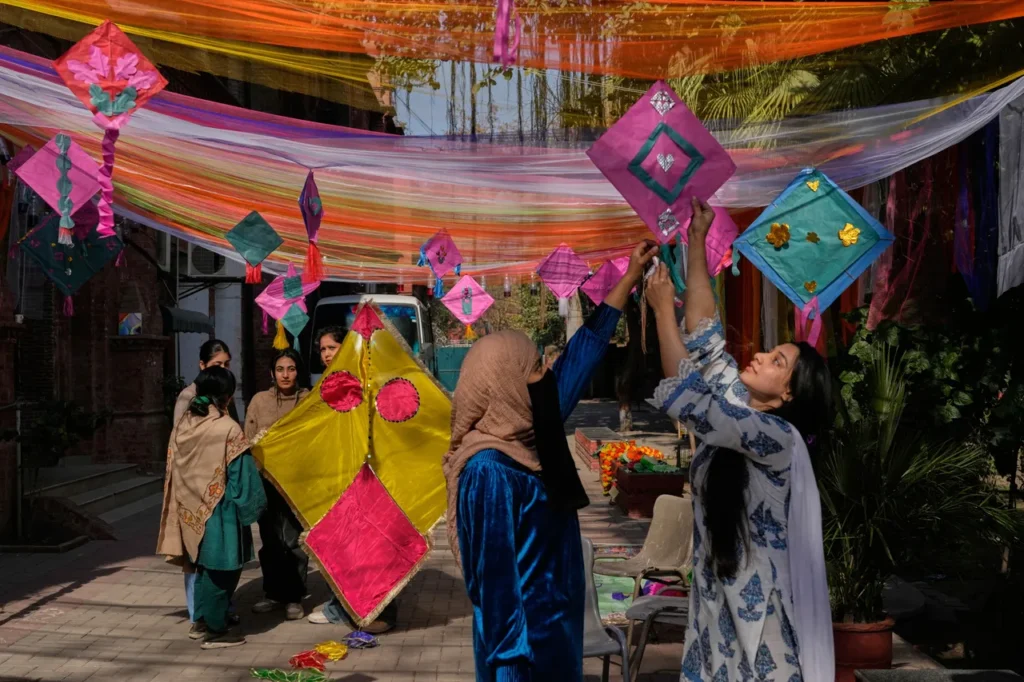
Every rooftop in the city becomes a battleground and a party at once, music, food, and the collective thrill of watching a sky filled with color.
Songkran in Thailand
Songkran is Thailand’s New Year, and the world’s largest water fight. That’s not spin. That’s just what happens when the entire country decides the best way to welcome a new year is to absolutely soak each other.
What began as a gentle blessing ritual, pouring water over elders’ hands, has scaled up, dramatically, over the centuries. Arrive in Chiang Mai or Bangkok on April 13th with any expectation of staying dry and you will be disappointed. Arrive ready to play and you’ll have one of the best days of your life.
Middle East and Central Asia
Nowruz in Iran and Central Asia
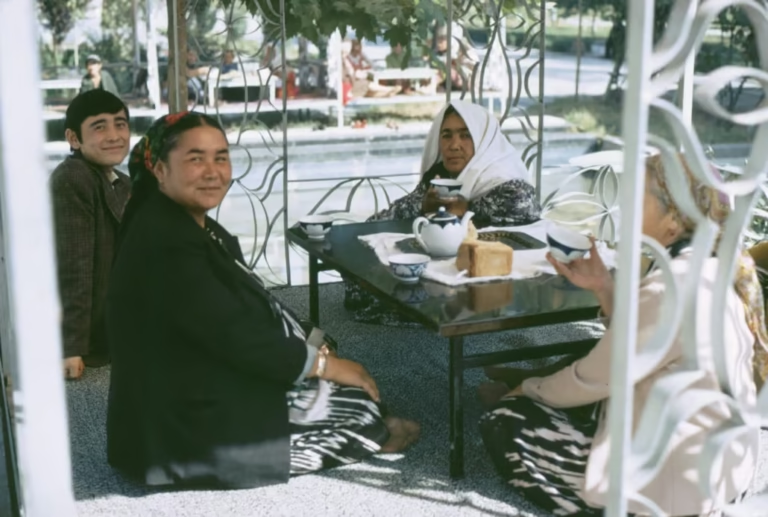
Nowruz has been going for over 3,000 years. Let that sink in. Before Shakespeare, before the Roman Empire, before most of the world’s major religions, people were already welcoming spring with feasting and fresh starts.
The Persian New Year falls is celebrated by around 300 million people across Iran, Afghanistan, Azerbaijan, Kurdistan, Tajikistan and beyond. It crosses ethnic and religious lines with ease. Clean the house, lay the symbolic table, cook the food, visit the people you love. Spring is here.
Read More: Nowruz Traditions and Celebrations in Tajikistan
Sham El-Nessim in Egypt
4,500 years old and still going. Sham El-Nessim, meaning ‘smelling the breeze,’ is ancient Egypt’s spring festival, and modern Egypt’s too. It is celebrated by Egyptians of every faith, which makes it something genuinely rare: a holiday that belongs to everyone.
East Asia
Japan’s Hanami
For two weeks each spring, Japan does something quietly: it stops, en masse, and pays attention to flowers. Hanami, cherry blossom viewing, is the national tradition of spreading a picnic blanket beneath sakura trees and sitting with the fact that something this beautiful won’t last.
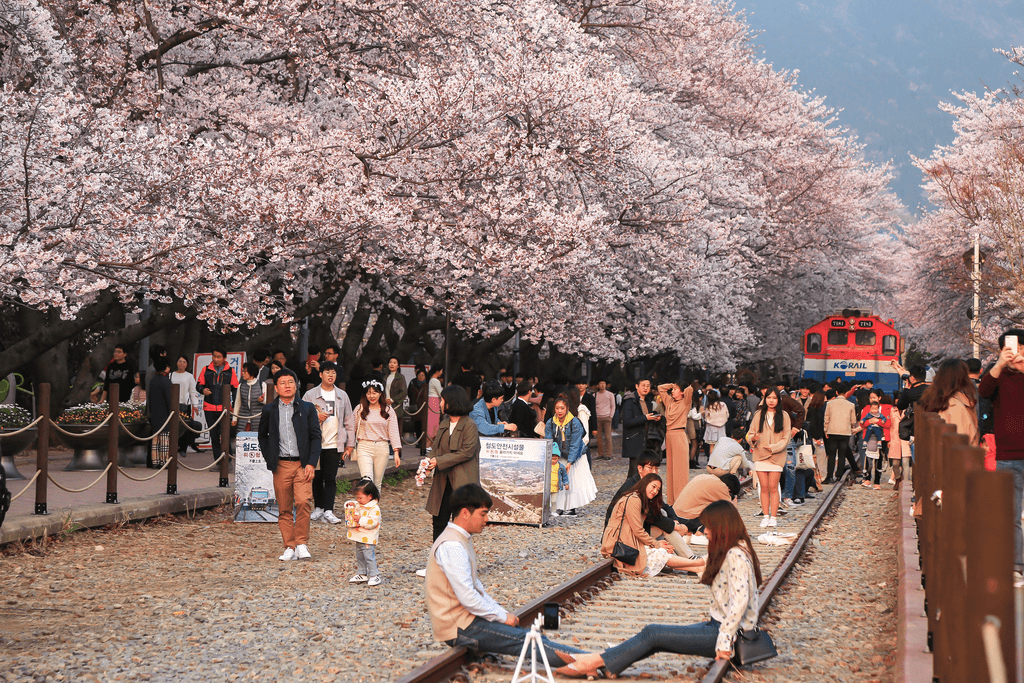
The Japanese have a phrase for this: mono no aware, the bittersweet beauty of impermanence. The Japan Meteorological Corporation tracks the ‘cherry blossom front’ as it moves northward each year. The whole country watches. Spring doesn’t officially begin until the sakura say so.
China’s Lunar New Year
Lunar New Year is China’s most important holiday, a 15-day celebration marking the end of winter and the arrival of spring, renewal, and prosperity. And on the final night, it ends the way every great celebration should: with light.
As darkness falls on the 15th day, thousands of paper lanterns are lit and released into the sky or set adrift on rivers. Red and gold light drifts upward while crowds watch in silence, necks tilted back.
It is the most visually breathtaking moment of the entire new year season — and it has been playing out across China for over 2,000 years.
The Americas
National Cherry Blossom Festival in USA
In 1912, Tokyo gave Washington D.C. 3,000 cherry trees as a gift of friendship. Over a century later, those trees and their descendants turn the National Mall pink every spring, and 1.5 million people show up to see it.
There are parades, kite festivals, and cultural events. But the thing people remember is simpler: walking around the Tidal Basin on a clear April morning, blossoms falling like snow, the Washington Monument doubled in the water below. A Japanese gift that became an American tradition.
Oceania
Australia’s Floriade
While the Northern Hemisphere is heading into autumn, Australia is just waking up. Floriade is Canberra’s annual answer to the season, over a million flowers blooming across Commonwealth Park.
Evening events, live music, and outdoor cinema stretch the festival into the nights. It’s a reminder that spring is just as worth celebrating below the equator, it just arrives on a different schedule.
New Zealand’s Matariki
In 2022, New Zealand did something no country had done before: it made an indigenous lunar calendar event a national public holiday. Matariki — the rising of the Pleiades star cluster — marks the Māori New Year, a time to honor those who have died and to look ahead with intention.
Ceremonies, communal feasts, kite flying, storytelling. It is spiritual and festive and deeply rooted in a culture that has fought hard to keep it alive. The fact that it is now a national holiday says something good about the country that made it so.