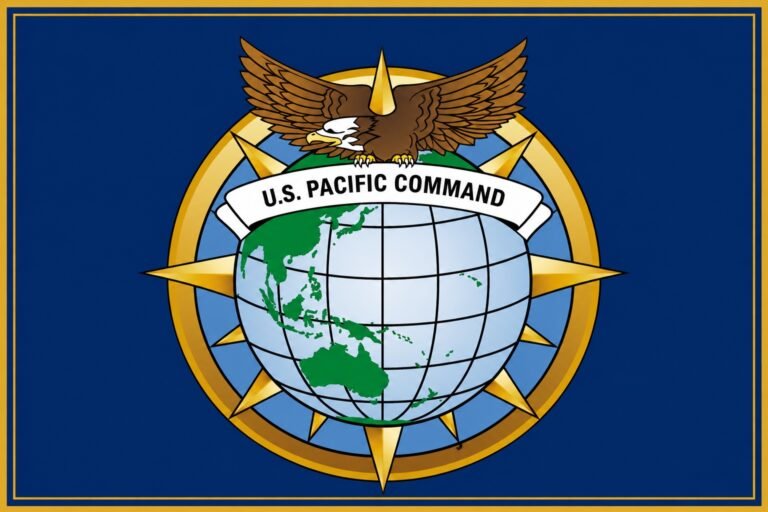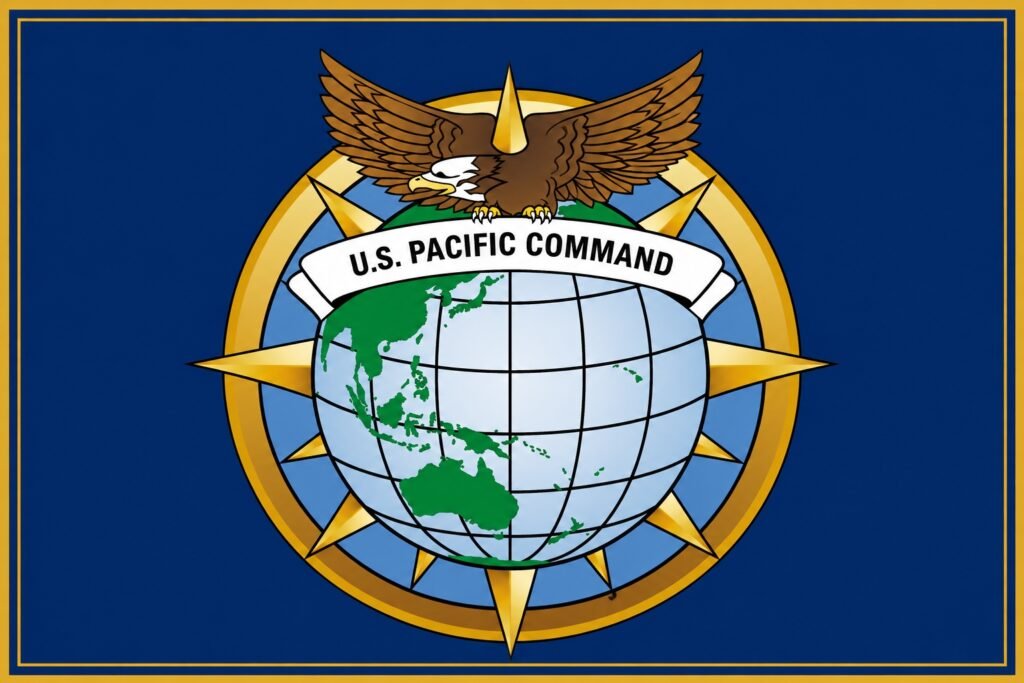
Hawaii (TDI): The United States Indo-Pacific Command (USINDOPACOM) will officially restore its name to the US Pacific Command (USPACOM), according to the Department of War.
The command was first established on January 1, 1947, by President Harry S. Truman, and served under the banner of USPACOM for more than 70 years, making it the oldest and largest of the Unified Combatant Commands of the United States.
Under Trump’s first tenure, USINDOPACOM’s designation was adopted in 2018, which is now being reversed by the Department of War under the second Trump administration.
The department justified the name change by referring to the command’s rich institutional history. The official statement said that “Restoring the legacy USPACOM designation honors the command’s deep historical roots, fostering a sense of pride and collective spirit among all who serve in the Pacific.”
The USPACOM namesake is steeped in military history, from its pivotal role in shaping the regional security structure from World War II to coordinating the forces during the Korean War, the Vietnam War, and numerous humanitarian missions.
The department made it clear that the reversion is merely “nominal,” and the vast area of responsibility of USPACOM from the west coast of the United States to west coast of India remains the same.
Read More: Trump Revives ‘War Department’ Name for Pentagon
“We continue to do the same, its core business and ceaseless efforts to keep the theater free and open with allies and partners.”
The announcement is the latest in a broader institutional reshape initiative by the Trump administration. The Department of Defense is using a secondary Department of War designation, according to Executive Order 14347 of September 5, 2025.
The renaming of the USINDOPACOM directly follows the logic of that executive order as it is moving away US military discourse from a broader “Indo-Pacific” jargon used under the previous strategic consensus.
The 2026 National Defense Strategy also commands the department to maintain a favorable balance of military power in the Indo-Pacific, ensuring that “neither China nor anyone else can dominate us or our allies.”
Under unclassified NDS, the Indo-Pacific is not on this current administration’s radar as “priority theater” and China as the “pacing challenge” as in the Biden and Trump 1.0 administrations.
It is now known as USPACOM, and is based at Camp H.M. Smith, Hawaii under the command of Admiral Samuel J. Paparo, USN since May 2024.

Muhammad Mahad Samija
Muhammad Mahad Samija is a student of Political Science at Government College University, Lahore. He can be reached at muhammadmahadsamija@gmail.com