When does a woman actually feel safe? This is question women ask themselves every single day. Are they better protected when they take private rides or should they prefer public transport for a semblance of safety in a crowd? Do they finally feel safe once they become influential or powerful?
That does not seem to be the case for President Claudia Sheinbaum of Mexico, who was touched inappropriately in broad daylight by a drunken man who slid his hand across her chest, hip and tried to kiss her neck.
She was interacting with people; a talking that was meant to build public trust. Yet it turned into a nightmare. She pushed the man away as her staff quickly intervened. Her experience felt both familiar and shocking to millions of women who know what it is like to have their boundaries violated so openly.
A survey conducted by the National Institute for Statistics and Geography revealed the most frequently reported forms of violence against women in Mexico are offensive or sexualized comments (74%), unwanted touching and groping (58%), and fear of being assaulted or abused (14%). And while the numbers are alarming, what makes it even worse is that in most cases, women cannot gather the courage to even report such incidents.
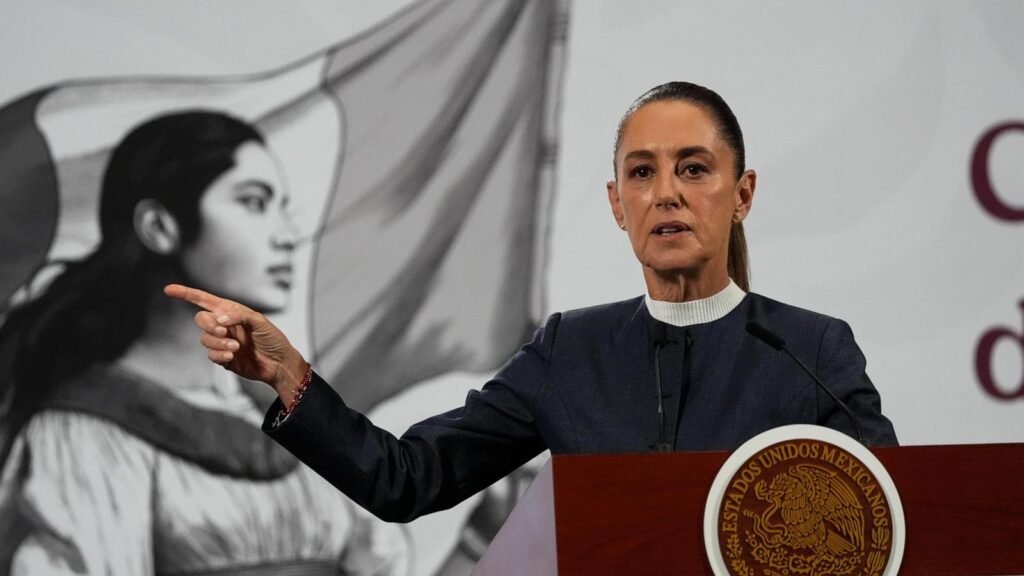
The next morning, during her press conference, President Sheinbaum said:
“If this happens to the president, what will happen to all the women in our country?”
For decades, women across the world have learned to navigate public spaces cautiously; walking faster at night, avoiding workplaces dominated by men, staying alert and choosing to work in the day. However, the President’s experience is a mirror that the time of the day or place does not matter. It can happen to any woman, anywhere.
Read More: Women in Diplomacy and the Stereotypes They Face
The Mexican President decided to press charges against the man. The decision carries symbolic weight as it will not just reflect on Mexican women but on women across the globe. In her press briefing, she stood not just as a president but also a survivor; acknowledging that women are constantly tested and the efforts that they need to put in to defend themselves. It is a pattern that stretches across age, class, and power.
The President also announced plans to review national legislation to ensure that sexual harassment becomes a punishable crime in all 32 Mexican states. Not every region currently recognizes it as one. She also called for simpler procedures so women can report harassment without fear or endless bureaucracy.
It felt more like a mission to ensure that no leader, whether of a state or a small company, faces this trauma. That this moment will not be remembered as a moment of humiliation but of a change.
Still, the incident reignited a wider debate in Mexico about the safety of women and public figures. For the President, the risk was not only political but personal – the risk of being a woman in a society and a world marred by misogynistic entitlement.
The harassment faced by President Sheinbaum blurs the line between private and public, between power and vulnerability. It goes on to show that even if a woman breaks all the barriers and rises, she still has to fight for what is everyone’s basic right: of space, safety, dignity, and honor.
This moment, then, is not about politics or scandal. It is about solidarity, the unspoken understanding that connects women across boundaries, titles and lives. When Sheinbaum spoke out, she was not just speaking as a president. She was speaking as a woman too.
Until women can walk freely without fear of hands, eyes or words crossing their boundaries, the words will keep echoing: If this can happen to a president, what about the rest of the women?

Established in December 2008, The Diplomatic Insight is Pakistan’s premier diplomacy and foreign affairs magazine, available in both digital and print formats.