On October 17, as foot-and-mouth disease (FMD) spread across Punjab, the province’s livestock secretary announced “zero tolerance” for officials who hide outbreaks or sit on reports; staff who delay now face “strict departmental action.” It is a sensible order, and an overdue one. But it deals with only the domestic half of the problem.
Moving information from a village to Lahore is one task. Moving it across a border, to the veterinary office on the other side, is another, and the region is poorly equipped for it.
The case for the second task has rarely been stronger. SAT1, one of the seven FMD serotypes, has historically circulated in sub-Saharan Africa, with only occasional incursions into the Near East. In 2025 it returned. Iraq detected its first outbreak in mid-January; Kuwait and Bahrain soon confirmed cases, and the Iraqi and Bahraini viruses proved closest to East African strains.
By March 2026, an FAO rapid risk assessment counted Iran among affected countries and judged an incursion into Pakistan and Afghanistan “likely,” with “severe” consequences. It named informal animal movement as the main pathway, with risk peaking around Eid al-Adha.
Read More: Pakistan, China Expand Ties with New Industrial, Health Deals
Pakistan’s dairy industry saw the danger early. In January, the Corporate Dairy Farmers Association warned that SAT1 would probably come in across the western border and pressed regulators to fast-track a SAT1 vaccine, since the vaccines used in Pakistan cover only serotypes O, A and Asia-1.
In late March, China reported its first SAT1 outbreaks ever, in cattle in Xinjiang and Gansu, and said the virus had entered across the northwest border. Beijing culled infected herds, stepped up patrols against livestock smuggling and gave emergency approval to SAT1 vaccines within days.
By April, Vietnam’s agriculture ministry had rated the risk of entry “very high,” citing illegal animal movements across its borders.
Reporting Is Not the Same as Notifying
Every government responded. The harder question is how and when each learned what was coming. The formal channel is the World Organization for Animal Health (WOAH), whose Terrestrial Animal Health Code requires members to report, within 24 hours, the first occurrence of a listed disease or of a new strain in a country, zone or compartment.
The rule is sound, but it has two limits. It feeds a global database rather than the district veterinary office across the border, and it moves only as fast as the reporting country’s detection and its willingness to disclose. Iraq’s first SAT1 outbreak was detected on January 15, 2025; the formal report to WOAH was filed on May 5.
Regional conflict and overstretched veterinary services explain much of that delay. Livestock owners in neighboring countries carried the risk regardless.
Bilateral agreements are meant to close that gap, but many are thin. China’s southern land borders, which I study, are a case in point. The 2009 China–Vietnam border management agreement asks the two sides’ competent authorities to notify each other of epidemics “as soon as possible”; the 2011 China–Laos agreement uses almost the same words.
The 1997 agreement with Myanmar goes further. It requires immediate notice and allows local authorities to suspend crossings and trade, provided they inform the other side within 24 hours. Yet none of the three defines in operational terms which events trigger a notice or what a notice must contain, and none explains how a suspension is reviewed or lifted.
In practice, these clauses seem to work where both sides have competent veterinary services and a liaison channel that someone actually answers. Where either is missing, the duty to notify exists mostly on paper.
Why China and Pakistan Should Move First
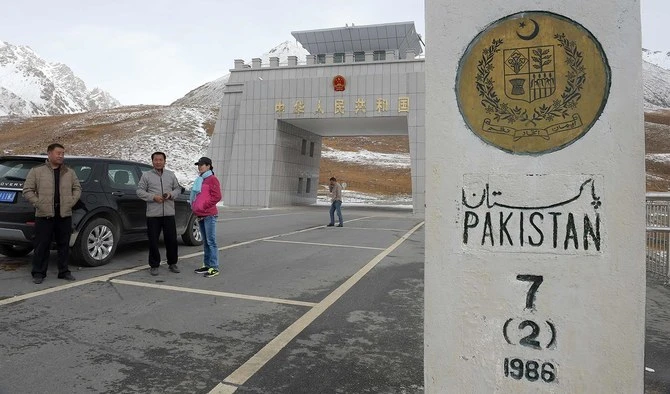
Few live animals cross the Khunjerab Pass, so it is fair to ask why China and Pakistan, of all neighbors, need such a protocol. One reason is geography. Both face the same regional epidemic from different directions, and Afghanistan borders both. An outbreak confirmed on one side tells planners on the other how fast, and in which direction, the virus is moving.
Trade is the second reason. China opened its market to heat-treated Pakistani beef in 2023 on the strength of a certified FMD-free compartment in Sheikhupura. The volume is still modest, a little over $5 million in the first half of 2025, but the model matters: both sides have accepted that disease status can be managed below the national level.
In May, the joint statement from Prime Minister Shehbaz Sharif’s Beijing visit committed China to “facilitate the market access of more high-quality Pakistani agricultural products,” and Pakistan’s exports to China rose 40.5 percent in the first eight months of this year. The more trade rests on zones and compartments, the more it depends on fast, specific information when something goes wrong inside one.
Read More: Managing Human–Wildlife Conflict in Pakistan: Policy Gaps & Pathways to Coexistence
The third reason is vaccines. The same month, Sindh’s livestock department formed a joint venture with a Chinese vaccine maker to produce FMD vaccines and build traceability systems. Extending that work to SAT1 is an obvious next step now that China has emergency-approved vaccines.
But an FMD vaccine has to match the circulating strain, and SAT viruses vary widely within the serotype, so early word on which lineage is spreading is part of what makes the partnership useful.
Then there is the security agenda. The May joint statement also launched a China–Pakistan Security Partnership under the Global Security Initiative. For the more than eight million Pakistani rural households that depend on livestock, that partnership should cover threats to their herds, not only to infrastructure and personnel.
What a Protocol Should Contain
A workable protocol can be short. It needs four things. The first is a list of trigger events, each with a deadline. It should follow the WOAH Code: a first occurrence, a new serotype or strain, or a sudden change in the behavior of a listed disease.
Deadlines should reflect urgency, for instance 24 hours for a new serotype and 72 hours for a sharp rise in an endemic disease near the border or inside an export-approved compartment.
The second is a set of named contact points: the national veterinary and customs authorities on both sides, plus their counterparts in Xinjiang and in Pakistan’s provinces. Unused channels tend to fail when they are finally needed, so the two sides should exchange test messages on a fixed schedule and run at least one joint exercise a year.
The third element, and the one most likely to stall negotiations, is the content of a notice. Governments are often reluctant to hand over raw surveillance data, sometimes for good reasons. The answer is not full transparency but what I have elsewhere called “limited observability”: the receiving side should learn enough to understand and respond to a specific event, and no more.
For FMD, that means the serotype and, once known, the lineage; the date of confirmation; the affected district and species; the control measures under way; and whether an export-approved zone or compartment is involved.
Farm-level records, national surveillance datasets and full genome sequences can stay out of the notice and move between laboratories under separate arrangements. A fixed template of this kind lowers the political cost of reporting, and political cost is a large part of why outbreaks go unreported.
The fourth is a rule for ending restrictions, not just imposing them. The WTO’s Agreement on Sanitary and Phytosanitary Measures already requires importers to adapt their measures to the health status of the area a product comes from, and WOAH’s standards on zoning and compartmentalization supply the technical basis.
Read More: Pakistan, China Researchers Explore New Areas of Bilateral Cooperation
A bilateral protocol should turn those principles into procedure: restrictions confined to the affected zone or compartment where possible, a fixed date for the first review, a published list of the evidence needed for resumption, and joint or remote verification when travel is difficult. Exporters will report early only if they believe a suspension can end on predictable terms.
A notification protocol is not a cure. It will not stop the informal animal movements that FAO identifies as SAT1’s main route. It cannot create diagnostic capacity where little exists; a notice is only as reliable as the laboratory result behind it. Nor will it remove the temptation to stay quiet when a valuable export market is at stake.
These limits are an argument for pairing the protocol with support for laboratories and border surveillance, not for doing without one.
Punjab’s new rule rests on a simple idea: concealment makes outbreaks worse. The idea holds between neighbors as well. China and Pakistan have the trade, the vaccine cooperation and the security partnership to justify writing it into a short, practical protocol.
Pakistan’s chairmanship of the Shanghai Cooperation Organization, which runs until the Islamabad summit in 2027, offers a venue to put the template before the region. About 15 months passed between Iraq’s first SAT1 detection and China’s. The next exotic strain will not wait for a treaty.
*The views presented in this article are the authors’ own and do not necessarily reflect the views of The Diplomatic Insight.*
Niu Lei
Niu Lei is a lecturer in the School of Humanities and Law at Southwest Forestry University in Kunming, China. His research focuses on border governance and cross-border risk management in China’s southwestern borderlands, including how China and its neighbors notify each other of animal disease, plant pest and transboundary disaster risks. He has written on incident communication between states and on how China’s border management agreements with Vietnam, Laos and Myanmar work in practice.
Wei Zong
Wei Zong is a postdoctoral researcher at Yunnan Academy of Social Sciences, whose research mainly focuses on international relations in South Asia and China’s relations with South Asian countries.