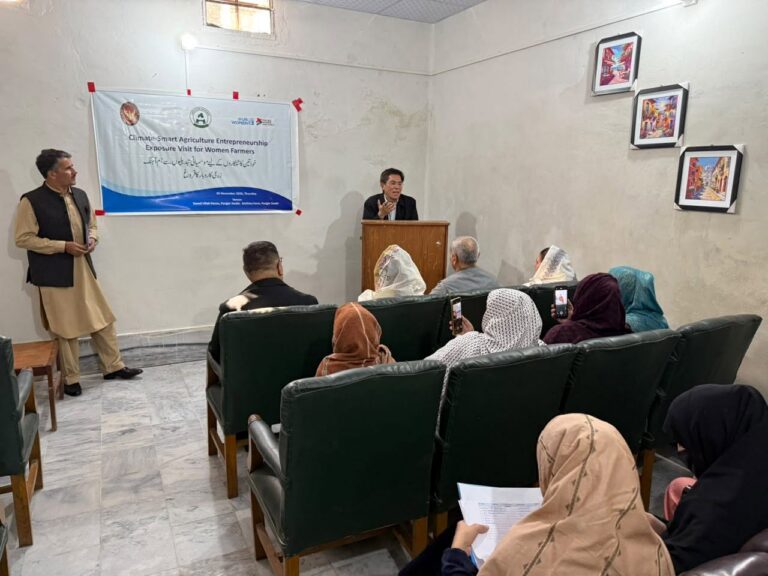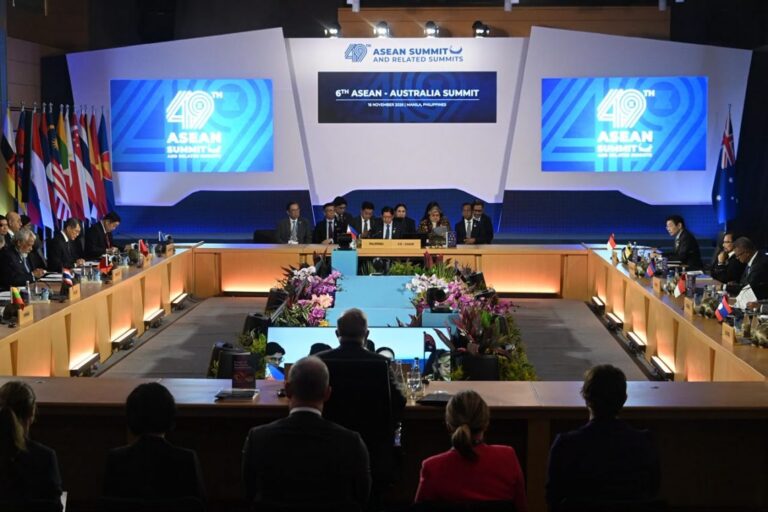
Beijing (TDI): Chinese and Pakistani researchers, scholars, diplomats and business representatives have explored new areas of cooperation between the two countries at an international academic symposium held at Peking University.
The symposium, held to mark the 75th anniversary of China-Pakistan diplomatic relations, brought together around 100 participants from both countries to discuss opportunities in trade, technology, energy, agriculture, education and human development.
Pakistan’s Ambassador to China Khalil Hashmi said business-to-business engagement between the two countries has gained significant momentum, with Chinese and Pakistani companies signing agreements worth more than $22 billion over the past two years.
He said around $7 billion of these agreements were linked to the relocation of enterprises, reflecting growing Chinese interest in expanding production and investment links with Pakistan.
Technology is also emerging as an important area of cooperation. Hashmi said four new Pakistan Studies centres had been established in Shenzhen, Shandong, Hangzhou and Shenyang over the past two years, with their work increasingly focused on technology-related fields including artificial intelligence and chemical technology.
Read More: Pakistan, China Celebrate 75 Years of Ties With Great Wall Gala
Researchers at the symposium highlighted the growing importance of renewable energy in strengthening economic resilience.
Mao Keji, an associate research fellow at China’s National Development and Reform Commission, said the green transition should no longer be viewed only as a tool for reducing emissions, but also as a strategic asset against external shocks.
He said greater dependence on imported oil and gas can leave economies vulnerable during geopolitical crises, while renewable energy and electric vehicles can help reduce exposure to disruptions in global energy markets.
Pakistan has already seen a major expansion in solar power. By the end of May 2026, cumulative solar panel imports had exceeded 55.7 gigawatts.
The State Bank of Pakistan estimates that replacing fossil-fuel generation with solar power could eventually reduce the country’s annual energy import bill by between $5.2 billion and $7.8 billion.
Mao said renewable energy can also reduce exposure to dollar-denominated fuel purchases, while financing projects in different currencies, including the renminbi, could provide countries with greater financial flexibility.
Read More: China Urges Deeper Party-to-Party Exchanges with Pakistan
Liu Yonggang, Assistant CEO and Chief Compliance Officer of China Three Gorges South Asia Investment Limited, highlighted the contribution of Chinese energy projects in Pakistan.
He said the Karot Hydropower Project is meeting the electricity needs of around five million people and has generated more than 12 billion kilowatt-hours of electricity.
The project saves around 1.4 million tonnes of standard coal annually and has helped reduce carbon dioxide emissions by roughly 3.5 million tonnes.
Liu said the project would be transferred to Pakistan free of charge at the end of its concession period. He added that the company’s wind-power projects in Pakistan have a combined installed capacity of 150 megawatts, with cumulative generation of around 3.2 billion kilowatt-hours.
Agriculture was another major area discussed at the symposium, with researchers highlighting the potential for more specialized cooperation between Chinese provinces and Pakistani regions.
Zhang Shulan, Director of the Center for South Asian Studies at Shandong University, said Xinjiang could share expertise in cotton production and desertification control, while Shaanxi and Hubei could contribute in areas including skills development, seeds and agricultural technology.
On the Pakistani side, Sindh is exploring contract farming and supply chains for exports to China, including chillies for Sichuan and mangoes.
Punjab is introducing modern farming technologies through demonstration farms, including hybrid rice, maize and cauliflower, while Gilgit-Baltistan has potential for developing border markets.
Balochistan, meanwhile, could benefit from investment in higher-value agricultural chains, particularly cold storage and logistics.
Participants said the future of the China-Pakistan partnership should not be measured only by investment and infrastructure, but also by its impact on ordinary people.
Researchers Zhou Yuan and Xiao Xueqin of Beijing Foreign Studies University said CPEC was evolving from an infrastructure-focused initiative into a broader platform for human development.
They highlighted education and women’s empowerment programs in Balochistan, where school assistance has expanded from primary to secondary education, creating further study opportunities for around 550 girls.