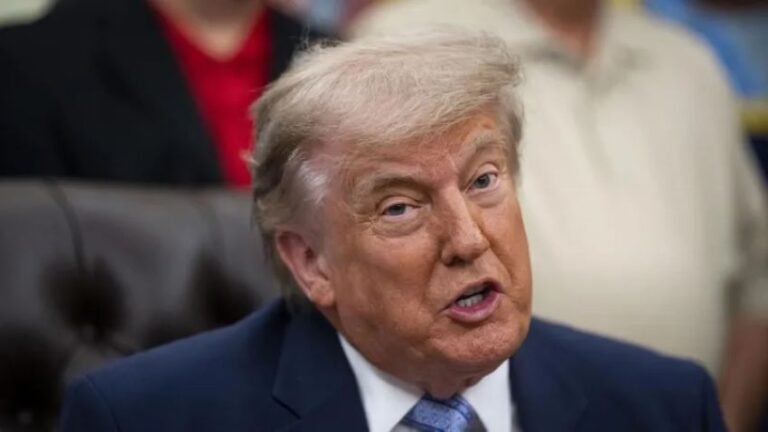
Insisting on loyalty of allies whose independence you are threatening to obliterate. This is a kind of brazenness which is unusual in the history of mankind. You say you are going to take the land of your neighbor on Monday and come to him on Friday and ask him to help you move the furniture. This has been Trump’s foreign policy, and it comes down one simple juxtaposition.
Sovereignty is sacred when America needs something from you, and it is negotiable when America wants something from you. It turns out that the distinction between need and want is the place where the entire argument resides.
The NATO was established on one basic promise: an attack on a single member will be considered an attack on all. It is a fellowship of equal sovereigns, bound by mutual obligation. At least, so says the founding document.
In early 2026, Trump initiated operation Epic Fury against Iran, without consulting any of his NATO allies. No collective decision-making, no coalition agreement, no discussion. He unilaterally started it and then he wanted a bunch of thirty-one sovereign nations to follow suit, a decision that they did not even participate in taking.
Read More: Polish PM Questions US Commitment to NATO in Case of Russian Attack
Trump referred to NATO as a “paper tiger”, when Spain and France refused to open their airspace to the military activities of the Americans. After allies declined to contribute naval forces to the Strait of Hormuz the White House said that “they had turned their backs on the American people.”
NATO Secretary General flew to Washington to salvage the relationship and Trump replied by posting: “NATO WASN’T THERE WHEN WE NEEDED THEM, AND WON’T BE THERE IF WE NEED THEM AGAIN.”
What this grievance fails to say is that NATO allies were never been invited to the table prior to the war. They had not been joint decision makers. They were supposed to share the consequences. It is not alliance politics to demand solidarity of people whom you have never consulted. It is nearer to anticipating a standing applause on a play that no one was invited to rehearse.
The Greenland Postscript
In the same post Trump called NATO a betrayer: “REMEMBER GREENLAND, THAT BIG, POORLY RUN, PIECE OF ICE!!!”
Greenland is a part of Denmark. Denmark is a member of NATO. And Trump himself confessed that the whole weakening of relations with NATO started there. “It all began with, if you want to know the truth, Greenland,” he explained to reporters, “We want Greenland. They don’t want to give it to us. And I said, ‘bye, bye.’”
So, chain of thought will be the following one: Trump threatened to occupy the sovereign land of the NATO member. The relations with allies of NATO became chilled. Trump without consulting them started a unilateral war. They declined to join. Trump then accused them of treachery of the alliance.
It is a marvelous argument. The same alliance which Trump foresaw as unconditionally in his favor, is the alliance when which the sovereignty of a member he openly threatened to meddle with. The paradox is not an exquisite one. On his personal social media feed, it will be written in capital letters.
Menu, No Principle
After seeing the pattern, it is difficult not to notice. The idea of sovereignty in Trump’s foreign policy is not an ideology, but a menu, which should be applied selectively depending on who is holding it, and as well as what America wants at a specific time and location.
As long as it is diplomatically convenient to give Russia some territory, the sovereignty of Ukraine has to be defended. Delta force was totally in control of the sovereignty of Venezuela when it kidnapped its president during broad daylight.
Sovereignty of Iran also collapsed when it was decided to make its nuclear program a political target. According to Trump himself, sovereignty of Greenland over Denmark remains open to negotiation.
But NATO members, Trump demands, have a debt to America called sovereign loyalty, that is, their bases, their airspace, their men and their politics, to a war whose planning, decision-making and execution had been carried out wholly without their involvement.
Empires that are used to trampling on the sovereignty of allies do not just build diplomatic scores. They forfeit much more down-to-earth an asset: the logistical systems that render military force effective on the ground.
Read More: Italy, Spain Refuse US Base Access Amid Iran War
Bases, overflight, port access, intelligence sharing, political cover, none of these can be found on a line item on a defense budget, but all this is what contributes to a strong military being an efficient one. Although denying airspace to the Iran war was symbolic when Spain and France did it. It was a preview of how the American power is going to be like as the network that encloses it begins to disintegrate.
And this leads to the question which defense analysts are increasingly beginning to pose: in what ways can an aircraft carrier have any value at a time when there are no friendly ports in sight, when there are no friendly bases nearby, and when supply lines extend back across to the Pacific?
A carrier group is an effective instrument, though it is not-so-plying on nothing. It is built on a web of relationships, accords and trust that demands decades to build and can be destroyed within a very short period of time.
The economic price of operation short of that web, of provision of all wars on home ground, of fighting with no burden-sharing allies hastens to multiply. The overextension of the military has worn down other much stronger empires than this one.
And a country that turns its friends to enemies, in the cause of sovereignty, will finally find that sovereignty, to all other people, is a two-way street.
*The views presented in this article are the authors’ own and do not necessarily reflect the views of The Diplomatic Insight.

Tabia Aziz
Tabia Aziz is a student at the Department of International Relations, Government College University Lahore (GCUL).

Muhammad Mahad Samija
Muhammad Mahad Samija is a student of Political Science at Government College University, Lahore. He can be reached at muhammadmahadsamija@gmail.com