There is a particular type of damage that is slow to notice but fast to spread. The kind does not announce itself with a bang but accumulates quietly, agreement by agreement, statement by statement, until one day allies look around and realize the foundation they built their security on has been quietly hollowed out.
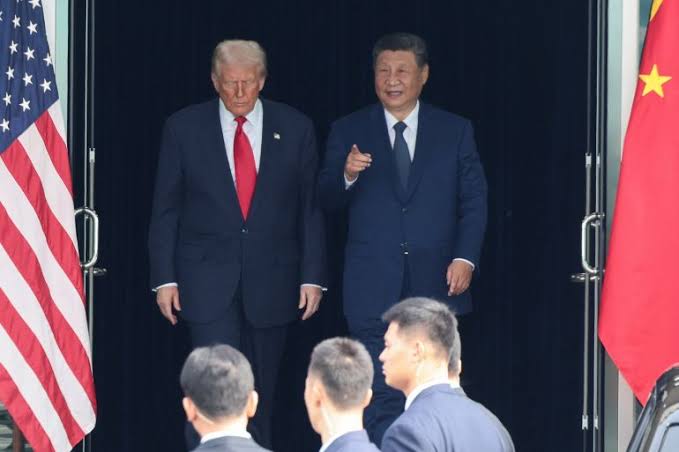
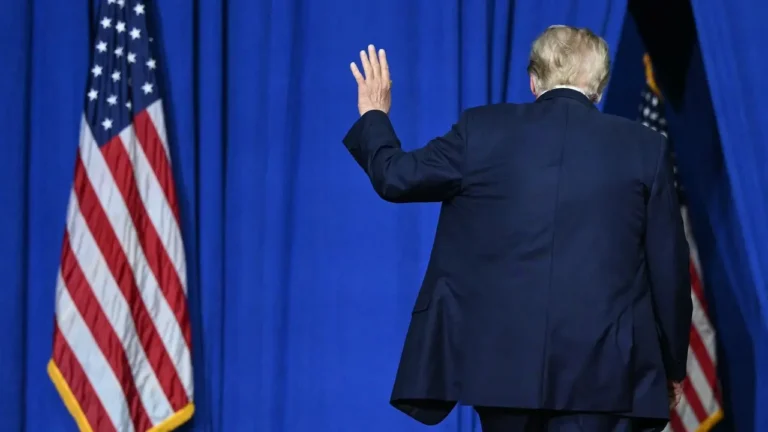
This is happening to America’s position in Asia. And the architect of that hollowing is sitting in the White House. The United States did not build its Asian alliance network overnight. It took decades, and in many cases, blood. The Mutual Defense Treaty with the Philippines dates to 1951.
The US-Japan security alliance is the cornerstone of its stability in Northeast Asia. The US-South Korea alliance, forged in the fire of the Korean War, has kept the peninsula’s balance of power intact for over seventy years.
These alliances were strategic investments, in stability, in influence, and in kind of rules-based order that served American interests as much as anyone’s else’s. For decades, every American administration understood this. They argued about how to manage these alliances.
They sometimes disagreed with their partners. But they never seriously questioned whether the alliances themselves were worth keeping. But Donald Trump has questioned it repeatedly and clearly damaged it.
Read More: US Defense Officials Tour Asia to Reassure Allies After South Korea Drills Cut Short
The most recent and most visible example came in August 2026, when Trump abruptly ordered the Pentagon to scale back at Ulchi Freedom Shield, the annual joint military exercises between the US and South Korea, just hours before they were set to begin.
His justification was breathtaking in its casualness as he cited his “good relationship” with North Korea leader Kim Jong Un, criticized South Korea for not helping in the Iran war, and suggested America could not keep defending countries that were not “there to help us.”
A retired South Korean general responded and said that North Korea and China would be the ones most pleased by this. He was right as the military exercises are not just about rehearsing battle plans. They are about signaling to allies, to adversaries, and to the region that the commitment is real, that troops are ready, and that the alliance means something.
When you cancel them because of a personal relationship with the adversary those exercises are designed to deter, you are not just changing a training schedule. You are changing what tour alliance is worth.
Trump’s treatment of Asian allies on trade has been equally damaging. Singapore, one of America’s closest partners in Southeast Asia and a country that consistently runs a trade surplus in America’s favor, found itself facing a 12.5% tariff on $7.4 billion worth of exports, on the grounds that it lacked adequate forced labor enforcement laws.
Singapore firmly rejected the characterization. Its Foreign Minister raised the issue directly with Secretary of State Marco Rubio, although the response from Washington was essentially irrelevant.
South Korea, Japan, and other Asian allies have faced similar experiences, being simultaneously told they are indispensable security partners and then treated as trade adversaries the moment economic calculations shift. The message this sends is corrosive, that America’s partnerships are transactional, conditional, and subject to revision at any moment based on the President’s mood rather than any consistent strategic framework.
Perhaps the most disorienting feature of Trump’s Asia policy is his continued public warmth toward North Korea’s Kim Jong Un, a leader whose country continues to develop nuclear weapons, fire ballistic missiles, and run one of the most brutal repression systems on earth.
Trump has repeatedly praised Kim. He used the personal relationship as a reason to cut South Korea’s military exercises. He has floated the idea of meaning Kim again. And each times he does, he sends a signal to every US ally in Asia that Washington is willing to prioritize a personal relationship with an adversary over its institutional commitments to its partners.
This matters beyond South Korea as Taiwan watches, Japan watches, the Philippines watches. They all ask the same question that if Trump can sideline the US-South Korea alliance for a phone call with Kim Jong Un, what exactly is the guarantee that underpins their own security arrangements with Washington?
What is being eroded is not just military readiness or trade relationships. It is harder to rebuild credibility. The belief that when America makes a commitment, it keeps it. The confidence that US security guarantees are worth something. The trust that Washington’s word, spoken in treaty form, in joint statement form, in alliance form, means what is says.
Read More: Trump Signals Openness to Talks With Iran
That credibility was built over decades by presidents who understood that allies are not a burden, they are multiplier. That forward-deployed alliances are cheaper than fighting wars after deterrence has failed. That rules-based orders do not maintain themselves, they require constant investment, consistent signaling, and the demonstrated willingness to show up even when it is inconvenient.
Taiwan has responded to the uncertainty by pledging record defense spending. South Korea is quietly expanding its own independent military capabilities. Japan has accelerated its own rearmament. These are not signs of confidence in American protection, they are insurance policies being taken out against American unreliability.
China is watching all of this very carefully. Every cancelled drill, every tariff imposed on a treaty ally, every warmth word for Kim Jong Un is registered and filed. Beijing does not need to do anything. It simply needs to wait while Washington does the work of undermining its own position.
The United States spent seven decades building a network of alliances, partnerships, and institutional partnerships in Asia that gave it unmatched strategic depth and influence. That network is not gone, but is assessed in ways it has never been evaluated before, not by an adversary, but by its own leader.
History will record what was lost. The question is whether America’s partners, and America itself will recognize the damage in time to stop it.
*The views presented in this article are the authors’ own and do not necessarily reflect the views of The Diplomatic Insight.*