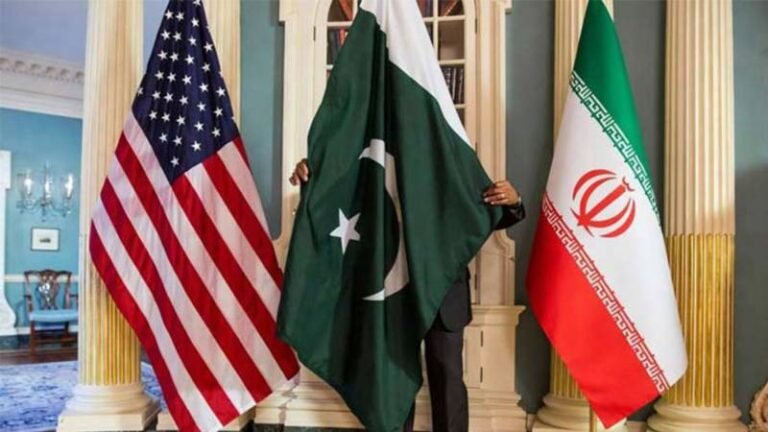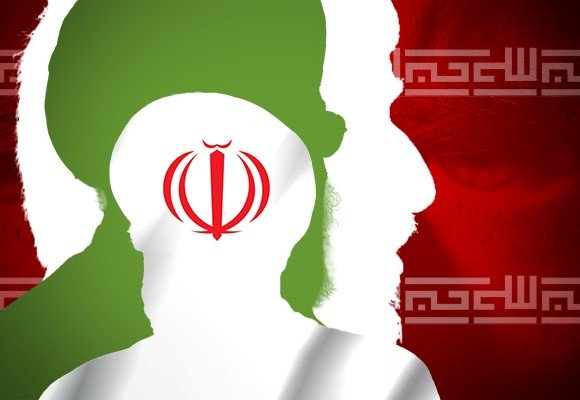
For decades, Iran has been cast as the Middle East’s central menace. Iran, in fact, is not a threat as it’s been perceived by the region and the west but an intentionally fanatic construction by Washington to keep its military footprints in the Gulf to protect Israel’s interests and to regionalize each conflict linked to Iran.
Iran’s support for Palestine and the Axis of Resistance led the US and Israel to cast Iran as a regional menace. This constructed threat aligns Gulf countries’ interest of survival with the US and Israel’s interests. The current Gulf countries’ defense agreements, diplomatic and trade alignments are designed in response to this threat.
The geopolitical reality is far simpler than it has been presented as complex. The U.S.-led security architecture in the Gulf, built around Iran through alliances with Gulf states, has often fueled more instability than the promises of regional peace.
Manufacturing the threat
Threat in international politics is rarely self-made but constructed through narratives and interpretations by the states. For decades, Washington and Tel Aviv have framed Iran as an existential danger to the Middle East. Since the 1979 revolution, Iran’s foreign policy has largely been shaped by defensive concerns, responding to external pressures and wars imposed on it, rather than by a desire to initiate direct aggression.
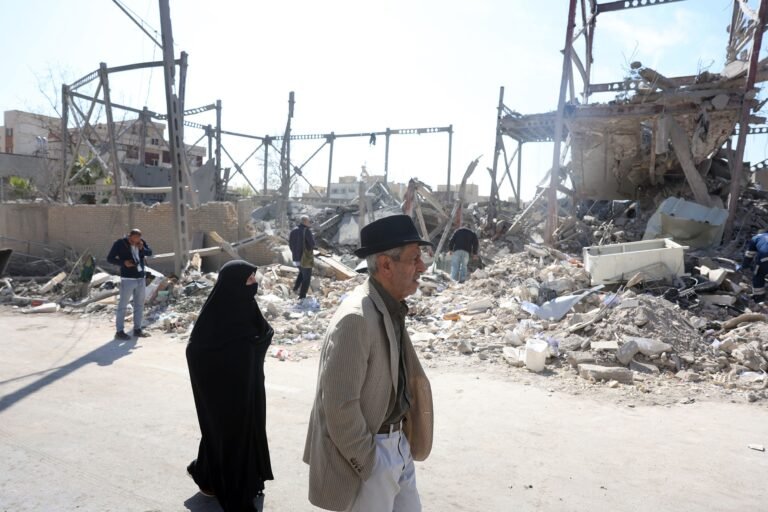
The series of events since February 2026 is being framed through the same narrative, with strikes on Iran’s senior military and political leadership, in which the Iranian Supreme Leader has been martyred, presented as necessary responses to an alleged Iranian threat, once again imposing war on Iran.
Israel has played a significant role in framing Iranian capabilities as an existential threat, not only to itself but to the Middle East and even U.S. interests, stretching from the conventional balance of power to nuclear deterrence. Along with this, successive U.S. administrations have, at various times, reinforced this narrative to justify a military presence in the Gulf, sustain defense partnerships with the Gulf states, and pursue broader strategic objectives of regional dominance and the protection of allies.
The establishment of the Gulf Cooperation Council (GCC) in 1981, for instance, was shaped by fears surrounding post-revolutionary Iran and the Iran–Iraq War. This Iranian threat is not a uniformly shared regional reality but a politically constructed perception.
U.S. security architecture in the Gulf
Washington has built a vast network of bases, naval deployments, and defense partnerships across the Gulf in the name of containing Iran. But containment requires a constant adversary, and in Iran’s case, the threat has become a structural necessity to justify an enduring military presence in the region.
US security architecture in the Middle East includes the headquarters of the U.S. Fifth Fleet, central to naval operations in the Persian Gulf in Bahrain, while Qatar hosts Al Udeid Air Base, the largest U.S. military facility in the Middle East, serving as a critical hub for air operations.
On the other hand, the military base in Kuwait performs its job as the main logistical support center to US Army deployments and operations in Iraq and Syria. In the United Arab Emirates, American forces operate from Al Dhafra Air Base, further extending U.S. air power in the region.
Meanwhile, Saudi Arabia remains a cornerstone of this architecture through long-standing defense cooperation agreements and extensive arms partnerships with Washington. These security arrangements are set for the US strategic priorities in the Gulf region, not for the security of the Gulf states, but its own presence as a hegemon in the region and to project power.
In February 2026, Iranian missiles and drones reportedly targeted U.S. military infrastructure in the Gulf. The resulting damage in Gulf States was not a reflection of hostility toward those countries, but rather a consequence of their hosting American military installations. In reality this system has turned the region into the most militarized region and spending on offense-defense armament.
The myth
Four recurring narratives have contributed to constructing Iran as a threat: the nature of its regime, its nuclear program, its missile and drone capabilities, and its network of regional proxies. The regime type of Iran has often been securitized by the West, where ideological differences and political rhetoric are framed as threat.
Among these, the nuclear issue has served as the cornerstone of the threat perception, interestingly Iran had a agreement with P5+1 States under the umbrella of JCPOA and was somehow complying with those obligation but the US suddenly withdrew from JCPOA under Trump’s previous administration.
In response to June 2025 strikes, Iran blocked the inspections of the IAEA at critical nuclear sites, the JCPOA framework totally collapsed , prompting the E3 (UK, France, and Germany) to trigger the “snapback” mechanism in September 2025. Iran’s civilian nuclear facilities have frequently been portrayed as a danger, often overlooking the broader regional imbalance shaped by the ambiguity of Israel’s nuclear program.
Similarly, Iran’s missile and drone capabilities, framed as destabilizing force, reflect tools that many states maintain for defensive purposes and everyone has the right to. Iran’s use of proxies reflects a forward or asymmetric deterrence strategy that emerged amid regional destabilization and the consolidation of U.S.-Gulf security alliances.
The consequences of this security framework are far-reaching for the region and global community. Economically, enormous defense expenditures divert critical resources away from development, limiting investment in social and economic progress.
Strategically, reliance on external military protection fosters dependence, constraining the autonomy of Middle Eastern states in shaping their own security policies. Politically, the constant invocation of threat narratives deepens divisions within the region, exacerbating fragmentation and hindering the possibility of cooperative, indigenous solutions to shared challenges.
At the same time, countries like Japan, South Korea, China, Pakistan, India, which are dependent on the energy resources of the Gulf, pay a huge price, and the Gulf populations bear the immediate human cost, as strikes on airports, ports, power plants and oil facilities disrupt livelihoods in countries that never chose this fight. It’s a loose-loose game for the entire world and entire world is going to pay the price of it.
*The views presented in this article are the authors’ own and do not necessarily reflect the views of The Diplomatic Insight.

Suffian Zafar
Suffian Zafar is an Mphil scholar of International Relations at the University of Punjab, Lahore. He is currently working as a Junior Research Fellow at the Maritime Centre of Excellence MCE. He can be reached atsuffianzafarmce@gmail.com

Abdul Muhaymin Farooq
Abdul Muhaymin Farooq is an Mphil scholar of Political science at the University of Punjab.