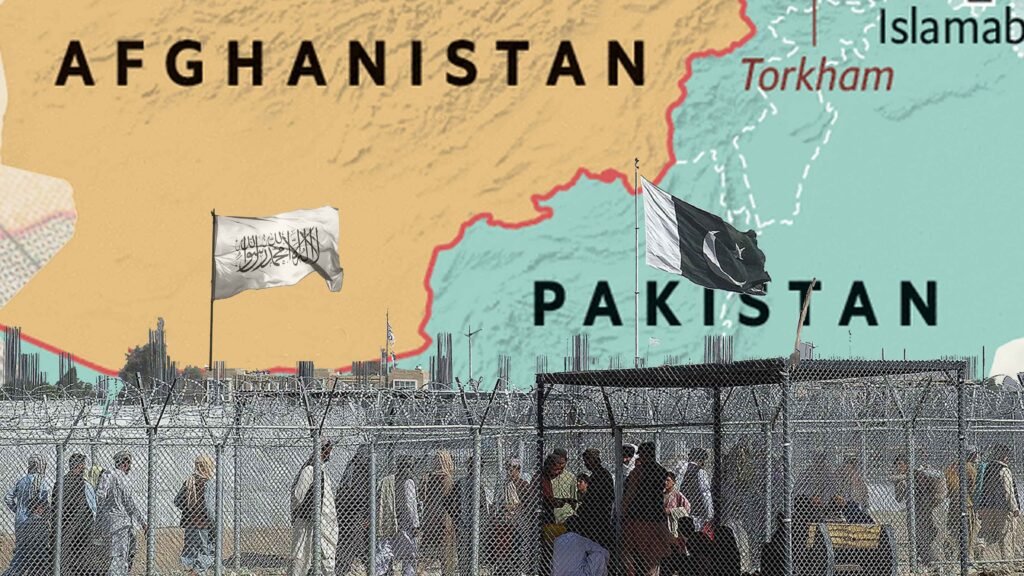
At the meeting of the United Nations Security Council on the situation in Afghanistan on 9 March 2026, Pakistan exchanged acerbic remarks with its Indian and Afghan counterparts after India accused Islamabad of “flagrant violations of international law” during the recent Pakistan’s strikes, the same tactic of cross-border strikes employed by India after Pahalgham incident in May 2025, which was, in fact, based on flawed reasoning, as Pakistan offered the independent investigating on Pahalgham incident and openly condemned that act of terrorism.
India emphasized Pakistan’s cross-border airstrikes as violations of international law, the UN Charter, and state sovereignty. But Pakistan’s interpretation carries credibility regarding terrorism as an imminent threat to its peace and stability, being a direct victim of regional terrorist militancy.
Before the strikes on the 26February, concerns about the regional terrorism threat were raised not only by Pakistan but also by Russia’s Foreign Ministry which warned that Afghan soil had become a refuge for 20,000 to 23,000 militants belonging to international terrorist groups active in Afghanistan, such as Islamic State Khorasan Province, Tehrik-e-Taliban Pakistan, and al‑Qaeda, posing an ongoing threat to regional security.
The ministry also highlighted that the TTP continues to operate mainly in Afghanistan’s southeast and eastern regions, which supports Pakistan’s stance. In addition, Pakistan’s airstrikes have reignited the debates on cross-border strikes and state sovereignty in the international law community.
Legal Debate on the Rationale Behind Strikes
The recent Pakistan’s Operation Ghazab Lil-Haq on 26th of February is based on precision air strikes, designed to defend Pakistani territory against terrorism while avoiding a full-scale escalation. Under Article 51 of the UN Charter, Pakistan maintains that it possesses the legal right of retaliation in self-defense against terrorist threats emanating from Afghan soil.
These actions are framed as a necessary response to the “outsourced problems of terrorism” that the interim Afghan regime has failed to contain.
Moreover, from a legal perspective, the Taliban operates as a de facto (in practice) government rather than a de jure (legal) one. Because they have failed to comply with United Nations conventions and Security Council resolutions regarding state recognition, their claim to absolute sovereign protection is weakened in the eyes of the international community.
Debate on the Breach of Doha Agreement
The Doha Agreement was an agreement to ensure that Afghan soil would not again become a refuge for terrorists. Pakistan argues that the Taliban’s failure to address groups like the Tehrik-i-Taliban Pakistan (TTP) constitutes a fundamental compliance issue.
Legal and diplomatic norms suggest that if one party shows restraint and a positive spirit, it must be reciprocated. Pakistan argues that since the Taliban has not proactively met its DHA mandates, the bilateral “ceasefire” or “understanding” is effectively undermined.
To transition to a permanent government, the Taliban must adhere to a “long checklist” of international rules and obligations established by the global community. By violating these, they remain an “international outlier,” which complicates the Taliban’s legal standing when protesting cross-border strikes.
Read More: The Durand Divide and South Asia’s Reignited Frontline
Debate on Blurred Lines between Taliban and TTP
The 2021 U.S. withdrawal, many groups, between hardliners in Kandahar, who favor stricter ideological governance, and more pragmatic figures in Kabul, who emphasize external engagement, and other groups like TTP in Afghanistan, view as a shared or unified victory, leading to a fragmented landscape where different outfits claim de facto control over various territories.
This fragmentation makes it challenging to ensure effective border monitoring mechanisms and compliance with international treaty obligations.
Furthermore, the line has been blurred to distinguish between the Tehrik-e-Taliban Afghanistan and Pakistan. The distinction between the two groups had become a fiction. This blurring is the core driver of the sharp deterioration in Pakistan–Afghanistan relations seen in 2025–2026.
A complicating factor in the legal debate is that the Taliban is not a single entity but a plethora of non-state actors and warring bands, which underlines the lack of centralized control. This raises the question of whether a central authority can be held legally responsible.
In conclusion, the ball is in Kabul’s court. For the Taliban to claim the legal protections of a recognized state, they must move from a war economy to a transparent system that complies with United Nations General Assembly resolutions and identifies “legitimate portions” of their movement versus “opportunists” and terrorists in their midst.
Failure to do so may lead to further diplomatic and political isolation, leaving them with little recourse against proportional self-defense measures taken by their neighbors.
*The views presented in this article are the authors’ own and do not necessarily reflect the views of The Diplomatic Insight.

Suffian Zafar
Suffian Zafar is an Mphil scholar of International Relations at the University of Punjab, Lahore. He is currently working as a Junior Research Fellow at the Maritime Centre of Excellence MCE. He can be reached at[email protected]