New York (TDI): The United Nations Security Council held an open briefing on Afghanistan, on Monday, with diplomats and country representatives warning that Taliban policies, human rights violations, and the presence of terrorist groups continue to threaten both regional and global security.
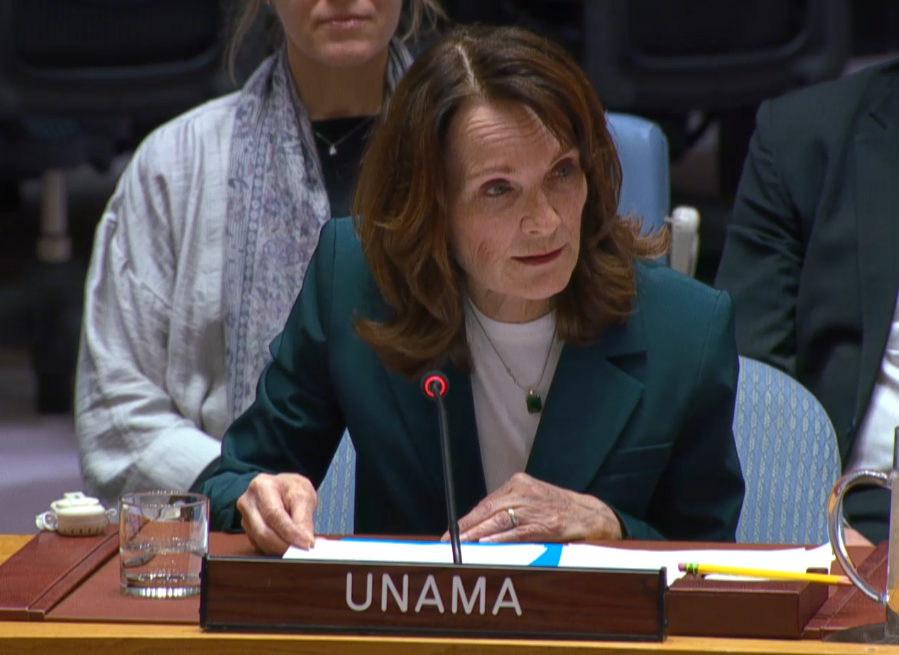
Briefing the Council, Georgette Gagnon, Office in Charge of the United Nations Assistance Mission in Afghanistan (UNAMA) and Secretary-General’s Deputy Special Representative for Afghanistan, said the country faces severe economic and humanitarian pressures compounded by international isolation and restrictive domestic policies.
She noted that bans on girls’ education and other limitations on women’s participation in public life risk undermining the country’s long-term development by eroding its human capital.
Millions of Afghans remain dependent on international assistance for survival, she added, stressing the need for sustained global engagement and humanitarian support.
The Middle East crisis is worsening conditions in Afghanistan alongside growing humanitarian needs and restrictions aimed at women and girls, head of the UN mission in the country (UNAMA) warns the Security Council.https://t.co/vg3ivaOngB
— UN News (@UN_News_Centre) March 9, 2026
UN officials estimate that nearly 22 million people, close to half of Afghanistan’s population, require humanitarian assistance this year amid food insecurity, poverty and declining international aid.
Representatives of several countries used the session to raise concerns about the Taliban’s governance and security record.
The United States envoy, Mike Waltz, sharply criticized the detention of American citizens and restrictions on Afghan women and girls, including limitations placed on female UN staff. He argued such policies deepen Afghanistan’s economic and humanitarian crises and hinder the delivery of international aid.
Russia’s ambassador, Vasily Nebenzya, warned that despite Taliban counterterrorism efforts, the regional affiliate of the Islamic State, Islamic State Khorasan Province (ISKP), remains active.
He also pointed to growing production of synthetic drugs in Afghanistan and called for stronger international cooperation to address security and narcotics trafficking.
China’s envoy, Fu Cong, emphasized the importance of dialogue and regional cooperation, particularly in light of rising tensions along the Afghanistan–Pakistan border.
He urged Afghan authorities to investigate attacks on Chinese nationals and ensure Afghan territory is not used to threaten other countries.
Statement by Ambassador Asim Iftikhar Ahmad,
Permanent Representative of Pakistan to the UN,
At the Meeting of the UN Security Council on the Situation in Afghanistan
(9th March 2026)
**************Thank you Madam President for giving me the floor,
It has been more than four… pic.twitter.com/WaFoemzCKl
— Permanent Mission of Pakistan to the UN (@PakistanUN_NY) March 10, 2026
Jacqui Smith, the United Kingdom Minister for Women and Equalities, called for the restoration of Afghan women’s access to education, employment and humanitarian work, stressing that their participation is essential to the country’s recovery.
Pakistan’s envoy, Asim Iftikhar Ahmad, accused Afghanistan of harboring militant groups including the Tehrik-e-Taliban Pakistan and Al-Qaeda, while defending Pakistani cross-border operations as necessary counterterrorism measures.
Meanwhile, India’s representative, Parvathaneni Harish, advocated a pragmatic approach that combines engagement with the Taliban and continued humanitarian and development assistance.
Despite differing approaches, Council members broadly agreed that Afghanistan’s future requires coordinated international engagement, protection of human rights, and stronger efforts to combat terrorism and stabilize the country.