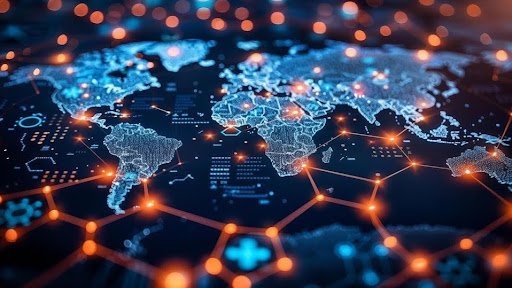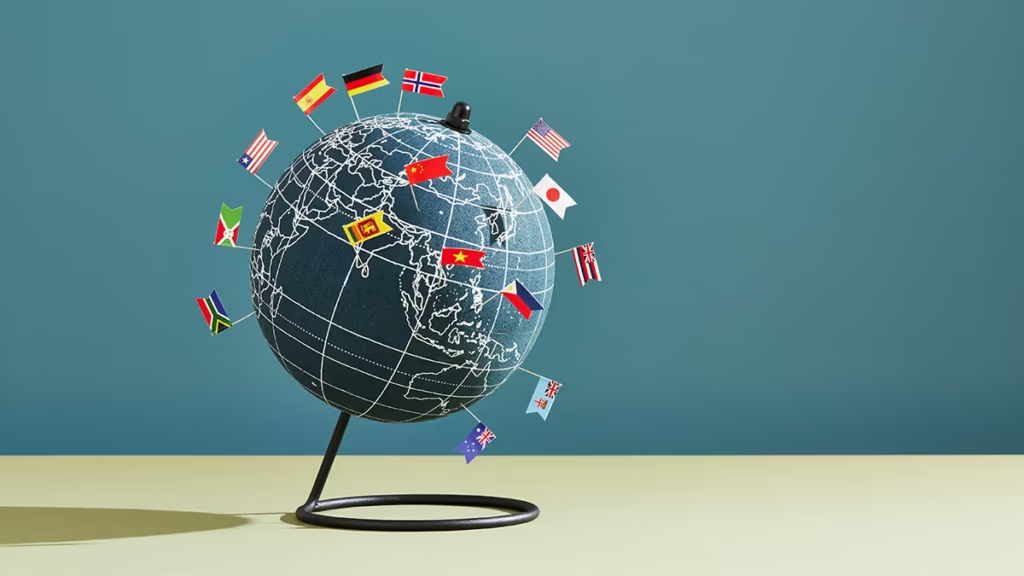
Throughout the history of global politics, the grundnorm of power; the deep, often unspoken foundation of international relations has been balancing power through alliances. For centuries, nations have formed groupings not simply out of affinity, but out of necessity: to counter adversaries, secure strategic advantage, and preserve sovereignty. This model persisted through the Cold War and into the 21st century. Yet today, this system is undergoing a profound transformation, accelerated not only by the rise of China and the resurgence of authoritarian powers, but by the disruptive behavior of the once stabilizing hegemon, the United States.
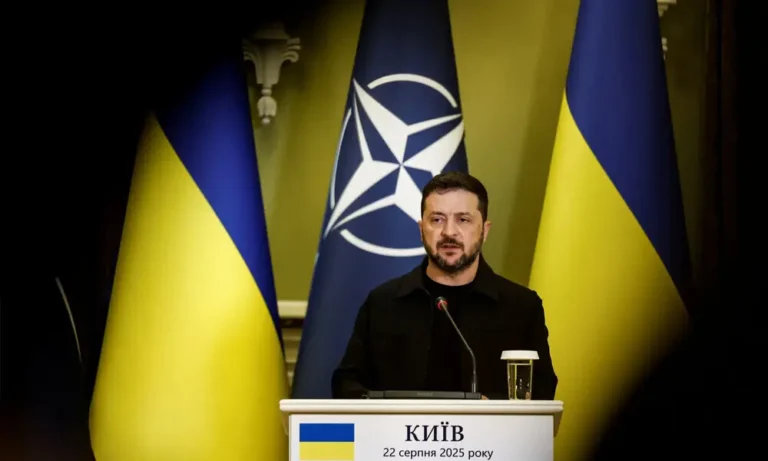
In traditional geopolitics, middle powers states with significant regional influence but not global dominance often align themselves structurally to counterbalance rising threats. The creation of alliances such as NATO post-World War II embodied this idea: Eastern European nations like Poland, Czechoslovakia, and Finland historically looked to collective defense against Russian expansion.
In Asia, rising concerns about a more assertive China led to the formation and strengthening of frameworks like the Quadrilateral Security Dialogue (QUAD), a strategic dialogue among the United States, Japan, India, and Australia, aimed at ensuring a free and open Indo-Pacific in the face of China’s growing military and economic might. From a realist perspective, these alignments are textbook examples of balancing behavior: states with limited unilateral power join larger coalitions to counter a principal threat.
Yet the U.S. often invoked as a hegemon in the international system has historically attracted alliances through ideational leadership rather than mere power balancing. Nations such as Canada, Western European states, Japan, and South Korea have partnered with the U.S. not just because it counters adversaries, but also because it championed norms like democracy, rule of law, and a rules-based global order. Unlike traditional empires that governed through explicit domination and coercion, the U.S. combined material power with international appeals to universal values providing a unique blend of incentives that encouraged cooperation over containment.
Read More: What Does the Capture of Venezuela’s President Mean for the World Order?
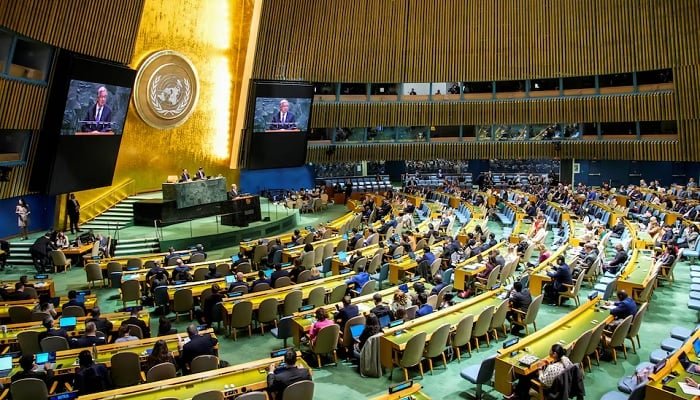
This distinction explains why many states historically preferred alignment with the United States even if asymmetrical rather than balancing against it. They saw not an unpredictable guardian, but a guarantor of the international system built largely on open commerce, collective security, and institutional legitimacy. The war in Iraq offers an illuminating case. Though the intelligence regarding weapons of mass destruction (WMDs) proved to be flawed, the U.S. did not act solely on executive whim. Prior to the invasion in 2003, the U.S. sought and received approval from the U.N. Security Council (UNSC) through Resolution 1441, and there was a significant domestic debate in Congress before military action was taken.
While hindsight has judged the wisdom of the war harshly, at the time the process embedded in international and domestic legal frameworks reinforced American claims to legitimacy and accountability. It was not mere unilateral action but one constrained and legitimized by structures of law and alliance. Such adherence to legal forms, even amid controversy, is what distinguished American hegemony from classical imperial conquest. It anchored U.S. power in a broader belief in institutional sanction, reinforcing the idea that even great power behavior should operate within recognized rules.
This was the foundation of Washington’s claim to moral leadership in world affairs. That paradigm has now shifted dramatically in early January 2026, the United States carried out an operation Absolute Resolve in Venezuela that resulted in the capture of President Nicolas Madura and his wife by U.S. forces, a bold and controversial act that has sent shockwaves across the globe. Madura, facing charges in U.S. courts related to narcotics trafficking and other allegations, was flown to New York to await trial.
This move alone is unprecedented in modern history: no U.S. administration in recent memory has extracted the leader of a sovereign state and brought him to its own territory for prosecution outside the framework of international cooperation or explicit global authorization. However, the rhetoric surrounding it was more striking still. In interviews following these events, President Donald Trump stated that his “own morality” not international law was the only constraint on his use of power. He openly dismissed the binding force of international legal norms and suggested that global authority was exercised not through shared rules, but through the unilateral decisions of the most powerful.
Read More: How the World Order Will Look Like in Next 50 Years
Donald Trump is even dangling a sword over his own allies by openly calling for the takeover of Greenland citing strategic reasons and fearing Chinese and Russian take over. This suggests an entirely different conception of how power should function on the global stage not as stewardship under constraints, but as direct, often unmediated, assertion of will. The implications are profound. International reaction has been sharply divided. Many nations, particularly in the Global South, have voiced alarm that such a precedent undermines sovereignty and the very essence of the United Nations Charter.
Leaders across Africa, the Caribbean, and Latin America have warned that unilateral intervention sets a dangerous precedent and recalls memories of colonial subjugation. Even within the United States, constitutional scholars and lawmakers have questioned the legality of the Venezuela operation. Critics note that Trump’s administration did not obtain prior congressional authorization for the military action, raising concerns under the U.S. Constitution’s division of war powers. Meanwhile, other great powers like China have condemned the move, framing it as a violation of sovereignty and international norms a language that they, too, employ when defending their own interests against Western critique.
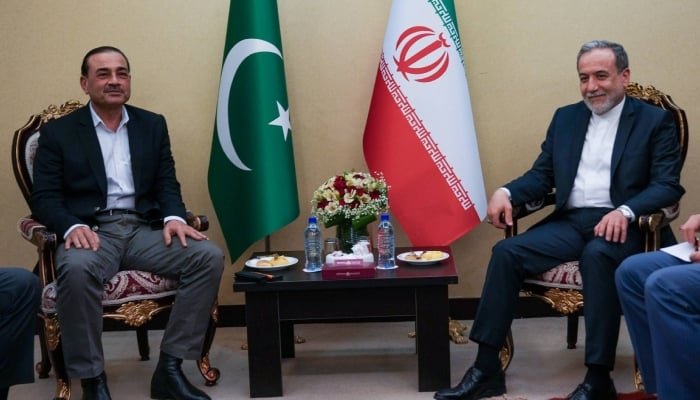
In this fraught context, the venerable system of alliances is fraying. Where once middle powers joined collective defense pacts to balance threats, today some are reconsidering their ties under a new calculus: not just who poses a threat, but who can be trusted to abide by the rules of the modern system. The fear engendered by unpredictable unilateralism risks eroding confidence in the very alliances that underwrite global stability. Another phenomenon emerging in this transitional era is what many describe as “selective globalization”: a retreat from universalist economic and security integration toward regionalized, interest-based cooperation.
The rise of blocs such as the expanded BRICS incorporating major economies across Africa, Asia, and the Middle East hints at a world where power is dispersed among many centers, not dominated solely by the United States and its traditional allies. We see a similar pattern in trade and financial systems. Nations wary of geopolitical coercion increasingly explore alternatives to Western dominated financial infrastructure, seeking networks that can shield them from sanction vulnerability and political pressure. This reconfiguration, studied extensively by economists, suggests a long-term fracturing of global integration with geopolitics and economic interests intertwined in new, complex ways.
Read More: Fault Lines of Fire: How Ukraine and Gaza Are Making a New World Order
In the last century, American leadership, though imperfect, anchored a global order built on shared rules, institutional legitimacy, and alliances that sought to manage power through cooperation as much as competition. That order was not perfect, but it provided a framework where states could balance threats without descending into constant conflict.
Today, however, we are witnessing a rupture a moment where the old playbook of power politics is being torn apart. A hegemon that once claimed moral and institutional constraints now embraces a vision of unfettered power, justified by personal judgment rather than collective norms. This transformation is reshaping alliances, unsettling middle powers, and accelerating the shift toward a multipolar world but a world that may be more fragmented, more transactional, and less governed by the very rules that once gave global politics its stability.
The key question for the future is not just who holds power, but how that power is understood, constrained, and exercised. Because in the absence of shared norms, balance; whether military, economic, or moral, becomes far more elusive.
*The views presented in this article are the author’s own and do not necessarily reflect the views of The Diplomatic Insight.

Idrees Khan
Idrees Khan holds a BS(Hons) degree in Government and Public Policy and is an alumnus of the SUSI exchange program at the University of Massachusetts Amherst. Currently, he is serving as Azerbaijan Youth ministry representative.