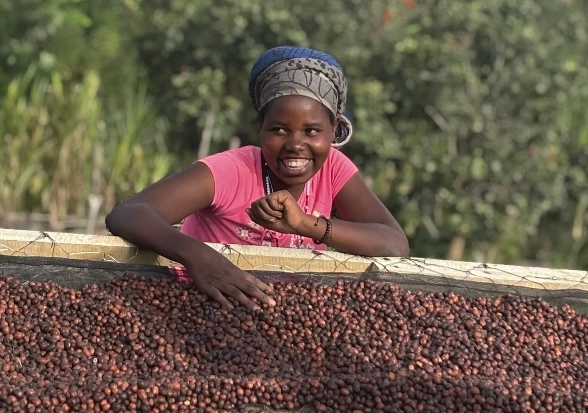
Coffee is becoming an increasingly interesting bridge between Rwanda’s agricultural economy and Pakistan’s rapidly changing urban consumer culture. Rwanda has developed a reputation for high-quality Arabica coffee and has steadily moved toward specialty production, value addition and international market expansion.
Rwanda’s coffee sector has undergone a significant transformation over the past two decades. The country has invested in washing stations, processing, quality improvement and export development, enabling a growing share of its coffee to enter specialty markets.
Rwanda’s agricultural authorities have previously reported that more than half of the country’s coffee exports were specialty coffee, reflecting the sector’s movement toward higher-value products rather than simply exporting raw agricultural commodities.
Read More: Why Pakistani Businesses Should Invest in Rwanda
Rwanda has also expanded its international market presence, with coffee exports reaching destinations including the United States, Switzerland, the United Kingdom, Sweden and Italy. More recently, the country has placed greater emphasis on roasted coffee and domestic processing, seeking to retain more value within Rwanda itself.
Pakistan presents a different but complementary side of the equation. Coffee consumption has historically remained smaller than tea consumption, but urban coffee culture is changing rapidly. In Lahore, Islamabad and other major cities, cafés have increasingly become social and lifestyle spaces for younger consumers.
Cafés are increasingly important meeting places for Lahore’s Gen Z, with young people using them to socialize, study, work and unwind.
Growing demand for African and Brazilian coffee blends among Pakistani urban consumers. This changing consumer environment creates room for Pakistani businesses to explore direct relationships with African coffee producers and introduce more distinctive origins and specialty products to the domestic market.
One immediate opportunity lies in the import and distribution of Rwandan coffee in Pakistan. Pakistani coffee companies, roasters and café chains could establish sourcing relationships with Rwandan producers and import specialty beans for the growing premium segment.
Read More: First Ever Rwanda Coffee Festival Held in Islamabad
Such partnerships could go beyond the conventional buyer-seller model by developing Rwanda-origin product lines, joint branding initiatives and curated coffee experiences.
Pakistani roasters could also add value locally through roasting, packaging and distribution, while Rwandan producers gain access to a new consumer market. This would create a model in which value is generated on both sides rather than through a one-directional commodity transaction.
The opportunity could extend further into investment and hospitality. Pakistani café operators and food-and-beverage companies could explore partnerships with Rwandan coffee producers, exporters and specialty brands, while Rwandan coffee businesses could examine Pakistan’s expanding urban café market as a potential destination for their products. Joint ventures could eventually involve roasting facilities, specialty cafés, coffee training centers and branded retail outlets.
Such cooperation would also allow businesses to connect coffee with tourism, culture and storytelling. Rwanda’s coffee industry has increasingly linked production with experiences around farms and processing, while Pakistan’s café culture demonstrates the growing commercial value of atmosphere, identity and social media-driven consumer engagement.
Read More: Rwanda’s Coffee Economy: Brewing Success on the World Stage
There is also a broader value-chain opportunity. Rwanda has demonstrated how an agricultural commodity can be upgraded through processing, branding and specialty positioning, while Pakistan possesses established capabilities in food processing, packaging, retail, hospitality and consumer marketing.
Combining these strengths could create opportunities for cooperation in roasting technology, packaging, café management, barista training, logistics and digital marketing.
Pakistani companies could also use Rwanda as an entry point into East African specialty-food networks, while Rwandan businesses could gain exposure to Pakistan’s large consumer and services market.
Rwanda’s wider investment environment is already attracting significant private capital, with the Rwanda Development Board reporting USD 2.62 billion in registered investments across 799 projects in 2025.
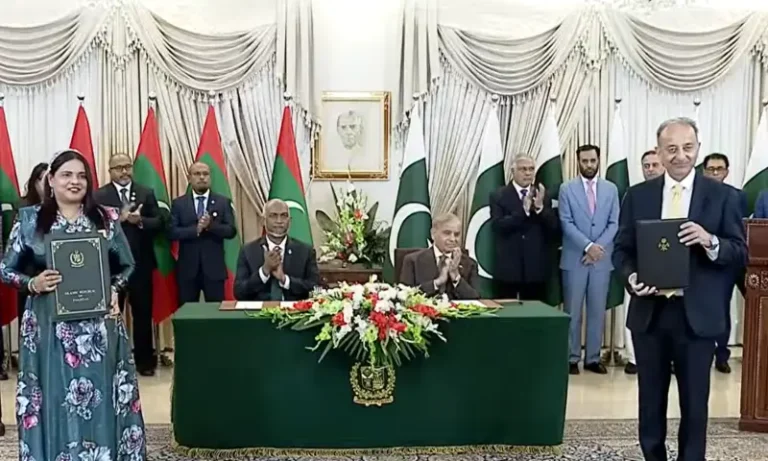
The Rwanda Coffee Festival happened in Islamabad in January 2026 was the example that Pakistan do acknowledge the need and demand of the Rwandan coffee in the Pakistan new rising urban coffee culture.
Read More: A Country That Exports Coffee to the World: Rwanda’s Own Coffee Culture
For Pakistan and Rwanda, therefore, coffee represents more than a niche consumer product. It illustrates how bilateral economic relations can evolve from traditional trade toward investment, value addition and private-sector partnerships.
Rwanda brings an increasingly sophisticated specialty-coffee ecosystem and an established agricultural export base, while Pakistan offers a large consumer market, expanding café culture and capabilities in processing, branding and hospitality.
As Pakistan looks to strengthen its economic engagement with Africa, and Rwanda continues to diversify its export markets and attract investment, coffee could become one of the smaller but more innovative sectors through which the two economies connect.
The next cup of coffee in a Pakistani café could, in this sense, represent not merely a changing consumer preference, but the beginning of a new commercial relationship between East Africa and South Asia.