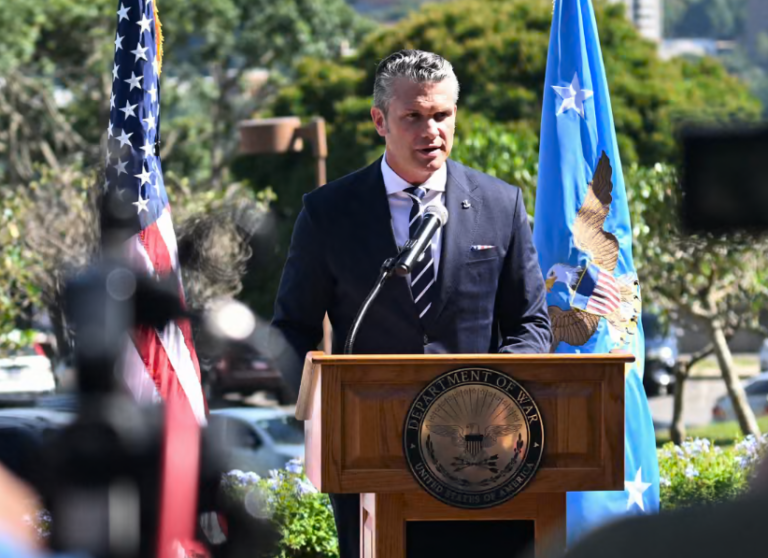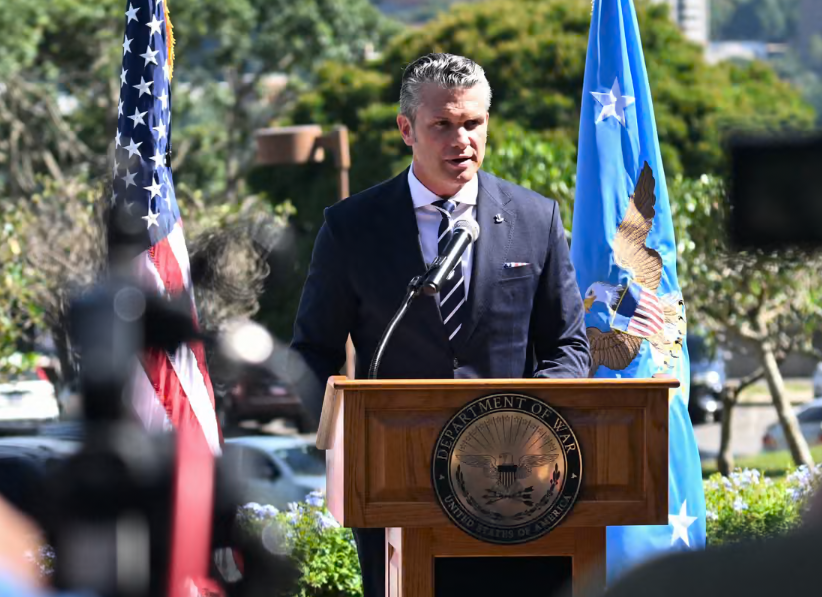
Caracas (TDI): United States’ Defense Secretary, Pete Hegseth, held a press conference in Caracas, Venezuela, on Wednesday, in which he revealed a military partnership between the United States and Venezuela.
The partnership would enable the two countries to conduct joint training, share military intelligence, and improve defense capabilities.
The defense agreement comes as a response to the alleged victimization of the Venezuelan government by ‘extrajudicial and narcoterrorist’ networks.
This military coalition comes a day after Colombia rejected the United States’ plans to deploy military bases in the country to fight cartels.
The Trump administration has been fervent in deploying weapons and military operations to target boats in the Caribbean Sea and the Eastern Pacific Ocean supposedly trafficking drugs across borders. Now, it seems that the administration is trying a more aggressive approach by deploying troops on the ground.
Read More: Trump Announces US Partial Control of Venezuela’s Vast Oil Reserves
Despite Colombia’s resistance to the deployment of a US military base on its soil, relations between the two countries remain strong, and US influence in the region seems to be growing. Colombia and the US recently held joint military training in the past.
There seems to be pressure from the White House toward the president to launch military operations to more aggressively target drug cartels operating in Latin America. Mexican officials fear that Chief of Staff Stephen Miller will convince Donald Trump into a full-scale invasion of their country to that effect.
Hegseth’s deal could potentially mean a US military base in Venezuela. This would add a new dimension to US-Latin America relations which hinges on US dominance of the region. The right-wing inclination in Latin America in recent years seems to have facilitated this presence.
The manner in which this deal took place, however, seems not to be of favor to the Pentagon, which has not yet made a public announcement of the deal. The deal captured the attention of Venezuelan state media before the Pentagon.
Ali works as a Consultant in Karachi for a private firm. He has a BA in Philosophy from The University of Texas at Austin. His research interests include US foreign policy, geopolitics, diplomacy, history, and philosophy. He enjoys traveling, music, and creative writing.