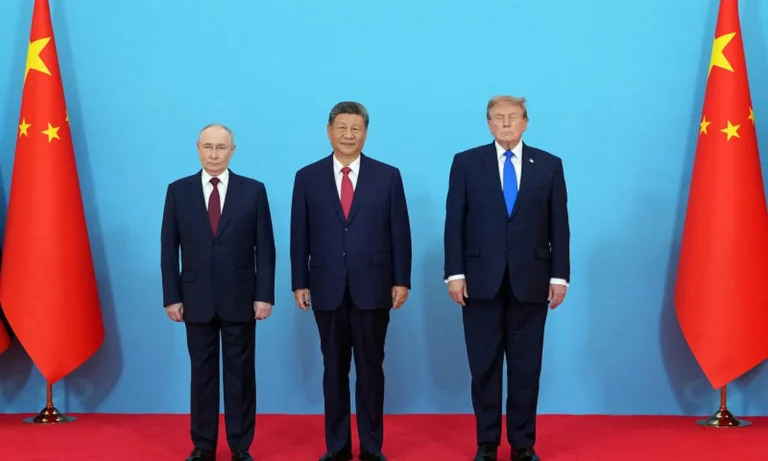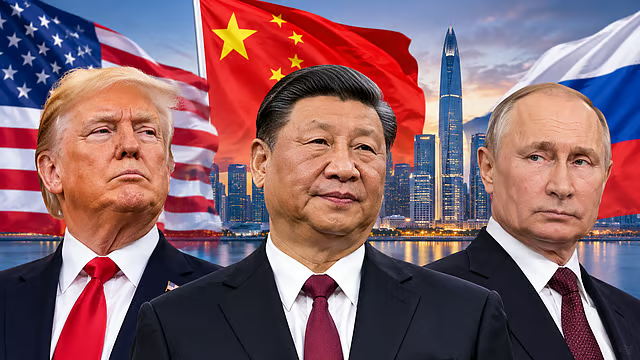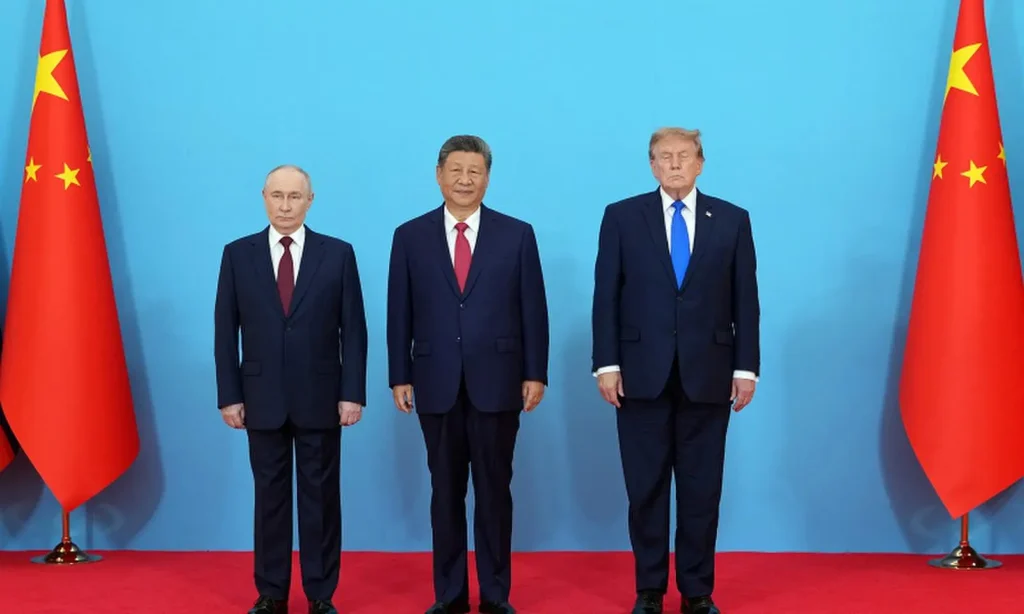
Shenzhen (TDI): Chinese President Xi Jinping, US President Donald Trump and Russian President Vladimir Putin agreed on a “peace declaration” during their unprecedented trilateral meeting on Thursday, reaffirming that a nuclear war must never be fought, according to statements released by Beijing and Moscow.
The declaration also calls for advancing United Nations reforms, increasing supplies of refined petroleum products to all countries and upholding the immunity of state officials before international courts.
The document was published by China’s state news agency Xinhua and the Kremlin following the meeting at Kylin Villa in the southern Chinese city of Shenzhen. None of the three leaders made an immediate public statement after the talks, while Trump departed for the United States.
Earlier, the leaders of the world’s three major nuclear powers described the meeting as historic as they gathered around a round table at the villa, situated among wooded hills beside a lake.
“We are really making history,” Trump told Xi and Putin at the start of the meeting, adding that “no peace was ever forged by declining opportunities for engagement.”
Read More: Three Presidents, One Table: A New Yalta?
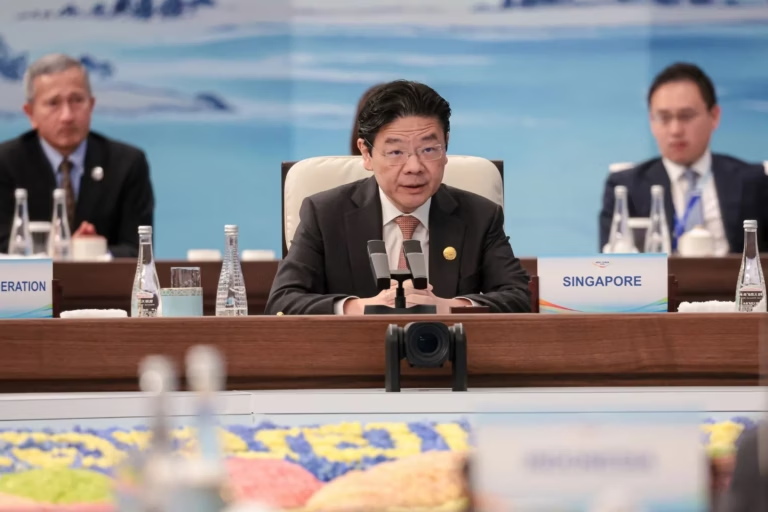
The summit, held on the sidelines of the Asia-Pacific Economic Cooperation (APEC) forum, brought together leaders whose countries have significant differences over Ukraine, Iran, nuclear weapons and international trade.
Putin said the three countries shared numerous interests in resolving regional conflicts, including the war in Ukraine.
His remarks came amid developments on the battlefield, including damage to a key bridge linking Crimea with Russia, which has affected Russian military and logistical operations.
Xi did not directly mention Ukraine in his opening remarks but emphasised the importance of cooperation among major powers.
“History tells us that when major powers live in harmony, the world is at peace. When major powers clash, the world falls into turmoil,” he said.
The meeting has drawn international attention, particularly from smaller countries concerned that agreements among major powers could affect their interests without their direct participation.
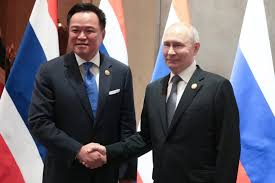
Before the trilateral session, Trump held separate meetings with Xi and Putin, describing both leaders as friends.
Trump also said he and Xi shared strong views on the need to maintain the flow of oil through the Strait of Hormuz, a strategic waterway disrupted by the war involving Iran.
Xi did not directly refer to Iran in his public remarks but called for political and diplomatic solutions to international conflicts.
“China, Russia, and the United States should continue encouraging parties to conflicts to sit down and engage in talks, and resolve disputes through political and diplomatic means,” he said.
Nuclear arms control was another major issue Trump had sought to place at the centre of the summit.
Read More: Xi, Trump and Putin Hold First Trilateral Talks in Shenzhen Amid Global Tensions
The United States and Russia possess far larger nuclear arsenals than China, which has repeatedly resisted joining trilateral arms-control negotiations with the two countries.
Addressing the issue at the start of the meeting, Trump acknowledged the difficulty of reducing nuclear weapons, telling Xi and Putin that giving them up was “not an easy thing to do.”
The discussions also took place against the backdrop of continuing trade and technology tensions between Washington and Beijing.
Trump and Xi met following an extension of their trade truce earlier this month. However, reports that Nvidia chips were being diverted to China through Southeast Asian countries have raised questions about the effectiveness of US export restrictions and China’s access to advanced semiconductor technology.