United States Secretary of State Marco Rubio has reaffirmed Washington’s defense commitments to Saudi Arabia as Yemen’s Houthis warned that American interests in the Middle East could become targets if the United States directly intervenes in the renewed conflict, raising concerns that the confrontation could expand beyond Yemen and Saudi Arabia.
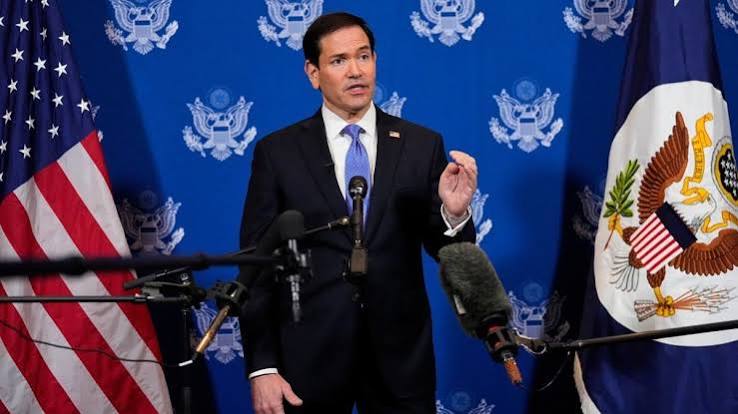
Speaking to reporters in New York, Rubio said the United States had a strong defense agreement with Saudi Arabia and would honor its commitments under that relationship.
His remarks came amid questions over whether President Donald Trump could authorize further action against the Houthis after Washington decided against launching renewed strikes earlier this week despite Saudi requests for greater military assistance.
Rubio did not specify what military options remained under consideration, leaving open the question of how far the United States would go if attacks against Saudi territory continue.
The comments draw an important distinction in Washington’s current approach to the conflict. The Trump administration has so far been reluctant to reopen a direct US military campaign against the Houthis, but Rubio’s statement indicates that this restraint does not amount to a retreat from American security commitments to Riyadh.
The United States continues to provide military and intelligence support to Saudi Arabia as the Kingdom faces renewed Houthi missile and drone attacks and increasing instability around Yemen’s Red Sea coast.
The Houthis, however, have warned that direct American involvement would change their position towards the United States.
Houthi military adviser Abed Mohammed al-Thawr told AFP that any US military intervention in support of Saudi Arabia, including air support or an attempt to take control of the Bab al-Mandab Strait, would cross what he described as a “red line.”
He said American interests in the region could become targets if Washington entered the conflict directly and threatened to close Bab al-Mandab to US vessels. The warning represents a shift from the position communicated by senior Houthi officials only days earlier.
Mohamed al-Bukhaiti, a member of the group’s political bureau, told the Associated Press that the Houthis had assured Washington they did not intend to target American vessels in the Red Sea, reflecting understandings reached through Oman-mediated contacts.
The latest warning suggests that this restraint is conditional on the United States remaining outside direct military operations in support of Saudi Arabia.
The exchange comes as fighting in Yemen continues to intensify. Houthi officials said Saudi Arabia carried out dozens of strikes over the latest 24-hour period, while Houthi-affiliated media reported casualties in Taiz and Al-Jawf.
These figures and attribution come from Houthi sources and have not been independently verified. Saudi authorities have meanwhile issued alerts in southern areas close to the Yemeni border amid the risk of further cross-border attacks.
The Bab al-Mandab Strait gives the confrontation wider international significance. The narrow waterway connects the Red Sea with the Gulf of Aden and forms a critical route for commercial shipping moving between Asia and Europe through the Suez Canal.
Any expansion of hostilities involving US forces around the strait could therefore affect maritime security well beyond Yemen.
Washington now faces a difficult balance between reassuring one of its principal Gulf security partners and avoiding another direct military confrontation in Yemen.
Rubio’s remarks make clear that the United States continues to stand behind its defense relationship with Saudi Arabia, while the Houthi warning illustrates the potential consequences if that support moves from intelligence, weapons and defensive assistance towards direct American military action.

Anoush Taimur is an International Relations graduate from DHA Suffa University, Karachi, currently based in Doha. Her research interests include Gulf politics, small-state diplomacy, Global South studies and conflict
mediation. Her work examines how states create influence through connectivity, institutions and strategic relationships. She can be reached at [email protected]