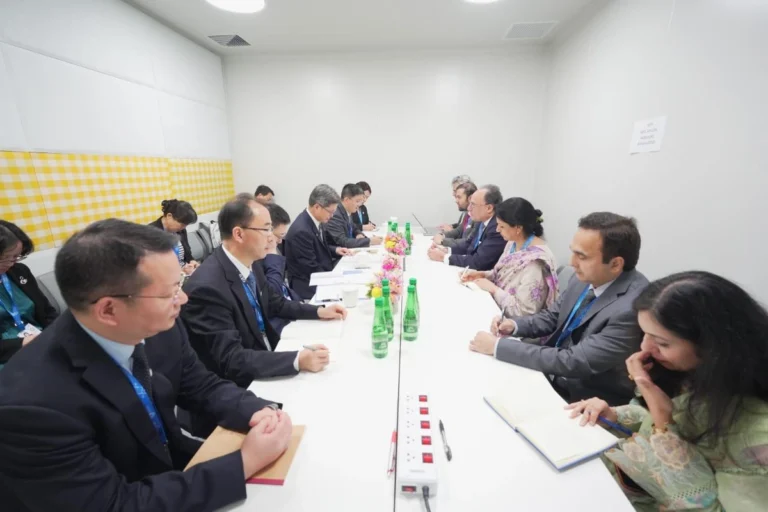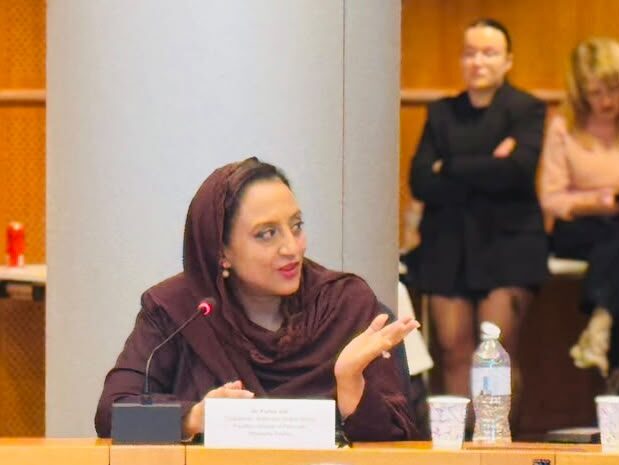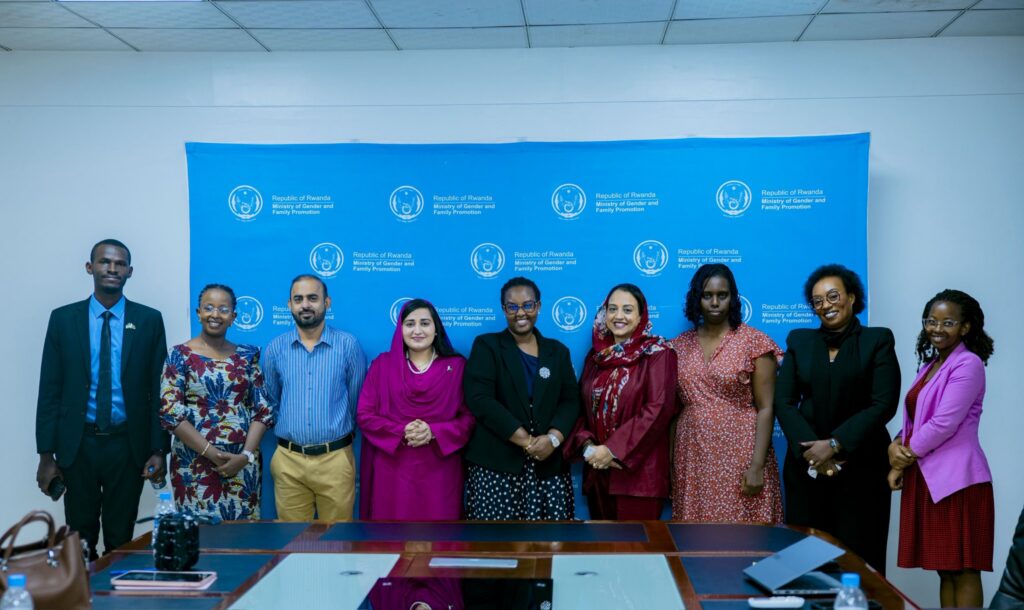
Kigali (TDI): A delegation from Pakistan led by Dr. Robina Awan, Focal Person to the Prime Minister on Youth Program, is in Rwanda to study how the country has advanced gender equality and women’s empowerment, Rwanda’s Ministry of Gender and Family Promotion said.
The delegation was received by the ministry’s Permanent Secretary, Mireille Batamuliza, together with the Executive Secretary of the National Women’s Council, Marie Médiatrice UMUBYEY.
The ministry said that the visit is a benchmarking mission, meaning Pakistan’s team is looking at Rwanda’s experience for lessons it can apply at home.
Talks between the two sides explored ways to deepen cooperation between Rwanda and Pakistan on women and youth empowerment, education, digital inclusion, knowledge exchange and institutional partnerships.
PS @MBatamuliza together with @RwandaWomen ES @MediaUmubyeyi received a delegation from Pakistan led by Dr. Robina Awan, Focal Person to the Prime Minister on Youth Programme, who are in Rwanda to benchmark on experience in advancing gender equality and women’s empowerment. pic.twitter.com/tUIFAWLCpY
— Ministry of Gender & Family Promotion | Rwanda (@RwandaGender) September 23, 2026
The Pakistani delegation was briefed on the figures and institutions behind Rwanda’s reputation as a global leader in women’s political representation.
Women hold 63.75% of seats in the Chamber of Deputies and 46.2% in the Senate. Women also lead the judiciary and central bank, serving as Chief Justice, Prosecutor General and central bank governor. They make up 46.9% of district councils and 38.8 percent of cabinet ministers.
On economic indicators, 55.6% of women take part in the labor force, against 71% of men, and 96% of women are financially included.
Read More: Inside Rwanda’s Gender Equality Ecosystem
Land data cited in the briefing shows women alone own 18.89% of land, while nearly half (48.96%) is co-owned by women and men.
Rwanda’s approach rests on four bodies; the ministry sets policy on gender equality, gender-based violence and family welfare. The Gender Monitoring Office tracks gender mainstreaming and accountability, and the National Women’s Council mobilizes women in development programs. The Rwanda Women Parliamentary Forum pushes for gender-responsive legislation.
These operate under a framework that includes the Revised National Gender Policy (2021), Vision 2050 and the 2024–2029 National Strategy for Transformation, alongside gender-responsive budgeting and household-level programs such as Indashyikirwa and Bandebereho.
Monitoring Desk
- Monitoring Desk