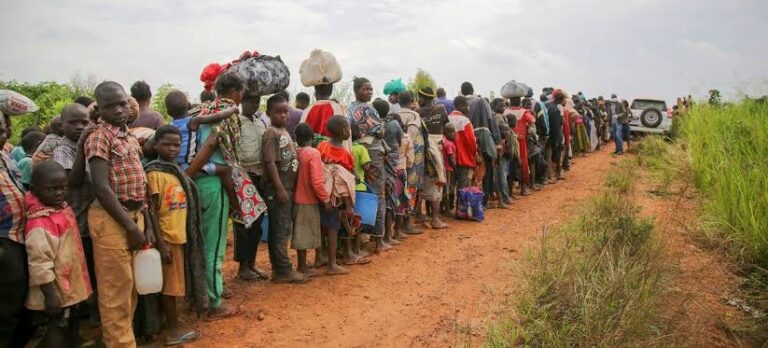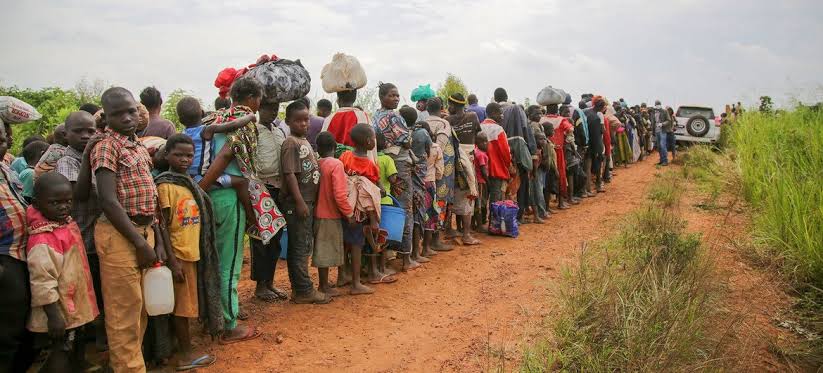
More than 117 million people have been forced from their homes by conflict, violence and persecution, the UN refugee chief told the General Assembly’s Third Committee, warning that shrinking aid budgets are straining both displaced people and the countries sheltering them.
In his first address to the Committee since taking office, High Commissioner for Refugees Barham Salih pointed to wars in Sudan, Ukraine and Yemen.
“When peace fails, people move,” he said. Humanitarian groups can protect people and keep families alive, he added, but cannot indefinitely make up for wars that remain unresolved.
Salih called for closer links between refugee protection and peacebuilding. He said millions of refugees live in long-term exile without the right to work, move freely or use public services, which he called neither sustainable nor dignified.
He outlined UNHCR’s “50 by 35” vision to halve, by 2035, the number of long-term refugees who depend on aid, mainly by helping them become self-reliant.
Read More: Myanmar Agrees to Take Back 5000 Rohingya Refugees from Malaysia
He noted some progress on returns. About 1.8 million refugees have gone back to Syria since 2024, and nearly 7 million have returned to Afghanistan since late 2023.
But he cautioned that returns will last only with security, documents, housing, livelihoods and working services, and that Afghanistan’s reintegration depends on the full participation of women and girls. UNHCR has cut costs, he said, but “efficiency has limits.”
Delegates from host countries stressed the funding squeeze. Namibia, speaking for the African Group, said a 64 per cent funding gap falls disproportionately on host communities. Nigeria cited crises in the Sahel and Lake Chad Basin, while Cameroon said it hosts 500,000 refugees and 1 million internally displaced people. Pakistan called for predictable financing and real burden-sharing.
Bangladesh, which hosts over 1.2 million Rohingya, urged greater political will to enable their safe return. Myanmar said continued junta airstrikes make such returns impossible.
The debate also exposed disputes. Algeria said any lasting solution for Sahrawi refugees must respect their right to self-determination, while Morocco said the host State had stopped UNHCR from fully carrying out its mandate.
Read More: 100 Sudanese Refugees Dead or Missing After Twin Boat Disasters Off Libya
Ukraine said Russia’s war has displaced some 10 million Ukrainians. Russia pointed to its UNHCR contributions despite sanctions, which it called illegitimate.
Earlier, two independent expert bodies presented findings. Isabelle Mamadou, Chair of the Working Group of Experts on People of African Descent, said the dangers African migrants face are the result of policy choices that perpetuate racial discrimination.
She warned that biometrics and artificial intelligence could reproduce bias in border management and urged independent oversight of digital surveillance.
Michelle Small, Chair-Rapporteur of the Working Group on mercenaries, warned of growing links between private military and security companies and organized crime.
She described “crime-as-a-service” arrangements in which cartels and scam compounds obtain military and security services, often exploiting vulnerable people, including children.
Monitoring Desk
- Monitoring Desk