The European Union has announced €505 million in financial assistance for Lebanon for 2026 and 2027 while preparing a new mission to advise and train the Lebanese Armed Forces, expanding European involvement in the country’s economic recovery and security at a time of continuing regional instability.
The European Commission announced the package on the sidelines of the United Nations General Assembly in New York.
The €505 million represents the second part of the €1 billion support package announced by European Commission President Ursula von der Leyen during her visit to Beirut in May 2024.
The first €500 million tranche covered 2024 and 2025, while the latest funding will support Lebanon over the following two years.
The assistance will be divided across several areas, including basic services for vulnerable communities, economic recovery, institutional reforms, security and border management.
Funding will help maintain access to healthcare, education, water and social protection, while also supporting reforms in the justice sector, regulatory institutions and Parliament.
The package also includes support for the private sector and economic recovery in areas affected by conflict, alongside programs dealing with the consequences of displacement.
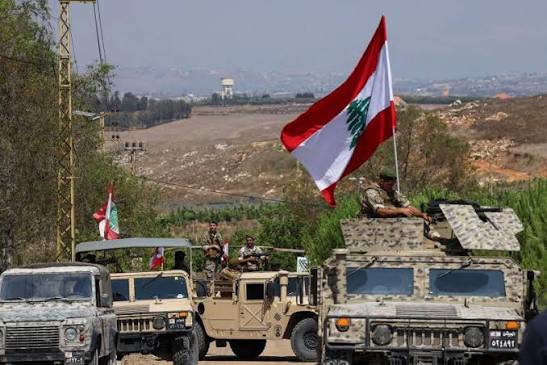
The security dimension of the announcement is particularly significant. EU foreign policy chief Kaja Kallas confirmed that a new European mission in Lebanon is being prepared to advise and train the Lebanese Armed Forces, with the wider objective of strengthening the state’s ability to provide security across its territory.
EU defense ministers have previously discussed support in areas including border and maritime security, and planning for the mission has been progressing with participation from several member states.
European officials have stressed that the proposed mission is not intended to replace the United Nations Interim Force in Lebanon.
Instead, Brussels has framed the initiative around strengthening the Lebanese Armed Forces and increasing the capacity of state institutions to manage the country’s security.
Kallas has said the objective is to help Lebanon develop its own ability to maintain security rather than create a substitute international force.
The timing is important as Lebanon continues to deal with the consequences of regional conflict and large-scale displacement.
According to the European Commission, more than one million people have been internally displaced in Lebanon since the escalation began in March, placing additional pressure on public services and an economy already facing longstanding structural challenges.
The EU has separately provided €100 million in humanitarian assistance to Lebanon during 2026. The package also reflects a wider European emphasis on strengthening Lebanese state institutions.
Commissioner for the Mediterranean Dubravka Šuica said a strong and sovereign Lebanon, with effective institutions and the state exercising control over its territory, was essential for lasting stability.
That objective connects economic assistance with the security debate surrounding the Lebanese Armed Forces and the country’s southern border.
For Brussels, the €505 million package therefore goes beyond immediate financial assistance. Combined with the proposed military advisory mission, it signals an effort to strengthen Lebanon’s institutional capacity at a time when questions over the country’s security architecture are becoming increasingly important.
How that mission develops, and how it interacts with the existing UN presence and Lebanon’s own armed forces, will be central to the EU’s longer-term role in the country.

Anoush Taimur is an International Relations graduate from DHA Suffa University, Karachi, currently based in Doha. Her research interests include Gulf politics, small-state diplomacy, Global South studies and conflict
mediation. Her work examines how states create influence through connectivity, institutions and strategic relationships. She can be reached at [email protected]