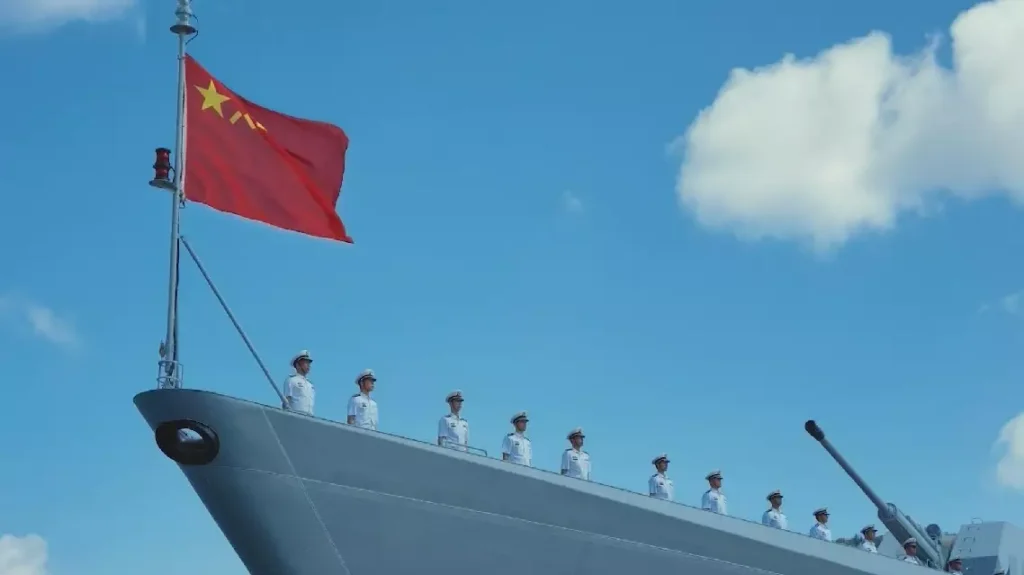
The People’s Liberation Army Navy’s 49th escort taskforce departed a military port in Sanya, Hainan Province, on the morning of Wednesday, bound for the Gulf of Aden and waters off Somalia to carry out escort missions.
The fleet consists of the guided-missile destroyer Kunming, the guided-missile frigate Yueyang, and the comprehensive supply ship Luomahu, with dozens of special operations personnel and two helicopters on board.
The deployment marks the Kunming’s first escort mission. The fleet will take over duties from the 48th escort fleet, which set sail in October last year.
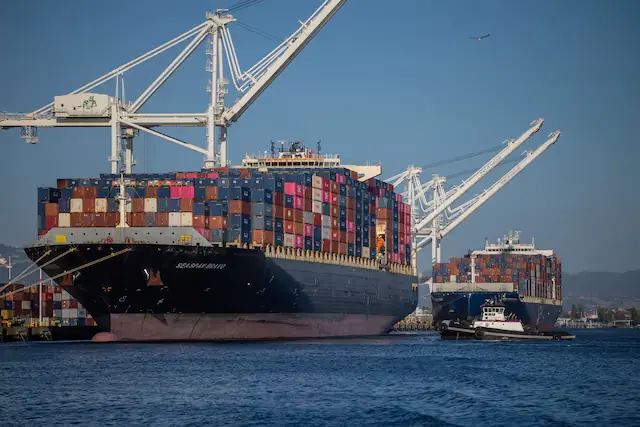
The 49th taskforce deploys into waters that have rarely been more consequential or more contested. Somali piracy is reemerging in 2026 as a growing maritime security concern, with early indicators of renewed activity visible along key shipping routes in the western Indian Ocean and the approaches to the Gulf of Aden. The resurgence is not episodic.
Pirates hailing from Somalia launched their first successful attack in six years in 2023, conducted high-profile hijackings of commercial vessels in 2024 and 2025, and captured three ships between April and May of 2026 which are still being held for ransom, representing at least 17 piracy-related incidents in Somali waters or the Gulf of Aden in the first five months of this year alone.
Read More: Insurance, Not Warships: The Strategic Lesson China Drew from Operation Epic Fury
Using hijacked dhows as motherships, pirate action groups have been able to project power far offshore — routinely 300 to 600 nautical miles from the coast — a marked escalation from the inshore operations that characterized earlier cycles. Meanwhile, multinational naval patrols are stretched thin by redeployments to the Red Sea and the Strait of Hormuz, diminishing the presence that had previously kept Somali piracy suppressed.
At the northern entrance to these waters, the threat calculus is no less acute. In July 2026, the Yemen-based Houthis declared that they would impose a complete naval blockade on Saudi Arabia. Houthi-controlled territory in Yemen runs directly along the Bab el-Mandeb Strait — at the south end of the Red Sea — and the group has demonstrated both the will and the reach to carry out concrete actions on such declarations.
In July 2025, the Houthis attacked and sank two commercial vessels in the southern Red Sea, killing four seafarers. In September 2025, they struck a Dutch-flagged cargo ship in the Gulf of Aden, killing one mariner. Following the Houthis’ declaration of a maritime embargo against Saudi Arabia, a 34% decline in traffic through the Bab el-Mandeb was observed.
The Bab el-Mandeb is one of the world’s most critical shipping chokepoints, handling roughly 12% of global seaborne oil trade and serving as a key pathway for cargo moving between Europe and Asia through the Suez Canal. It is into this compounded environment — resurging piracy in the south, renewed interdiction pressure in the north — that the 49th taskforce now sails.
Read More: China Tightens Drone Export Controls on US. What Does It Mean for Iran War?
The 49th taskforce takes its place in an unbroken chain of deployments stretching nearly two decades. On December 26, 2008, in accordance with relevant resolutions of the UN Security Council and with the approval of the Chinese State Council and Central Military Commission, a PLA naval escort taskforce comprising guided-missile destroyers Haikou and Wuhan, as well as the comprehensive supply ship Weishanhu, departed a military port in Sanya to perform escort missions in the Gulf of Aden and waters off the Somalian coast — the first time that China sent military forces overseas to safeguard the nation’s strategic interests.
Since then, the PLA Navy has maintained this presence without interruption, escorting well over 7,200 vessels across successive rotations.
The inclusion of CNS Kunming — the lead ship and class namesake of the Type 052D destroyer — is the defining strategic feature of this deployment. China’s first Type 052D destroyer, the Kunming, entered service with the PLA Navy on March 21, 2014. That the class namesake has not appeared in the Gulf of Aden until now is analytically significant.
Starting with the 33rd taskforce, which departed China in August 2019, every taskforce has comprised one Type 052D destroyer, one Type 054A frigate, and one supply ship — yet the Kunming itself, the vessel from which the entire class derives its identity, had been withheld from these distant waters.
Its deployment in the 49th taskforce is therefore not merely a rotation but a signal: Beijing possesses the capability and, more importantly, the political will to deploy its most symbolically consequential hulls to waters far beyond its own littoral.
Read More: 47th Chinese Naval Taskforce Heads to Aden Gulf
The Type 052D class displaces approximately 7,500 tons at full load, achieves speeds up to 30 knots, and carries 64 universal vertical launch system cells supporting a range of missiles including the HQ-9 surface-to-air missile and YJ-18 anti-ship missile, alongside the Type 346A active electronically scanned array radar enabling advanced air defense and situational awareness.
These are not characteristics required for counter-piracy operations alone. They reflect the broader attitude Beijing has chosen to project in a strategically vital maritime corridor — one now caught between resurgent non-state maritime violence and the deliberate application of force by organized armed movements seeking to reshape transit norms in the Red Sea basin.
Assessed across the full eighteen-year arc of the Gulf of Aden mission, the 49th taskforce represents the most capable naval formation China has assembled for this mission at the point of its outset. The platform maturity, indigenous construction depth, and rotational regularity of these deployments are the product of sustained institutional will rather than episodic capability demonstration.
The Kunming’s appearance in these waters closes a symbolic gap between what China has possessed and what it has chosen to project — arriving at a moment when the waterway itself demands exactly the kind of credible, sustained presence that this mission, at its best, provides.
In line with relevant United Nations Security Council resolutions, China has maintained a regular naval escort presence in the Gulf of Aden and Somali waters since 2008 to safeguard the security of international shipping routes, escort Chinese and foreign vessels, and rescue, protect, or assist ships in distress.

Muhammad Mahad Samija
Muhammad Mahad Samija is a student of Political Science at Government College University, Lahore. He can be reached at [email protected]