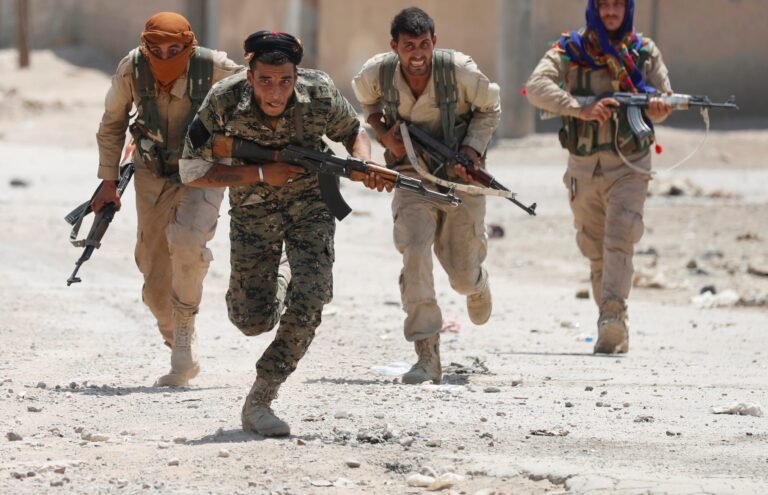
By the evening of 7 May 2025, South Asia had turned into a conflict zone. Radar screens were crowded longer than usual, air bases shifted into hardened routines and naval units stopped broadcasting. The conflict was simmering since 22 April when the Pahalgam attack in Indian-administered Kashmir resulted in the killing of 27 people, majority of them tourists.
The images regarding the attack spread rapidly across Indian media, and within hours, the political atmosphere hardened. Before any meaningful investigation matured, Pakistan was publicly blamed. Delhi’s television ecosystem went into overdrive and retaliation was no longer discussed as a possibility but as an inevitability.
Islamabad rejected the allegations almost immediately and demanded an international investigation, calling the attack a false-flag operation. But by then, the diplomatic space was already shrinking. Within days, India held the Indus Waters Treaty in abeyance, declared military attaches as persona non grata, elevated military readiness levels, and began preparing what later became known as Operation Sindoor.
Pakistan responded rationally both militarily and diplomatically. It suspended the Shimla agreement and declared military attaches of India as persona non grata. Militarily, the counter-mobilizations started quietly, air defense assets shifted posture and operational dispersal began.
The language coming from Islamabad remained measured publicly, but internally, the mood had changed. Nobody expected a full-scale war. But everyone expected something, some strike, some adventure and it was witnessed on May 7.
By the first week of May, military signaling was visible across every domain. Indian Rafales carrying SCALP-EG cruise missiles and HAMMER precision munitions became central to strike planning. BrahMos batteries moved into operational readiness. Pakistan activated layered air defense systems including HQ-9 and LY-80 batteries while J-10Cs armed with PL-15 missiles began assuming combat air patrol roles.
Read More: Pakistan Warns India of Stronger Response to Any Aggression
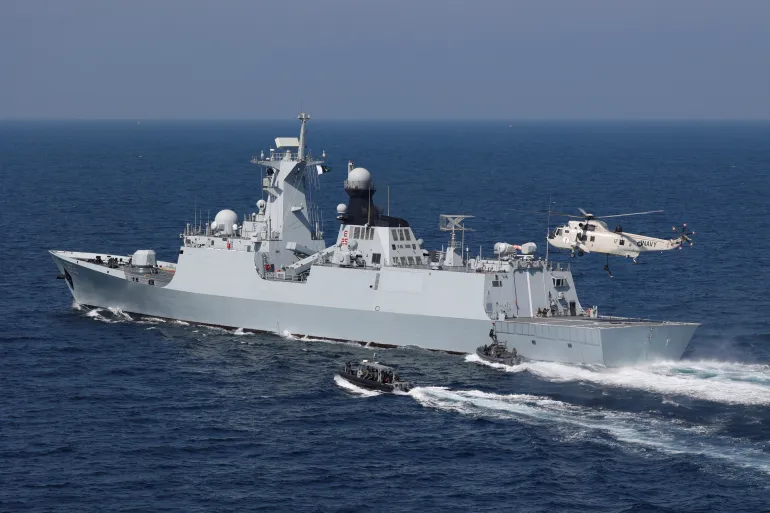
But away from public attention, the maritime theatre was also heating up. And this part deserves far greater attention than most analyses have given it. The Arabian Sea during those days was not calm. It was tense, crowded, and strategically loaded. Indian naval deployments began expanding westward while Pakistan Navy units maintained a persistent sea presence under a far more serious operational posture than publicly acknowledged at the time.
The Indian media narrative suggested overwhelming naval superiority and frequently hinted at punitive maritime options ranging from sea-based missile strikes to coercive blockading measures near Karachi. What they did not understand was that the naval warfare in the North Arabian Sea is brutally unforgiving, especially once uncertainty enters the equation.
Pakistan Navy adopted what can best be described as a controlled offensive-defensive posture. Surface combatants dispersed intelligently. Maritime ISR intensified and air and surface surveillance remained persistent. Coastal missile units reportedly moved into heightened readiness. Sub-surface ambiguity was deliberately maintained.
Naval aviation and maritime patrol assets increased operational tempo. Commercial shipping patterns were quietly monitored because both sides understood a dangerous reality: any serious disruption near Karachi or Gwadar would immediately ripple into energy security, insurance premiums, and regional trade flows. And that is where deterrence at sea quietly succeeded.
Unlike air skirmishes over contested territory, naval conflict carries economic consequences almost immediately. Merchant traffic panics, Insurance spikes overnight, Energy routes tighten and an increase in the risks of Misidentification. And once submarines enter the equation, political control over escalation becomes dangerously fragile.
By 7 May, when Indian strikes finally began, the crisis entered open confrontation. India used Rafales and Su-30MKIs to launch stand-off strikes into Pakistani territory, marking the first combat employment of SCALP-EG and BrahMos-class systems against Pakistan. Pakistan’s response was rapid. Air defense systems were activated across multiple sectors while retaliatory strikes followed under Operation Bunyan-un-Marsoos.
What followed over the next 72 hours was probably the most technologically dense military exchange South Asia has ever witnessed. Drone swarms, cruise missiles, electronic warfare, ballistic trajectories, data-linked engagements, AWACS coordination, cyber disruptions, psychological warfare and disinformation floods.
And amid all this, one could sense something unusual happening beneath the public bravado: caution. Neither side fully trusted escalation anymore. By 8 May, international pressure intensified sharply. Washington became deeply involved behind closed doors.
Gulf capitals grew nervous about maritime trade vulnerability. Tehran feared spillover instability. Beijing reportedly warned against any military activity threatening CPEC-linked zones. The maritime domain again became central here.
Read More: IWT Dispute: Court Orders India to Share Hydropower Records with Pakistan
Global energy markets were already reacting nervously. Underwriters began reassessing regional risk exposure. Shipping observers started tracking unusual naval movements more closely. Had the conflict continued another week, maritime insurance and freight costs alone might have imposed severe economic pressure across the northern Indian Ocean region.
The “compression point” came on 9 May. That was the day when both militaries appeared operationally active enough to continue fighting but strategically uncertain enough to stop. Pakistan and India under the guise of May conflict discovered uncomfortable truths about modern conflict.
First, limited war under the nuclear shadow is becoming more thinkable and therefore more dangerous. Second, modern technology does not eliminate the fog of war; it accelerates it. Third, maritime deterrence remains one of the least appreciated stabilizers in South Asian crises. And finally, information warfare has become inseparable from military operations themselves.
By the time the U.S.-brokered ceasefire emerged on 10 May, both countries were already shaping victory narratives for domestic audiences. But beneath those narratives, military professionals on both sides likely reached a similar conclusion: South Asia had just rehearsed a future war neither side is fully prepared to control.
The four days of May 2025 were not merely another Pakistan-India crisis. They were a warning. A warning that the region has entered an era where drones, precision missiles, cyber operations, maritime signaling, AI-assisted ISR, and information warfare can compress strategic decision-making to dangerous levels.
The next crisis may unfold even faster. And if maritime escalation ever breaks containment in the Arabian Sea, the consequences will extend far beyond South Asia itself. That is the real lesson of May 2025.
*The views presented in this article are the authors’ own and do not necessarily reflect the views of The Diplomatic Insight.

Ehsan Ahmed Khan
Ehsan Ahmed Khan is a PhD Scholar of International Relations at the School of Integrated Social Sciences, University of Lahore, and Deputy President Maritime Centre of Excellence at Pakistan Navy War College, Lahore.

Shakh e nabat
Shakh e nabat is doing her Master's in International Relations at Quaid I Azam University Islamabad. She is also currently working as a junior research fellow at Maritime Center of Excellence.