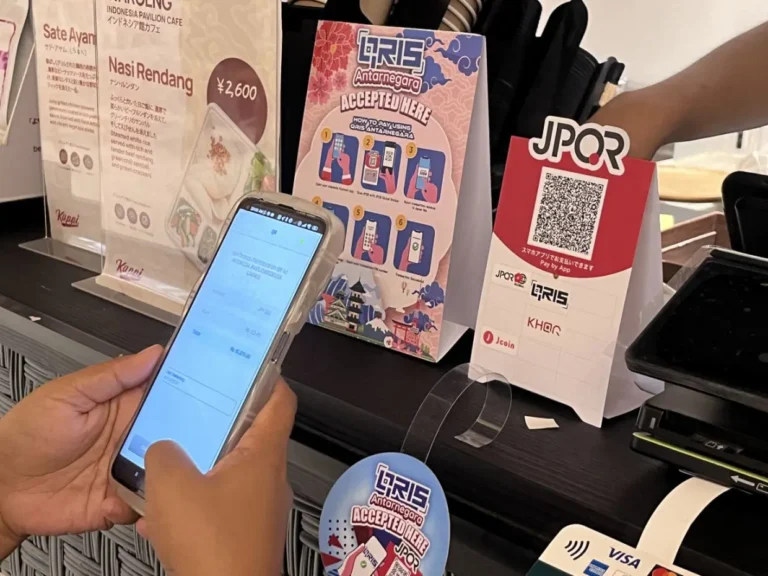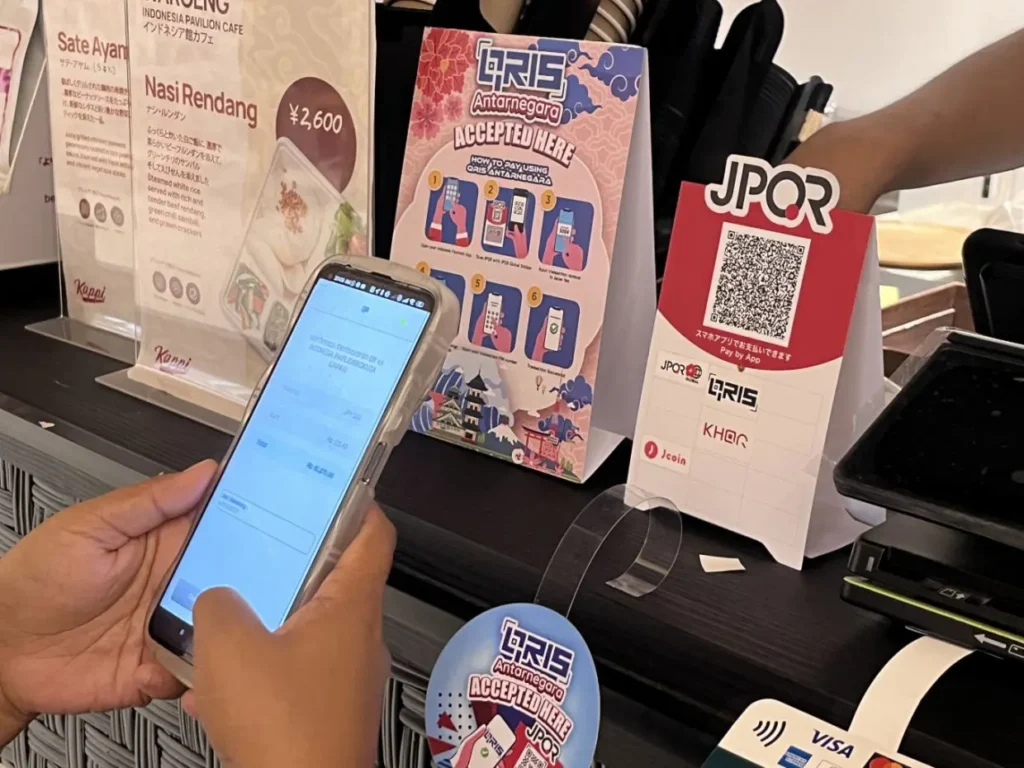
Since 30th April 2026, Quick Response Code Indonesian Standard (QRIS) can officially be used in China. This is a great achievement considering China’s position as a global economic power. This can occur through cooperation between Indonesia’s and China’s central banks.
Since its launch on 17th August 2019, QRIS has experienced rapid growth. Starting from being widely adopted by micro and small enterprises in Indonesia, it is now available in various countries. QRIS is not merely an innovation in financial technology, but also a real step toward Indonesia’s digital sovereignty.
Global payment systems are largely dominated by major multinational companies such as Visa, Mastercard, and PayPal. Unlike these private entities, QRIS was conceptualized and created directly by the central bank. A key operational advantage of QRIS is that it does not require an Electronic Data Capture (EDC) machine, significantly reducing infrastructure costs.
Additionally, QRIS can be used seamlessly across all mobile banking applications and e-wallets, showcasing its strength in integrating all existing payment systems into a single network. It also makes digital payments more inclusive by allowing different platforms to operate under a unified system.
This can happen because, since 1st January 2020, Indonesia’s central bank has required all non-cash payment service providers to adopt the QRIS standard.
Read More: Can Emerging Economies Rewrite Global Payments? Indonesia’s QRIS Is Testing the Answer
QRIS can be seen as an alternative system. This system reduces Indonesia’s dependence on global payment networks. Moreover, it reflects Indonesia’s strategic policy to strengthen its functional security. If a systemic error occurs in the global financial system, Indonesia can minimize the domestic impact.
Another important aspect of this system is data security. Payment transactions occur very frequently in daily life. These transactions not only provide information about the amount of money spent, but also generate details about what was bought, where, and when.
While this may seem like raw data, it holds significant strategic value. This data can be analyzed to understand consumer behavior or influence economic policies by those who have the capability. By utilizing QRIS, Indonesia secures its financial data because transactions occur entirely within the domestic infrastructure without being transferred to external servers.
In this era, functional security is as important as, if not more important than, territorial security. In this context, functional security means the ability of the government and civil society to function, and the capacity necessary to maintain critical infrastructures, for democratic governance to manifest certain basic values.
Furthermore, QRIS cross-border allows transactions to be converted directly into the local currency without first being converted to USD. This process is facilitated by the Local Currency Settlement (LCS) scheme. LCS is the result of bilateral cooperation between two countries, allowing transactions to be conducted in each country’s respective currency. This mechanism reduces currency conversion costs and reduces dependence on certain dominant currencies, such as the USD.
Read More: Indonesia Strikes Major Free Trade Pact with Eurasian Economic Union
China serves as a key trading partner and a major source of tourists for Indonesia. In the first quarter of 2026, the number of Chinese tourists visiting Indonesia reached 357,740 visits, an increase of 2.5 percent compared to the same period last year. This collaboration makes it easier for Chinese tourists, as they can pay via mobile banking apps or e-wallets such as UnionPay and Alipay.
However, this shift toward monetary autonomy has not gone unnoticed. In 2025, the National Trade Estimate Report, released by the United States Trade Representative, expresses criticism of QRIS. This resistance shows a clear reaction from established global economic powers that view independent, regional payment networks as a challenge to Western-dominated financial infrastructure.
However, QRIS cannot yet be considered a fully global payment system. Currently, QRIS can be used in 9 countries, including Malaysia, Singapore, Thailand, and China. To achieve broader international expansion, the government of Indonesia, through the Bank of Indonesia, must continue to negotiate bilateral agreements with other countries, including fulfilling regulatory and technical requirements, so that QRIS can be accepted.
Because QRIS cannot currently be used in many parts of the world, it is best understood today as a project of technological sovereignty that is still navigating international standardization processes and political negotiations. This journey is inherently related to bargaining costs and diplomatic leverage.
Nevertheless, the growth of QRIS shows significant numbers. In early 2022, QRIS users were at 18 million. This number kept rising, hitting 60 million users by the end of 2025, which is approximately a 233 percent increase.
In the end, the future of a nation’s sovereignty is no longer determined merely by weapons stationed at physical borders, but also by how a state can protect its invisible territory, which is the digital space.
*The views presented in this article are the authors’ own and do not necessarily reflect the views of The Diplomatic Insight.

Rivandita Rully Kafasaskya
Rivandita Rully Kafasaskya is a Master’s student of Political Science at the Indonesian International Islamic University (UIII), and a technical policy analyst in a local government in Indonesia. He can be reached at rivandita.kafasaskya@students.uiii.ac.id